


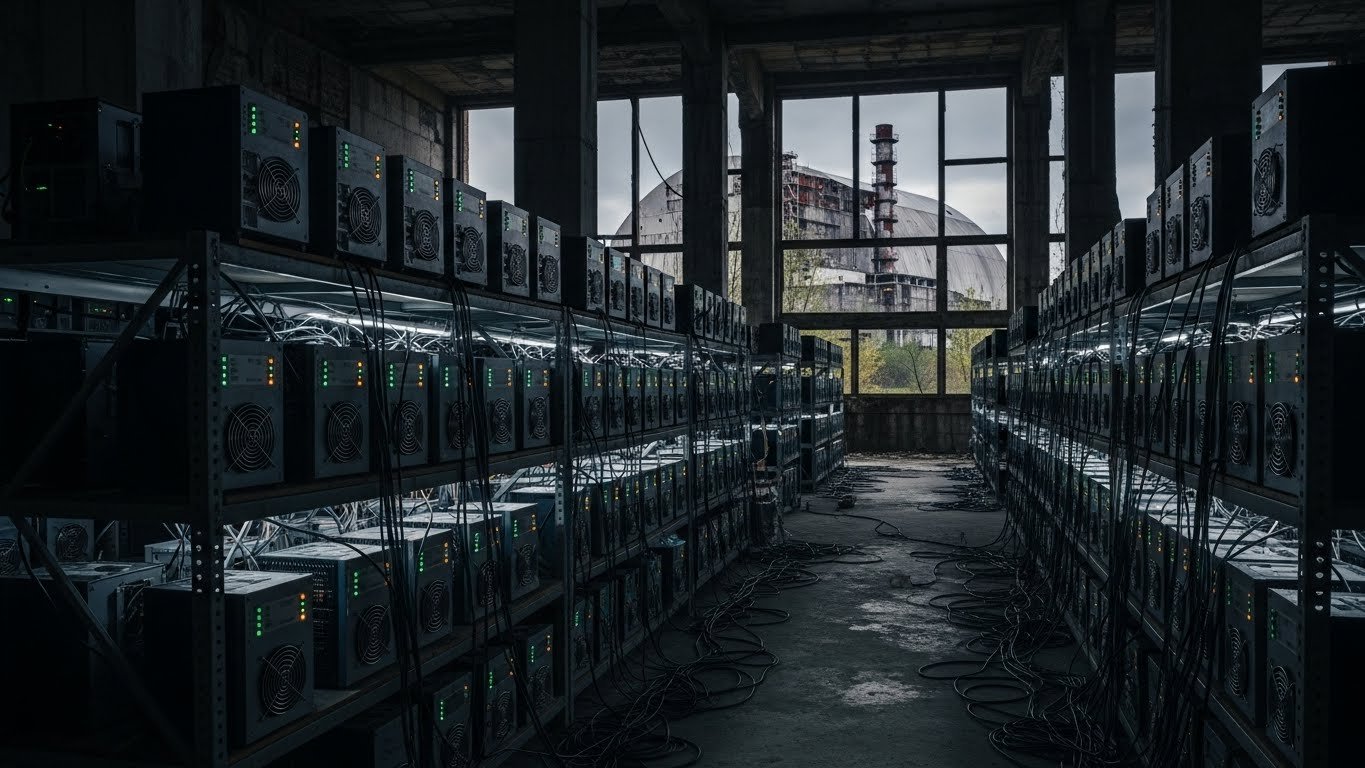
Bitcoin miners Ukraine nuclear The intersection of cryptocurrency mining and nuclear energy has taken an unexpected turn as Bitcoin mining companies set their sights on one of Europe’s most contentious power facilities. The Zaporizhzhia nuclear power plant in Ukraine, currently at the center of geopolitical tensions, has emerged as a potential energy source for large-scale Bitcoin mining operations—but only if a peace agreement materializes in the war-torn region.
Bitcoin miners Ukraine nuclear The convergence of blockchain technology, nuclear power, and post-conflict reconstruction raises fascinating questions about the future of energy-intensive industries in geopolitically sensitive regions. As global Bitcoin mining continues to face scrutiny over its environmental impact and energy consumption, the prospect of tapping into existing nuclear infrastructure offers a potentially cleaner alternative to fossil fuel-dependent operations. However, the realization of this vision hinges entirely on one critical condition: peace.
The Zaporizhzhia Nuclear Facility and Its Strategic Importance
The Zaporizhzhia nuclear power plant stands as a testament to Soviet-era engineering ambition, featuring six pressurized water reactors with a combined capacity of approximately 6,000 megawatts. Located on the banks of the Dnieper River in southeastern Bitcoin miners Ukraine nuclear, this massive facility has historically provided roughly one-fifth of Ukraine’s total electricity generation, making it an indispensable component of the nation’s energy grid.Since the escalation of military operations in the region, the plant has become a focal point of international concern. Control of the facility has changed hands, operations have been repeatedly disrupted, and the International Atomic Energy Agency has maintained a persistent presence to monitor safety conditions. Despite these challenges, the infrastructure itself remains largely intact, representing a substantial energy resource that could theoretically be repurposed once hostilities cease.
For cryptocurrency mining enterprises, Bitcoin miners Ukraine nuclear the appeal is straightforward. Bitcoin mining requires massive amounts of consistent electrical power to run the specialized computers that validate transactions and secure the blockchain network. The Zaporizhzhia plant’s capacity far exceeds what most mining operations could realistically utilize, offering not just abundant power but also the potential for favorable pricing arrangements that could significantly reduce operational costs.The energy consumption associated with Bitcoin mining has long been a contentious issue. Critics point to the industry’s carbon footprint, while advocates argue that miners increasingly seek renewable and clean energy sources. Nuclear power, despite its own controversies, provides carbon-free baseload electricity that aligns with the growing emphasis on sustainable crypto mining practices.
Bitcoin Mining’s Global Energy Quest
Bitcoin miners Ukraine nuclear why miners would consider such an unconventional location requires examining the broader context of Bitcoin’s energy demands. The process of mining involves solving complex mathematical puzzles that require enormous computational power. As more miners join the network and the difficulty of these puzzles increases, the energy requirements grow proportionally.Bitcoin miners Ukraine nuclear Mining companies have historically gravitated toward regions with surplus electricity capacity and low energy costs. This has led to migrations from China to Kazakhstan, from Venezuela to Texas, as miners chase the most favorable economic conditions. The industry has learned to be nimble, relocating operations when regulatory environments shift or when better opportunities emerge elsewhere.
Bitcoin miners Ukraine nuclear The proposed utilization of Zaporizhzhia’s power represents a natural extension of this pattern. Ukraine, prior to the conflict, had relatively low electricity costs and a well-developed power infrastructure. The country had already attracted some cryptocurrency mining interest before military operations disrupted normal economic activity. A post-war scenario could see Ukraine actively courting energy-intensive industries as part of its reconstruction strategy, with Bitcoin mining operations providing immediate demand for available power capacity.Beyond mere cost considerations, miners are increasingly conscious of their environmental footprint. Bitcoin miners Ukraine nuclear transition away from coal-powered operations in China forced many miners to reconsider their energy sources. Nuclear power, whatever one’s perspective on its long-term sustainability, produces electricity without direct carbon emissions during operation. For an industry facing mounting pressure to demonstrate environmental responsibility, access to nuclear energy could provide both practical benefits and public relations advantages.
Economic Implications for Post-War Ukraine

Bitcoin miners Ukraine nuclear Should peace return to Ukraine, the nation faces the monumental task of rebuilding its economy while managing damaged infrastructure and displaced populations. In this context, attracting Bitcoin mining investments could serve multiple strategic purposes for Ukrainian policymakers and energy planners.First, mining operations would provide immediate demand for electricity from the Zaporizhzhia facility, generating revenue that could fund necessary maintenance, safety upgrades, and operational costs. Rather than struggling to find markets for excess capacity during the reconstruction phase, Ukraine could secure committed industrial customers willing to pay for consistent power access.
Bitcoin miners Ukraine nuclear Third, such operations would create employment opportunities, both directly within mining facilities and indirectly through supporting services. While Bitcoin mining is less labor-intensive than traditional industries, it still requires technical staff, security personnel, facility maintenance workers, and various professional services.The Ukrainian government Bitcoin miners Ukraine nuclear could potentially structure agreements with mining companies to include commitments beyond simple power purchases. Requirements for local hiring, technology transfer arrangements, or commitments to fund community development projects could transform what might otherwise be purely extractive relationships into genuine partnerships supporting broader reconstruction efforts.
Technical Challenges and Infrastructure Requirements
Bitcoin miners Ukraine nuclear Despite the compelling economic logic, numerous technical obstacles stand between concept and reality. The Zaporizhzhia nuclear plant, while structurally sound, has endured months of uncertain operation under conflict conditions. Comprehensive safety assessments would be mandatory before full-scale commercial operations could resume, and international regulators would likely maintain heightened scrutiny given the facility’s recent history.Bitcoin mining facilities themselves require more than just raw electrical power. They need reliable cooling systems to manage the heat generated by thousands of mining machines running continuously. They require robust internet connectivity to maintain constant communication with the broader Bitcoin network. They need physical security to protect valuable equipment, and they need skilled technicians capable of maintaining and troubleshooting specialized hardware.
Bitcoin miners Ukraine nuclear Building such infrastructure in a post-conflict environment presents unique challenges. Supply chains might remain disrupted, skilled labor could be scarce, and the broader business environment might lack the stability that large capital investments typically require. Mining companies contemplating such ventures would need to carefully assess not just energy costs but the total cost of establishing and maintaining operations in potentially challenging conditions.The power grid infrastructure connecting Bitcoin miners Ukraine nuclear the nuclear facility to potential mining sites would require evaluation and possible upgrades. While Ukraine has historically maintained reasonably robust transmission networks, wartime damage and deferred maintenance could necessitate significant investments before large-scale industrial loads could be safely connected.
Environmental and Regulatory Considerations
The environmental dimensions of this proposal extend beyond simple carbon calculations. While nuclear power generation itself produces minimal direct emissions, the cryptocurrency mining industry faces broader sustainability questions that any Ukrainian operation would need to address.Water usage represents one concern. Both nuclear facilities and large mining operations require substantial cooling capacity, potentially placing demands on local water resources. The Dnieper River provides ample water for the power plant, but environmental assessments would need to verify that adding significant industrial loads wouldn’t create ecological problems.
Regulatory frameworks would need development or adaptation. Ukraine’s existing cryptocurrency regulations might require updating to accommodate large-scale industrial mining operations. Questions around taxation, licensing requirements, and operational standards would all need clear answers before significant investments could proceed.International perspectives matter as well. If Ukraine hopes to attract Western investment and maintain good relations with European partners, environmental standards governing any Bitcoin mining ventures would likely need to align with European Union expectations, even if Ukraine isn’t itself an EU member. This could mean stricter requirements than miners might face in some other jurisdictions.
The Peace Prerequisite and Geopolitical Reality

All of these considerations remain theoretical without the fundamental prerequisite: peace. The current situation makes any commercial exploitation of Zaporizhzhia’s capacity impossible. The facility operates under emergency conditions, with reduced staff and constant international monitoring to prevent nuclear incidents.For Bitcoin miners to seriously commit to projects in the region, they would require not just a ceasefire but a durable peace agreement that provides reasonable confidence in long-term stability. Mining operations involve substantial upfront capital investment in equipment and facilities. Companies need assurance that their investments won’t be threatened by renewed hostilities or ongoing instability.
The geopolitical complexity extends beyond the immediate conflict. International sanctions, export controls, and financial restrictions create legal and practical obstacles for companies attempting to operate in or near conflict zones. Even after peace, some of these restrictions might remain in place during transition periods, complicating business operations.Nonetheless, the interest expressed by mining companies indicates their willingness to consider unconventional opportunities. The cryptocurrency industry has demonstrated remarkable adaptability, and pioneers willing to enter markets that others avoid can sometimes secure advantageous positions. For companies with appropriate risk tolerance and long-term perspectives, post-conflict Ukraine could represent an opportunity worth pursuing despite the challenges.
Conclusion
The prospect of Bitcoin miners utilizing power from the Zaporizhzhia nuclear facility illustrates the unexpected intersections between emerging technologies, energy infrastructure, and geopolitical developments. While entirely contingent on achieving peace in Ukraine, this proposal highlights how cryptocurrency mining continues to reshape global energy markets and how nations emerging from conflict might leverage unconventional economic opportunities during reconstruction.
As the world watches developments in Ukraine, the cryptocurrency industry’s interest in the region serves as a reminder that post-conflict reconstruction involves not just rebuilding what existed before, but potentially creating entirely new economic structures adapted to contemporary technological realities. Whether Bitcoin mining ultimately plays a significant role in Ukraine’s future remains to be seen, but the very fact that such possibilities are being discussed demonstrates the remarkable evolution of both the digital currency ecosystem and global energy markets.
Frequently Asked Questions
Q: Why are Bitcoin miners specifically interested in nuclear power plants?
Bitcoin miners require enormous amounts of consistent, affordable electricity to operate profitably. Nuclear power plants provide baseload electricity at relatively low costs without the intermittency issues associated with renewable sources like solar or wind. The Zaporizhzhia facility’s massive capacity, combined with Ukraine’s potentially favorable electricity pricing in a post-war reconstruction scenario, creates an attractive proposition for mining operations seeking to reduce their operational costs while accessing cleaner energy sources.
Q: How much electricity does Bitcoin mining actually consume?
Bitcoin mining’s global electricity consumption is substantial, estimated at over 100 terawatt-hours annually, comparable to the energy usage of some medium-sized countries. Individual large-scale mining facilities can consume tens or even hundreds of megawatts continuously. This enormous energy appetite is why miners constantly seek regions with surplus electrical capacity and competitive pricing, making underutilized facilities like Zaporizhzhia potentially attractive targets for the industry.
Q: Could Bitcoin mining actually help Ukraine’s post-war economy?
Potentially, yes. Mining operations would provide immediate revenue for electricity sales, helping to fund the operation and maintenance of power infrastructure. They would bring foreign investment capital when other investors might be hesitant, create employment opportunities both directly and indirectly, and demonstrate that Ukraine can attract international technology companies. However, the actual economic benefits would depend on how agreements are structured and whether requirements for local hiring, technology transfer, or community investment are included.
Q: What are the main obstacles to this plan becoming reality?
The primary obstacle is achieving a durable peace agreement that provides sufficient stability for long-term commercial investments. Beyond that, technical challenges include assessing and potentially repairing the nuclear facility after months of uncertain operation, building the necessary infrastructure for mining operations, ensuring adequate internet connectivity, and developing appropriate regulatory frameworks. Geopolitical complications around sanctions and international relations could also complicate implementation even after hostilities cease.
Q: Is using nuclear power for Bitcoin mining environmentally responsible?
This question involves complex tradeoffs. Nuclear power generates electricity without direct carbon emissions, making it cleaner than fossil fuel alternatives from a climate perspective. However, nuclear energy has its own environmental concerns, including radioactive waste management and water usage for cooling. For Bitcoin mining specifically, using existing nuclear capacity that might otherwise remain underutilized could be more environmentally sound than building new fossil fuel plants to meet mining demands. The electronic waste from obsolete mining equipment and the overall energy intensity of cryptocurrency operations remain valid concerns regardless of the power source.
