



CME Expands Crypto Futures but Retail Traders Face a Catch Crypto futures legitimized by CME with Cardano, Chainlink, and Stellar addition mark a major milestone in the ongoing integration of digital assets into traditional financial markets. When the world’s largest derivatives exchange expands its crypto product lineup, it sends a powerful signal to institutions, regulators, and global investors that cryptocurrencies are no longer fringe instruments but increasingly recognized financial assets. The inclusion of Cardano, Chainlink, and Stellar alongside established contracts reinforces the narrative that crypto markets are maturing.
For institutional investors, this development represents validation, risk management capability, and access to regulated exposure. For the broader crypto ecosystem, it suggests deeper liquidity, better price discovery, and increased credibility. On the surface, this appears like an unambiguous win for the entire market.
However, beneath this optimism lies a critical caveat. While crypto futures are legitimized by CME with Cardano, Chainlink, and Stellar addition, retail traders face a massive catch that fundamentally changes who can benefit most from this evolution. Access barriers, contract structures, margin requirements, and regulatory frameworks tilt the playing field toward institutions, leaving everyday traders with limited direct advantages. Understanding this divide is essential to grasp what this expansion truly means for the crypto market.
CME Expands Crypto Futures
The Chicago Mercantile Exchange has long been regarded as a cornerstone of global financial infrastructure. Its role in commodities, interest rates, equities, and currencies has shaped markets for decades. When crypto futures are legitimized by CME with Cardano, Chainlink, and Stellar addition, it elevates these assets into the same institutional conversation as oil, gold, and major stock indices.
This move matters because CME products are heavily regulated, transparent, and trusted by large financial institutions. For many conservative investors, CME-listed futures represent the only acceptable way to gain exposure to crypto-related price movements. As a result, CME’s expansion signals growing comfort with crypto’s market structure and risk profile.
Beyond symbolism, CME’s involvement enhances price discovery. Futures markets allow participants to express views on future prices, hedge exposure, and arbitrage inefficiencies. Over time, this can reduce extreme volatility and align crypto pricing more closely with global macro trends.
Cardano, Chainlink, and Stellar Enter the Institutional Arena
The selection of Cardano, Chainlink, and Stellar is not accidental. Each of these assets represents a distinct narrative within the crypto ecosystem. Cardano emphasizes research-driven development and scalability. Chainlink underpins decentralized data infrastructure through oracle services. Stellar focuses on cross-border payments and financial inclusion.
By adding futures contracts for these assets, CME acknowledges their relevance beyond speculation. Crypto futures are legitimized by CME with Cardano, Chainlink, and Stellar addition because these networks have demonstrated longevity, utility, and sustained market interest.
For institutions, futures contracts on these assets enable sophisticated strategies. Portfolio managers can hedge spot exposure, express relative value trades, or gain directional exposure without holding the underlying tokens. This flexibility is central to institutional adoption.
Institutional Validation and Market Perception
Institutional validation is one of the most powerful outcomes of CME’s expansion. Many market participants view CME listings as a stamp of legitimacy. When crypto futures are legitimized by CME with Cardano, Chainlink, and Stellar addition, it reshapes how regulators, banks, and asset managers perceive these networks.
This perception shift can have cascading effects. Greater institutional acceptance can lead to improved custody solutions, expanded research coverage, and more favorable regulatory dialogue. Over time, this ecosystem support can strengthen the overall market.
However, validation does not automatically translate into equal opportunity. The benefits of institutional-grade products often accrue unevenly, favoring participants with scale, expertise, and capital.
How CME Crypto Futures Actually Work
To understand the massive catch for retail traders, it is important to understand how CME crypto futures function. CME futures are standardized contracts that represent a fixed quantity of an underlying asset. They are cash-settled, meaning no actual crypto changes hands at expiration.
These contracts are designed for professional participants. They involve specific contract sizes, margin requirements, and trading hours that align with traditional financial markets rather than 24/7 crypto exchanges. Risk management is built around institutional norms.
Crypto futures are legitimized by CME with Cardano, Chainlink, and Stellar addition, but the structure of these contracts inherently prioritizes institutions that can manage complex derivatives strategies.
The Massive Catch for Retail Traders
The massive catch lies in accessibility. While headlines suggest broader crypto adoption, retail traders often cannot easily participate in CME futures markets. High minimum contract sizes, substantial margin requirements, and brokerage restrictions create significant barriers.
Most retail traders operate on crypto-native exchanges with smaller position sizes and flexible leverage. CME contracts, by contrast, require accounts with futures-enabled brokers, compliance checks, and capital thresholds that many retail traders cannot meet.
As a result, crypto futures are legitimized by CME with Cardano, Chainlink, and Stellar addition, but the primary beneficiaries are hedge funds, proprietary trading firms, and institutional desks, not everyday traders.
Margin Requirements and Capital Constraints
Margin requirements represent one of the biggest obstacles. CME futures demand initial and maintenance margins designed to mitigate systemic risk. While this enhances market stability, it also raises the cost of participation.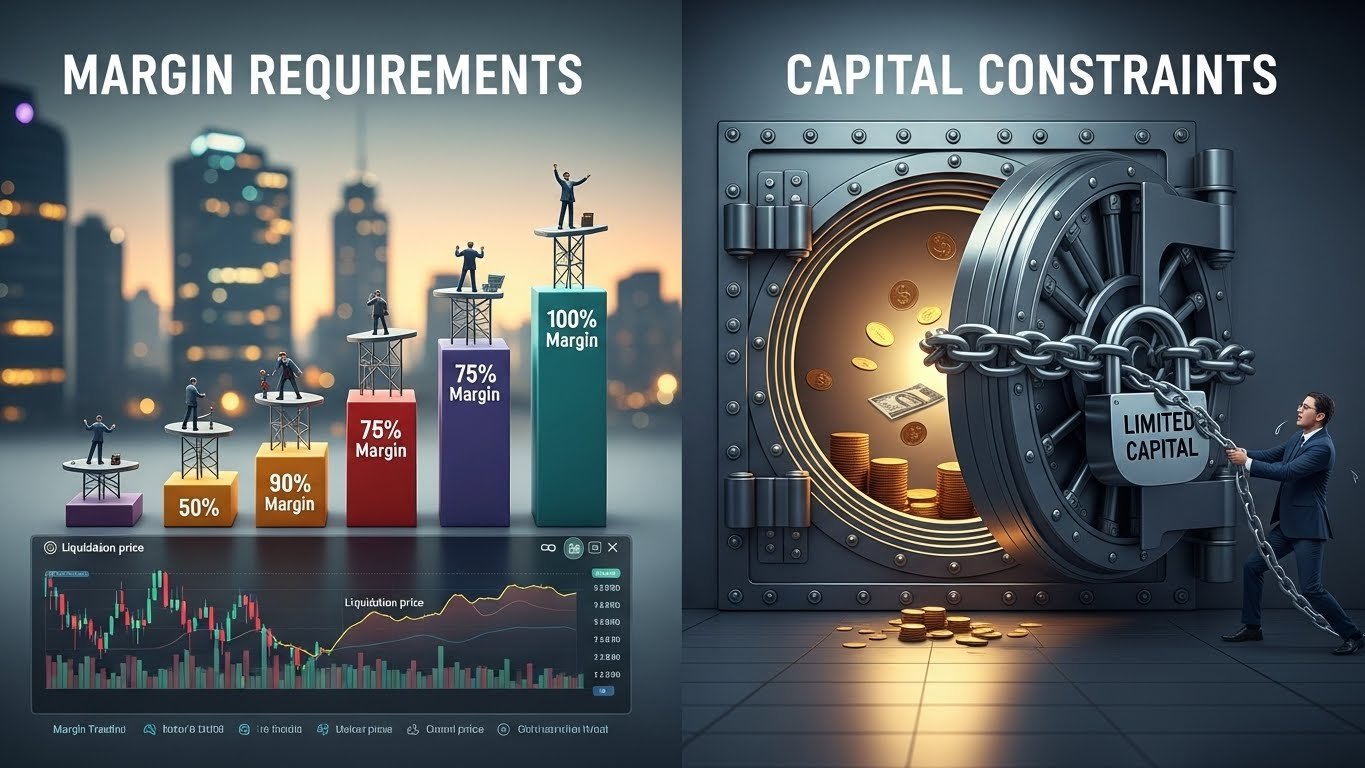
Retail traders accustomed to small-margin positions may find CME requirements prohibitive. Even micro contracts, where available, still require infrastructure and approvals beyond what many retail participants possess.
This capital constraint means that retail traders often observe institutional activity indirectly, through price movements rather than direct participation.
Trading Hours and Liquidity Dynamics
Another catch is trading hours. CME futures operate during set market hours, with scheduled maintenance breaks. Crypto markets, however, trade continuously. This mismatch creates periods where price moves occur outside CME hours, potentially leading to gaps when markets reopen.
Institutions can manage this risk through diversified strategies and global desks. Retail traders, however, may face slippage or unexpected volatility when CME markets resume trading.
Crypto futures are legitimized by CME with Cardano, Chainlink, and Stellar addition, but the trading environment differs significantly from the always-on nature of crypto exchanges.
Impact on Price Discovery and Volatility
CME futures influence price discovery by reflecting institutional expectations. Over time, futures pricing can shape spot markets through arbitrage and sentiment. This influence tends to stabilize prices, but it can also introduce new dynamics.
Institutions often trade based on macro signals, correlations, and quantitative models. Their activity can dampen speculative extremes but also accelerate trend shifts when consensus changes.
Retail traders may find it harder to anticipate these moves, as institutional flows are less transparent than on-chain activity. The result is a market increasingly shaped by professional capital.
Hedging and Risk Management Advantages
One of the biggest advantages of CME futures is hedging capability. Institutions holding spot crypto can hedge downside risk without selling assets. This flexibility supports long-term investment strategies and reduces forced selling during downturns.
Retail traders rarely have access to equivalent hedging tools at the same scale or regulatory assurance. While some crypto exchanges offer derivatives, these platforms often carry higher counterparty risk.
Crypto futures are legitimized by CME with Cardano, Chainlink, and Stellar addition, but the risk management benefits disproportionately favor large players.
Regulatory Comfort Versus Innovation Speed
CME’s regulated environment provides comfort to institutions and regulators, but it can slow innovation. Product changes, new listings, and contract adjustments require regulatory approval.
Crypto-native platforms, by contrast, innovate rapidly. Retail traders often benefit from early access to new instruments, higher leverage, and flexible products. CME’s approach prioritizes stability over experimentation.
This trade-off highlights the divergence between institutional and retail ecosystems. Each serves different needs, and CME’s expansion reinforces that divide.
The Illusion of Equal Adoption
Headlines often frame CME listings as wins for the entire crypto community. While crypto futures are legitimized by CME with Cardano, Chainlink, and Stellar addition, equal adoption is an illusion.
Institutional adoption does not automatically democratize access. Instead, it often formalizes markets in ways that exclude smaller participants. Retail traders benefit indirectly through increased legitimacy and potential price stability, but not through direct participation.
Understanding this distinction prevents misplaced expectations and encourages realistic assessments of market structure.
What Retail Traders Actually Gain
Despite the catch, retail traders are not entirely left out. CME’s involvement can reduce existential risk for crypto assets by embedding them within regulated frameworks. This can attract long-term capital and reduce the likelihood of abrupt market collapses.
Additionally, institutional futures activity can provide signals about broader sentiment. Observing futures curves, volume, and open interest can offer insights into market expectations.
These indirect benefits, while less tangible than direct access, still contribute to a healthier ecosystem.
Long-Term Implications for the Crypto Market
Over the long term, CME’s expansion could reshape crypto markets into a two-tier system. One tier caters to institutions with regulated products and deep liquidity. The other serves retail traders through crypto-native platforms with higher risk and flexibility.
Crypto futures are legitimized by CME with Cardano, Chainlink, and Stellar addition, accelerating this bifurcation. How these tiers interact will define future market dynamics.
Bridging this gap may require innovation in compliant retail products, micro futures, or improved access through fintech intermediaries.
Retail Access Improve Over Time
History suggests that retail access can improve as markets mature. As demand grows, exchanges and brokers may develop smaller contracts, simplified access, or integrated platforms.
However, regulatory and risk considerations will continue to shape what is possible. CME’s priority will remain systemic stability rather than mass retail participation.
Retail traders should not assume that institutional products will automatically become accessible.
Strategic Takeaways for Traders and Investors
For institutional investors, CME’s expansion offers validation and tools. For retail traders, it offers context rather than opportunity. Understanding where power and access reside is critical.
Crypto futures are legitimized by CME with Cardano, Chainlink, and Stellar addition, but success in this environment requires adapting strategies to an increasingly institutionalized market.
Retail participants may need to focus more on long-term positioning, on-chain analysis, and risk management rather than trying to compete directly with institutional derivatives trading.
Conclusion
Crypto futures are legitimized by CME with Cardano, Chainlink, and Stellar addition, representing a milestone in the evolution of digital asset markets. This move brings credibility, deeper liquidity, and institutional validation that strengthen the crypto ecosystem as a whole.
Yet, this progress comes with a massive catch. Retail traders face significant barriers to direct participation, as CME’s futures markets are designed primarily for institutional players. While retail participants benefit indirectly through legitimacy and stability, the most powerful tools remain out of reach.
Recognizing this reality allows traders and investors to adjust expectations and strategies. The future of crypto will be shaped by both institutional frameworks and grassroots innovation, but access and advantage will not be evenly distributed.
FAQs
Q: Why is CME adding Cardano, Chainlink, and Stellar futures significant?
CME’s addition is significant because it signals institutional recognition of these assets as mature and relevant, enhancing their credibility and integration into traditional finance.
Q: What is the massive catch for retail traders?
The catch is that CME futures have high capital requirements, regulatory barriers, and complex structures that make them largely inaccessible to most retail traders.
Q: Do CME crypto futures affect spot prices?
Yes, CME futures can influence spot prices through price discovery, institutional sentiment, and arbitrage between futures and spot markets.
Q: Can retail traders access CME crypto futures indirectly?
Retail traders may access them through certain brokers or funds, but direct participation is often limited by account requirements and capital thresholds.
Q: Does institutional adoption harm retail traders?
Not necessarily. While it limits direct access, institutional adoption can improve market stability and legitimacy, benefiting retail traders indirectly over time.
