


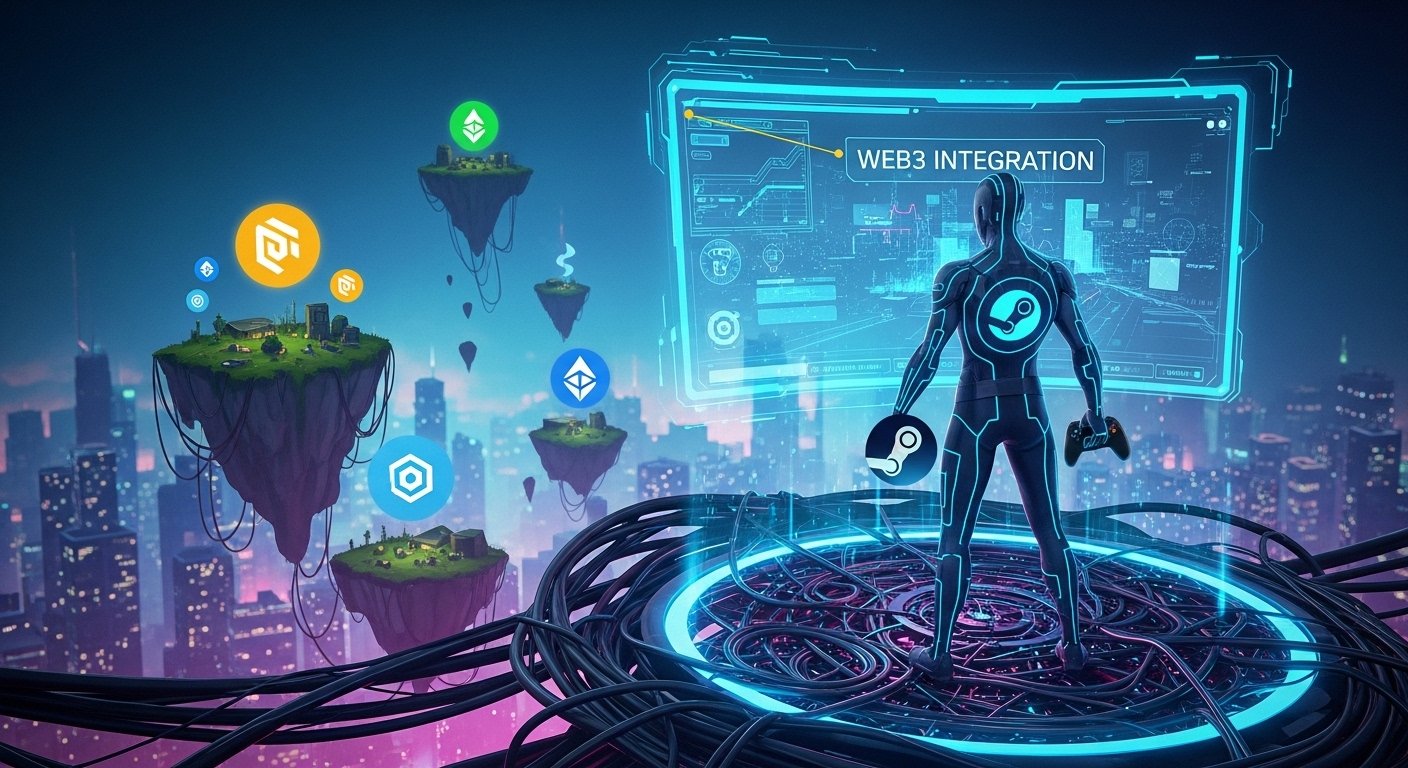
Steam Explores Web3 New Game Listings Spark Bold Experiment in a move that has sent ripples through the gaming world, Steam, the global digital distribution platform, has quietly begun listing games with Web3 elements, signaling what many are calling a bold experiment. The integration of blockchain technology into mainstream gaming has been a topic of debate for years, with enthusiasts touting its potential to reshape digital ownership, while critics warn of environmental and speculative risks. Steam’s recent activity, however, hints at a serious exploration of how Web3 gaming could find its footing in one of the largest gaming ecosystems in the world.
This development is noteworthy because Steam has historically maintained a cautious stance toward emerging technologies that might disrupt its existing marketplace. The sudden appearance of blockchain-based games and NFT-enabled features on the platform suggests that the company is ready to test the waters, gauging user interest and evaluating the potential for more decentralized gaming experiences. For gamers, developers, and investors alike, Steam’s move may represent a pivotal moment where Web3 gaming shifts from niche experiments to mainstream adoption.
Steam Explores Web3 New Game
Steam’s introduction of Web3-enabled games is more than a simple expansion of its catalog. It represents a strategic experiment designed to assess the viability of blockchain integration in a controlled yet influential environment. Traditionally, Steam has focused on a centralized model where players purchase, download, and play games through a single platform. Web3, by contrast, emphasizes decentralization, digital ownership through non-fungible tokens (NFTs), and even player-driven economies.
By experimenting with Web3, Steam could potentially bridge the gap between traditional gaming and the growing ecosystem of blockchain-based titles. This approach allows Steam to remain competitive in an evolving market while providing its vast user base with access to innovative digital assets that enhance engagement and player investment. Game developers may also benefit from this experiment, as Steam offers unparalleled reach and visibility to millions of active users.
What Web3 Games on Steam Mean for Gamers
For gamers, the appearance of Web3 game listings on Steam introduces a new layer of interactivity and ownership. Unlike conventional games, where in-game items are controlled solely by developers, Web3 games allow players to truly own, trade, and even monetize their digital assets. NFTs, for example, can represent rare weapons, skins, or characters, which exist independently of the game’s servers. This means that gamers could potentially sell or transfer these assets across different platforms or even retain value outside the original game environment.
This development also encourages a more community-driven gaming experience. Players can participate in decentralized marketplaces, influence game development through governance tokens, or engage in play-to-earn mechanics that reward their time and skill. The integration of blockchain technology has the potential to redefine player engagement, turning gaming from a purely entertainment activity into a form of digital entrepreneurship.
Implications for Developers and the Gaming Industry
For developers, Steam’s move into Web3 presents both opportunities and challenges. On one hand, it opens the door to new monetization models that go beyond traditional sales or subscriptions. Developers can generate revenue through NFT sales, in-game token economies, and secondary marketplaces, creating a more sustainable income stream that rewards creativity and innovation.
On the other hand, the adoption of blockchain gaming comes with technical and regulatory hurdles. Developers must navigate the complexities of smart contracts, security vulnerabilities, and evolving legal frameworks surrounding digital assets. Additionally, they need to consider user sentiment, as some segments of the gaming community remain wary of NFTs and blockchain integration due to concerns about speculation, environmental impact, and digital equity.
Despite these challenges, the industry’s response to Steam’s experiment could be a bellwether for the broader adoption of Web3 gaming. If successful, it could encourage other major platforms to embrace blockchain technology, fostering a new era where digital ownership and player empowerment become standard features of gaming ecosystems.
How Steam’s Experiment Aligns With Market Trends
Steam’s exploration of Web3 is not occurring in isolation. Across the gaming and blockchain landscape, several trends indicate a growing interest in decentralized gaming experiences. The rise of play-to-earn games, the increasing popularity of NFT collectibles, and the expansion of metaverse concepts all suggest that players are ready for more interactive and economically integrated gameplay.
By listing Web3 games, Steam positions itself at the forefront of this evolving market. The platform can analyze player adoption, engagement rates, and asset transactions to determine whether blockchain features are sustainable and appealing at scale. This data-driven approach reduces risk while allowing Steam to experiment with innovation in a way that is both measurable and strategic.
Moreover, Steam’s move could influence investor sentiment and developer priorities, as the platform’s endorsement of Web3 features signals legitimacy and potential profitability. For investors, the presence of blockchain games on a mainstream platform indicates that the industry may be entering a phase of accelerated growth and adoption.
Challenges Steam May Face With Web3 Integration
Despite the excitement, Steam’s Web3 experiment is not without obstacles. One of the primary concerns is user backlash. Many gamers have expressed skepticism toward NFTs and blockchain mechanics, often associating them with environmental concerns and speculative bubbles. Steam will need to address these issues transparently, emphasizing the utility, security, and ecological responsibility of its Web3 offerings.
Another challenge lies in scalability and infrastructure. Web3 games rely on blockchain networks, which can experience latency, high transaction fees, or other limitations that affect gameplay. Steam must ensure that these technical hurdles do not compromise the seamless experience that users have come to expect from the platform.
Regulatory uncertainty is also a factor. Governments worldwide are still shaping rules for digital assets, cryptocurrencies, and blockchain-based gaming economies. Steam must navigate these evolving legal landscapes carefully to avoid potential compliance issues or restrictions that could hinder its experiment.
The Role of Community in Steam’s Web3 Experiment
One of the most compelling aspects of Web3 gaming is the emphasis on community participation. Players are no longer just consumers; they are stakeholders with the ability to influence game development, participate in decentralized governance, and trade valuable assets. Steam’s platform, with its robust user base and social features, provides an ideal environment to test these community-driven mechanics.
By integrating Web3 games, Steam encourages player engagement and collaboration. Communities can form around trading, in-game economies, and governance, creating a more immersive and participatory gaming ecosystem. This shift from passive consumption to active involvement could redefine how games are developed, marketed, and monetized in the years to come.
Predictions for the Future of Steam and Web3
If Steam’s experiment proves successful, it could have far-reaching implications for the gaming industry. Mainstream adoption of blockchain-based games may accelerate, leading other digital distribution platforms to explore similar integrations. We could see a future where players have more control over their digital assets, developers enjoy new monetization avenues, and gaming communities become central to game evolution.
However, the journey will likely be iterative. Steam will need to balance innovation with user experience, addressing concerns around security, environmental impact, and speculation. Gradual rollout, careful curation of Web3 titles, and clear communication with the community will be key to sustaining interest and trust in this bold experiment.
Ultimately, Steam’s entry into Web3 could mark the beginning of a broader transformation in gaming, where digital ownership, decentralized economies, and player empowerment become foundational aspects of the industry.
Conclusion
Steam’s recent Web3 game listings represent a significant step toward the mainstream adoption of blockchain technology in gaming. By experimenting with decentralized assets, NFTs, and play-to-earn mechanics, the platform is exploring a future where gamers are more empowered and developers have new opportunities to innovate.
While challenges related to user sentiment, infrastructure, and regulation remain, Steam’s move signals a willingness to test the boundaries of traditional gaming models. The experiment has the potential to reshape player experiences, foster stronger community engagement, and influence the broader direction of the gaming industry.
As the gaming world watches closely, Steam’s Web3 journey may well define the next era of interactive entertainment, blending innovation, ownership, and community-driven gameplay into a cohesive and engaging ecosystem.
FAQs
Q: How will Steam’s integration of Web3 games change the way gamers interact with digital assets and in-game items in the future?
Steam’s Web3 integration will allow gamers to truly own digital assets such as NFTs, in-game currency, and collectibles. Unlike traditional models where items are confined to the game environment, Web3 games enable players to trade, sell, or even use these assets across multiple platforms. This shift empowers players, creating new forms of engagement and even financial opportunities, fundamentally changing how gamers perceive value in virtual worlds.
Q: What are the main challenges developers might face when creating Web3 games for a platform like Steam?
Developers must contend with technical complexities such as smart contract security, blockchain scalability, and network transaction costs. They also need to navigate evolving regulations around digital assets and cryptocurrencies. Additionally, developers must carefully design their games to ensure user trust and community adoption, as skepticism around NFTs and environmental concerns remains prevalent among mainstream gamers.
Q: How could Steam’s Web3 experiment impact the broader gaming and blockchain industry over the next few years?
Steam’s experiment could serve as a benchmark for mainstream adoption of blockchain gaming. A successful rollout may encourage other platforms to embrace decentralized technologies, increase investor interest, and spur more innovative game design centered on digital ownership and community engagement. This could accelerate the growth of the Web3 gaming ecosystem and redefine economic models for both developers and players.
Q: Are there risks associated with the environmental and speculative aspects of blockchain-based games on Steam?
Yes, there are potential environmental concerns related to energy-intensive blockchain networks. Speculation on NFTs could also lead to market volatility and financial risk for players. Steam will need to implement solutions that mitigate these issues, such as energy-efficient blockchain protocols, transparent marketplaces, and clear communication regarding the utility and value of digital assets to ensure responsible adoption.
Q: How might community involvement change with the introduction of Web3 games on Steam, and why is this significant?
Community involvement will likely increase as players gain governance rights, trade digital assets, and participate in decentralized economies. This shift transforms gamers from passive consumers into active stakeholders, fostering collaboration and loyalty. A strong, engaged community can drive innovation, influence game development, and enhance the longevity of titles, making this a significant factor in the success of Web3 gaming on Steam.
