


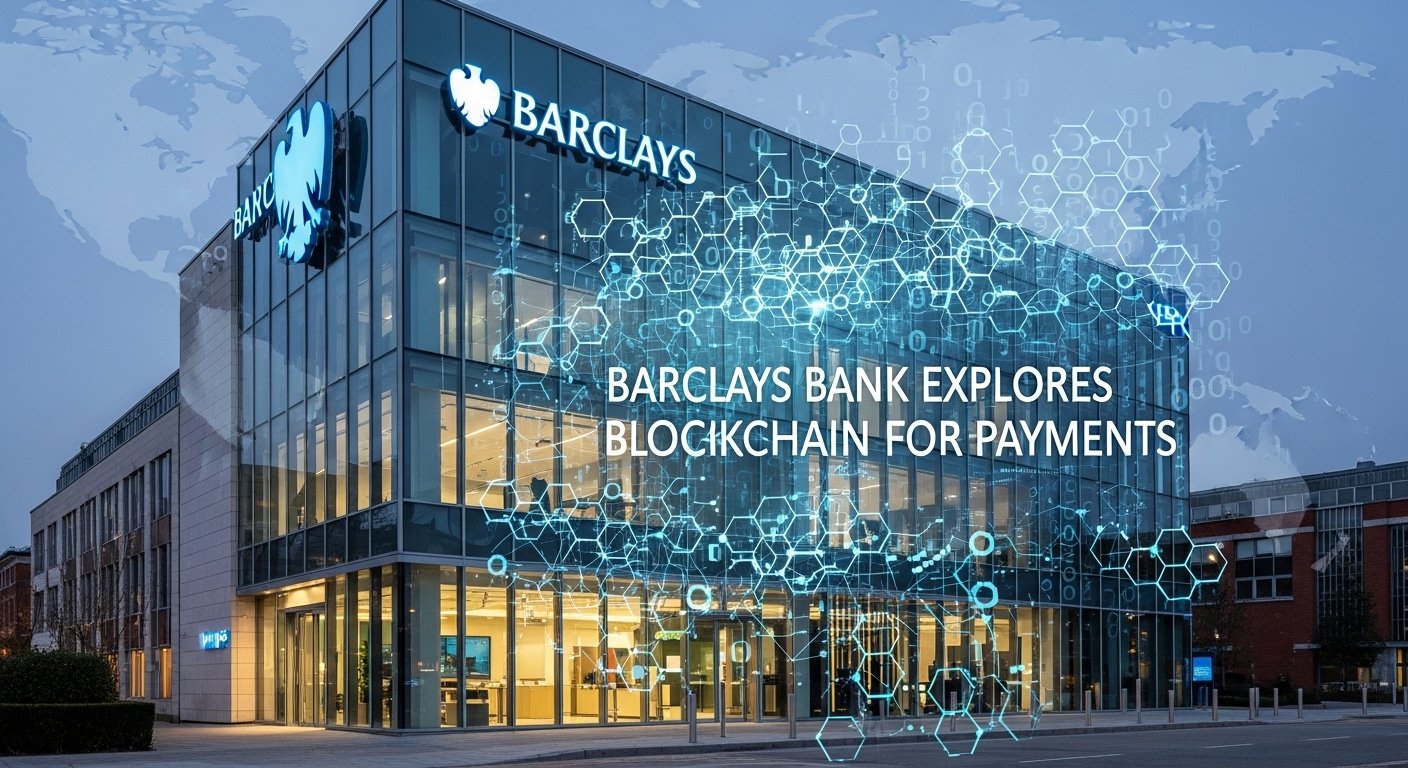
Barclays Bank Explores Blockchain for Payments Innovation the global financial sector is undergoing a digital transformation unlike anything seen in previous decades. As competition intensifies and customer expectations evolve, major institutions are rethinking the foundations of their payment systems. In this context, Barclays Bank Begins Exploring Blockchain for Payments, marking a significant milestone in the bank’s innovation journey. The move highlights how established financial giants are embracing blockchain technology, digital payments infrastructure, and financial innovation to remain competitive in an increasingly digital economy.
Barclays has long been recognized as one of the most influential financial institutions in the world. With operations spanning multiple continents, the bank has consistently invested in technological advancement. Now, as Barclays Bank begins exploring blockchain for payments, it signals a strategic response to the rapid growth of fintech solutions, decentralized networks, and real-time settlement systems that are reshaping global finance.
Blockchain, once primarily associated with cryptocurrencies, has matured into a robust framework capable of transforming core banking operations. By examining how blockchain can optimize payments, Barclays is positioning itself at the forefront of the next era of banking technology modernization. This development is not merely about adopting a new tool; it represents a broader shift toward secure, transparent, and cost-efficient financial services.
Barclays Bank Explores Blockchain for Payments
When Barclays Bank begins exploring blockchain for payments, it does so against a backdrop of industry-wide disruption. Traditional payment systems often rely on complex correspondent banking networks that can cause delays, increase transaction costs, and create inefficiencies in cross-border transfers. Blockchain offers an alternative that promises instant settlement, improved transaction transparency, and enhanced cybersecurity protocols.
One of the core motivations behind this exploration is the need for speed. In today’s digital economy, customers expect near-instant transactions. Businesses operating across borders require reliable and rapid fund transfers. By leveraging blockchain, Barclays can potentially streamline its payment rails and reduce processing times dramatically.
Another key factor is cost efficiency. Legacy systems require multiple intermediaries, each adding fees and administrative burdens. Blockchain’s distributed ledger system eliminates many of these intermediaries, creating opportunities for lower transaction costs. For a global institution handling millions of transactions daily, even marginal improvements in efficiency can translate into significant financial savings.
Security also plays a critical role. Distributed ledger technology enhances data integrity by recording transactions across multiple nodes, making unauthorized alterations extremely difficult. As cyber threats become more sophisticated, strengthening digital infrastructure has become a top priority for banks worldwide.
Understanding Blockchain Technology in Banking
To appreciate why Barclays Bank begins exploring blockchain for payments, it is essential to understand how blockchain works within the banking ecosystem. At its core, blockchain is a decentralized ledger that records transactions in a secure and immutable manner. Each transaction is grouped into a block, which is then linked to the previous block, forming a chain.
In the context of banking, blockchain can support real-time payments, smart contracts, and automated compliance verification. Smart contracts, in particular, have the potential to transform payment workflows by executing transactions automatically when predefined conditions are met. This reduces manual intervention and minimizes operational errors.
Blockchain also enables enhanced auditability. Because every transaction is time-stamped and permanently recorded, regulators and compliance teams can access transparent records more efficiently. This aligns with growing demands for stricter regulatory oversight and anti-money laundering compliance across global financial markets.
For Barclays, exploring blockchain does not necessarily mean abandoning traditional systems overnight. Instead, it involves integrating distributed ledger technology alongside existing infrastructure, testing use cases, and gradually expanding implementation where practical.
The Competitive Landscape in Blockchain Payments
Barclays is not alone in exploring blockchain-based payment solutions. Across Europe, North America, and Asia, major banks are investing heavily in digital ledger innovation. Financial institutions recognize that staying competitive requires embracing emerging technologies that offer speed and efficiency.
For instance, banks have partnered with technology firms to experiment with cross-border payment platforms built on blockchain. These initiatives aim to reduce settlement times from days to seconds. As Barclays Bank begins exploring blockchain for payments, it joins a growing movement among established institutions that are reimagining the future of global transactions.
The competitive pressure also stems from fintech startups. Agile companies specializing in blockchain-based remittances and digital asset transfers have disrupted traditional payment models. To maintain relevance, established banks must match or exceed the technological agility of these newcomers. Barclays’ exploration signals that legacy banks are no longer observers in the blockchain revolution. Instead, they are active participants shaping how distributed ledger technology integrates with mainstream finance.
Potential Benefits of Blockchain for Barclays
When Barclays Bank begins exploring blockchain for payments, the potential advantages extend beyond faster transactions. One significant benefit is improved operational transparency. Blockchain’s immutable ledger provides clear visibility into transaction flows, reducing disputes and reconciliation issues.
Another advantage lies in scalability. As global commerce expands, payment networks must handle increasing transaction volumes without compromising performance. Blockchain systems can be designed to support scalable infrastructure capable of adapting to future demand.
Risk reduction is also a compelling factor. Fraud detection can be enhanced through transparent record-keeping and automated validation processes. By embedding advanced cryptographic security into payment systems, Barclays can strengthen trust among customers and partners.
Additionally, blockchain can facilitate financial inclusion. By reducing transaction costs and increasing efficiency, banks can offer more accessible services to underserved populations. This aligns with broader industry goals of promoting inclusive economic growth.
Challenges and Considerations
Despite its promise, blockchain adoption is not without challenges. As Barclays Bank begins exploring blockchain for payments, it must navigate regulatory complexities. Financial regulations vary across jurisdictions, and integrating new technologies requires compliance with stringent legal frameworks.
Interoperability is another concern. For blockchain payments to function seamlessly, they must interact effectively with existing banking systems and other blockchain networks. Achieving this level of integration demands significant technical expertise and collaboration. There are also concerns about scalability and energy consumption in certain blockchain models. While newer systems are more efficient, institutions must carefully select frameworks that align with sustainability goals.
Moreover, customer trust is paramount. While blockchain enhances security, public perception is often shaped by cryptocurrency volatility. Barclays must communicate clearly that its exploration of blockchain focuses on infrastructure improvements rather than speculative digital assets.
The Broader Impact on the Financial Industry
As Barclays Bank begins exploring blockchain for payments, its actions may influence the broader financial ecosystem. Large institutions often set industry standards. When a major bank commits resources to distributed ledger technology, it signals confidence in its long-term viability.
This development could accelerate collaboration between banks and technology providers. It may also encourage regulators to refine guidelines for blockchain-based financial services. Over time, blockchain could become as integral to banking as online banking platforms once were.
The move also reflects the convergence of traditional finance and emerging digital technologies. By integrating enterprise blockchain solutions, banks can create hybrid systems that combine regulatory stability with technological innovation.
Strategic Implications for Barclays
For Barclays, exploring blockchain is not merely a technological experiment; it is a strategic decision. The bank must balance innovation with risk management, ensuring that any implementation aligns with its core business objectives. Investing in blockchain research and development demonstrates a forward-looking mindset. It positions Barclays as a leader in digital transformation in banking, capable of adapting to evolving market conditions.
Furthermore, blockchain exploration may open doors to new revenue streams. Services such as tokenized asset settlements, digital identity verification, and enhanced payment analytics could create additional value for clients. By proactively exploring blockchain for payments, Barclays reinforces its commitment to modernization and long-term competitiveness.
Future Outlook for Blockchain Payments
The future of blockchain in banking remains dynamic and evolving. As Barclays Bank begins exploring blockchain for payments, the outcomes will likely unfold gradually. Pilot programs, limited deployments, and collaborative initiatives may pave the way for broader integration.
Industry analysts anticipate that blockchain adoption will increase steadily over the coming years. As technology matures and regulatory clarity improves, more institutions may follow Barclays’ example.
Ultimately, blockchain’s success in payments will depend on its ability to deliver tangible benefits in speed, cost reduction, and security. If these advantages are realized at scale, distributed ledger technology could redefine the global payments landscape.
Conclusion
Barclays Bank begins exploring blockchain for payments at a pivotal moment in financial history. The banking industry is undergoing profound transformation driven by technological advancement and shifting customer expectations. By embracing blockchain innovation, Barclays signals its readiness to adapt and lead in a rapidly changing environment.
While challenges remain, the potential rewards are substantial. Faster transactions, enhanced security, lower costs, and improved transparency represent compelling incentives for adoption. As the exploration continues, Barclays’ efforts may serve as a blueprint for other institutions seeking to modernize their payment systems.
The journey toward blockchain-enabled payments is still unfolding, but one thing is clear: traditional banking is no longer resistant to change. Instead, it is actively shaping the future of finance through thoughtful innovation and strategic investment.
FAQs
Q: Why is Barclays Bank exploring blockchain for payments now?
Barclays Bank begins exploring blockchain for payments at a time when digital transformation is accelerating across the financial sector. Customers demand faster and more secure transactions, and businesses require efficient cross-border settlement systems. Blockchain offers the potential to meet these demands by reducing intermediaries, enhancing transparency, and strengthening cybersecurity measures. By acting now, Barclays aims to stay competitive in an environment increasingly influenced by fintech innovation and technological disruption.
Q: How could blockchain improve payment efficiency at Barclays?
Blockchain can streamline payment processing by enabling real-time settlement and automated transaction validation. When Barclays Bank begins exploring blockchain for payments, it is examining how distributed ledger systems can eliminate delays associated with traditional correspondent banking networks. This could significantly reduce transaction times, minimize operational costs, and improve overall service quality for customers and corporate clients alike.
Q: Does exploring blockchain mean Barclays will focus on cryptocurrencies?
The exploration of blockchain does not necessarily imply a direct focus on cryptocurrencies. Barclays Bank begins exploring blockchain for payments primarily to enhance infrastructure and operational efficiency. While blockchain technology underpins digital currencies, its applications in banking extend far beyond cryptocurrency trading. The bank’s interest lies in secure, transparent transaction systems that align with regulatory requirements and institutional standards.
Q: What challenges might Barclays face in adopting blockchain payments?
Implementing blockchain solutions involves navigating regulatory frameworks, ensuring system interoperability, and maintaining cybersecurity standards. As Barclays Bank begins exploring blockchain for payments, it must also address scalability concerns and ensure seamless integration with existing financial infrastructure. Overcoming these challenges requires strategic planning, technological expertise, and collaboration with regulators and industry partners.
Q: What could this mean for the future of global banking?
Barclays Bank begins exploring blockchain for payments as part of a broader industry shift toward digital innovation. If successful, blockchain adoption could transform global banking by enabling faster cross-border transactions, reducing costs, and enhancing transparency. This move may encourage other financial institutions to accelerate their own digital transformation strategies, ultimately reshaping how money moves across the world.
