


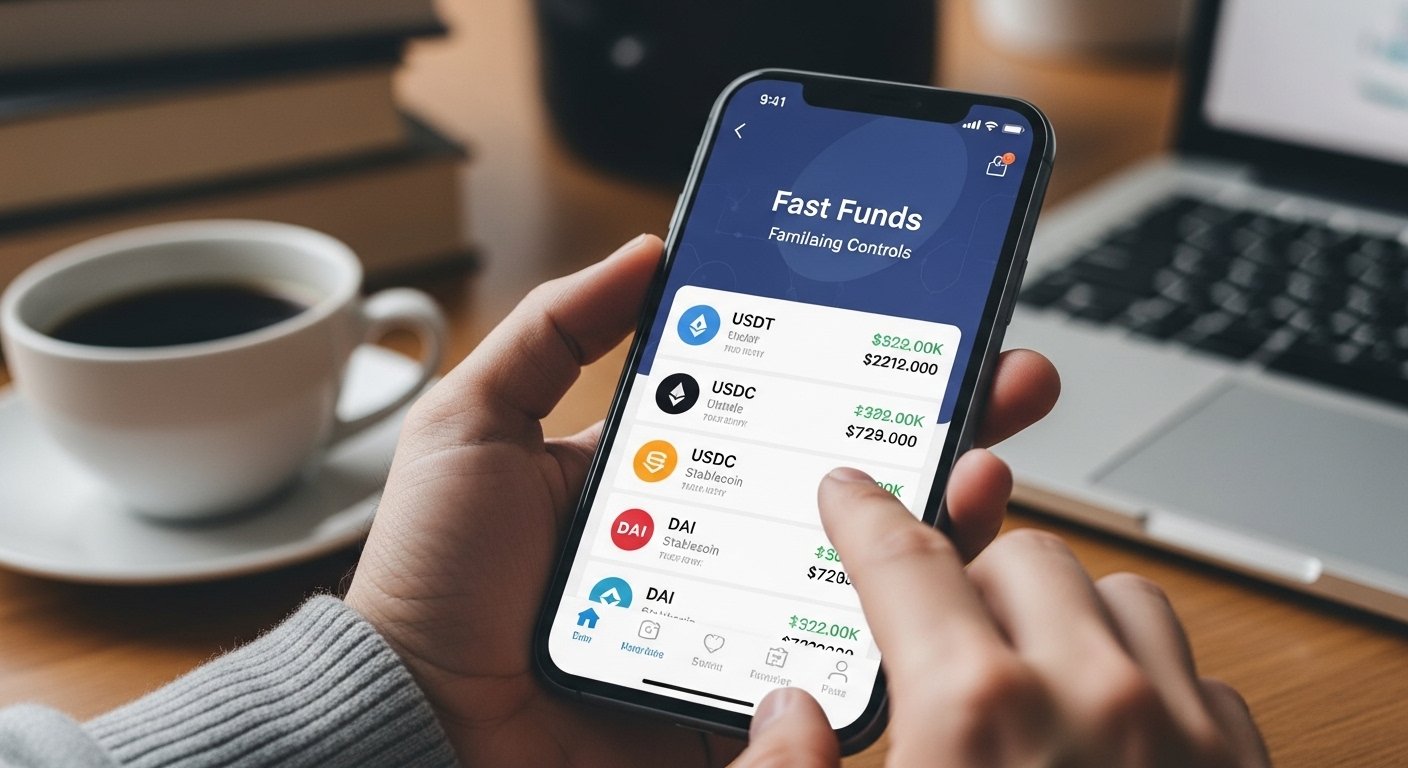
Fast Funds Familiar Controls Stablecoins in Daily Payments the global payments landscape is undergoing a silent but powerful transformation. For decades, consumers have relied on cash, debit cards, and online banking to move money. While digital banking has improved speed and convenience, it still comes with delays, fees, and cross-border friction. Into this evolving ecosystem step stablecoins, digital assets designed to maintain a stable value while delivering the efficiency of blockchain technology.
Fast funds familiar controls stablecoins fit into everyday payments not as a disruptive replacement of existing systems, but as a natural evolution. They combine the speed of blockchain transactions with the reliability and predictability users expect from traditional currencies. Unlike volatile cryptocurrencies, stablecoins are pegged to fiat currencies such as the US dollar, making them more suitable for daily spending, savings, and transfers.
As businesses and consumers seek faster, cheaper, and more secure ways to transact, stablecoins are increasingly positioned as a practical solution. From online shopping to international remittances, these digital currencies are moving beyond speculation and into real-world usage. We explores how fast funds familiar controls stablecoins fit into everyday payments, the technology behind them, their advantages, challenges, and what the future holds for this growing financial innovation.
Fast Funds Familiar Controls Stablecoins
Stablecoins are a type of digital currency built on blockchain networks but designed to maintain price stability. Unlike traditional cryptocurrencies such as Bitcoin or Ethereum, which experience significant price fluctuations, stablecoins are typically backed by fiat reserves or other assets to maintain a fixed value.
When discussing how fast funds familiar controls stablecoins fit into everyday payments, it is important to understand their foundational structure. Most stablecoins are categorized into fiat-backed, crypto-backed, or algorithmic models. Fiat-backed stablecoins are supported by real-world reserves held in banks. Crypto-backed stablecoins rely on other digital assets as collateral. Algorithmic stablecoins use automated supply adjustments to maintain price stability.
The combination of blockchain efficiency and asset-backed stability allows stablecoins to function as reliable mediums of exchange. This reliability is what makes them increasingly attractive for everyday payment scenarios.
The Rise of Fast Funds in the Digital Economy
The demand for instant financial transactions has grown significantly over the last decade. Consumers expect seamless digital experiences across platforms, whether ordering food, booking travel, or transferring money to family members abroad.
Fast funds familiar controls stablecoins fit into everyday payments because they enable near-instant settlement. Traditional bank transfers, especially cross-border ones, can take days to clear. In contrast, stablecoin transactions can settle within minutes or even seconds, depending on the blockchain network used.
This speed reduces counterparty risk, eliminates long waiting periods, and enhances overall financial efficiency. For businesses, quicker settlement means improved cash flow. For individuals, it means immediate access to funds without bureaucratic delays.
Familiar Controls: Bridging Traditional Finance and Blockchain
One reason stablecoins are gaining mainstream acceptance is their alignment with familiar financial controls. Users can access stablecoins through digital wallets, mobile banking apps, or fintech platforms that resemble traditional banking interfaces.
Fast funds familiar controls stablecoins fit into everyday payments by preserving regulatory oversight, compliance standards, and transparent auditing. Reputable stablecoin issuers often undergo reserve attestations and maintain compliance with financial regulations. This ensures users do not feel like they are venturing into an unregulated financial frontier.
In many cases, stablecoin transactions integrate with existing payment gateways, allowing merchants to accept digital assets without changing their operational processes drastically. This blending of old and new systems makes adoption smoother and less intimidating.
Stablecoins in E-Commerce and Retail Payments
E-commerce is one of the most promising arenas for stablecoin adoption. Online shoppers value speed, low fees, and global accessibility. Stablecoins meet all three criteria.
Fast funds familiar controls stablecoins fit into everyday payments by offering merchants a cost-effective alternative to credit card networks, which often charge significant transaction fees. By reducing reliance on intermediaries, stablecoin payments can lower costs for both businesses and consumers.
Retail adoption is also expanding. Some physical stores now experiment with digital wallets that support stablecoin transactions. As point-of-sale systems become more blockchain-compatible, stablecoins may become as common as contactless card payments.
Cross-Border Remittances and Financial Inclusion
Remittances represent a massive global market, particularly in developing economies. Traditional remittance services can be expensive and slow. Stablecoins provide a more efficient alternative.
Fast funds familiar controls stablecoins fit into everyday payments by enabling cross-border transfers with minimal fees and rapid settlement times. Migrant workers sending money home benefit from reduced transaction costs and faster delivery. Recipients gain immediate access to funds without relying on intermediaries that take a substantial cut.
Additionally, stablecoins can promote financial inclusion. Individuals without access to traditional banking systems can participate in digital economies using only a smartphone and internet connection. This democratization of finance is one of the most compelling aspects of stablecoin technology.
Security, Transparency, and Trust
Security remains a primary concern in digital payments. Blockchain technology provides enhanced transparency through public ledgers, where transactions can be verified in real time.
Fast funds familiar controls stablecoins fit into everyday payments because they combine cryptographic security with regulatory compliance. The use of blockchain technology ensures transaction integrity, while oversight frameworks build user trust.
Moreover, the integration of digital wallets, biometric authentication, and multi-factor security measures enhances protection against fraud. As users become more comfortable with digital assets, stablecoins may serve as a bridge between traditional finance and decentralized ecosystems.
The Role of Regulation in Everyday Adoption
Regulation plays a crucial role in determining how fast funds familiar controls stablecoins fit into everyday payments. Governments worldwide are developing frameworks to oversee stablecoin issuance, reserve management, and transaction monitoring.
Clear regulatory guidelines can strengthen consumer confidence and encourage institutional adoption. Financial authorities aim to balance innovation with risk mitigation. As compliance standards evolve, stablecoins may become fully integrated into national payment infrastructures. The development of digital payments infrastructure supported by stablecoins could redefine how governments distribute social benefits, process tax payments, and manage public funds.
Challenges and Limitations
Despite their promise, stablecoins face challenges. Questions about reserve transparency, systemic risk, and cybersecurity remain at the forefront of policy debates.
Fast funds familiar controls stablecoins fit into everyday payments only if these risks are addressed effectively. Issuers must maintain transparent auditing practices. Blockchain networks must scale to handle high transaction volumes without congestion.
Additionally, consumer education is vital. Many people still associate digital currencies with speculation rather than practical financial tools. Bridging this perception gap will require sustained awareness efforts and reliable user experiences.
Stablecoins and the Future of Digital Commerce
The future of digital commerce may depend heavily on frictionless payment systems. Stablecoins align well with the growing demand for borderless transactions, real-time settlements, and programmable money.
Fast funds familiar controls stablecoins fit into everyday payments by enabling automated financial processes through smart contracts. Subscription services, payroll disbursements, and supply chain payments can be executed seamlessly on blockchain networks.
As more businesses explore decentralized finance integrations, stablecoins could serve as foundational liquidity instruments. Their stability makes them ideal for transactional use while supporting broader blockchain innovation.
Integration with Traditional Financial Institutions
Banks and fintech companies are increasingly exploring stablecoin integration. Some institutions are developing custodial services and digital asset platforms to meet client demand.
Fast funds familiar controls stablecoins fit into everyday payments when traditional institutions collaborate rather than compete with blockchain innovators. Partnerships between banks and stablecoin issuers can enhance compliance, improve liquidity management, and ensure robust risk controls.
This hybrid model allows consumers to enjoy the speed and efficiency of stablecoins without abandoning trusted financial relationships.
Consumer Behavior and Everyday Spending Patterns
Consumer acceptance ultimately determines whether stablecoins achieve mainstream adoption. Behavioral patterns suggest that convenience and trust are primary drivers of payment method choice. Fast funds familiar controls stablecoins fit into everyday payments when they are as easy to use as mobile banking apps.
Seamless onboarding, intuitive interfaces, and transparent fee structures encourage regular usage. As younger generations become more comfortable with digital assets, stablecoins may naturally integrate into routine financial activities such as grocery shopping, bill payments, and peer-to-peer transfers.
The Global Economic Impact
The widespread adoption of stablecoins could reshape global financial dynamics. By reducing dependency on intermediaries, stablecoins may lower systemic costs and enhance economic efficiency. Fast funds familiar controls stablecoins fit into everyday payments in ways that extend beyond individual transactions. They may influence monetary policy, cross-border trade, and digital identity systems.
Emerging markets stand to benefit significantly from stablecoin integration, especially where local currencies face volatility or limited convertibility. In such contexts, stablecoins provide a reliable store of value and medium of exchange.
Conclusion
Fast funds familiar controls stablecoins fit into everyday payments because they strike a rare balance between innovation and familiarity. They deliver the speed and efficiency of blockchain technology while maintaining the stability and regulatory safeguards associated with traditional finance.
From e-commerce and remittances to financial inclusion and digital commerce automation, stablecoins are gradually embedding themselves into daily financial life. While challenges remain, ongoing regulatory development, technological advancements, and growing consumer awareness are paving the way for broader adoption.
As the digital economy continues to evolve, stablecoins may become a cornerstone of modern payment systems. Their ability to offer fast funds with familiar controls positions them as a practical and transformative solution in the future of global finance.
FAQs
Q: How do stablecoins maintain price stability while operating on blockchain networks?
Stablecoins maintain price stability by linking their value to underlying assets such as fiat currencies, commodities, or other digital assets. Most fiat-backed stablecoins hold reserves in regulated financial institutions to ensure each token corresponds to an equivalent unit of currency. This asset-backed model helps prevent the volatility seen in traditional cryptocurrencies. Additionally, transparency mechanisms like regular audits and reserve attestations strengthen trust. By combining blockchain efficiency with tangible backing, stablecoins achieve both stability and speed, making them practical for everyday payments.
Q: Are stablecoin payments safer than traditional digital payment methods?
Stablecoin payments leverage blockchain technology, which offers cryptographic security and transparent transaction records. While traditional payment systems rely on centralized databases, blockchain networks distribute data across multiple nodes, reducing the risk of single-point failures. However, safety also depends on wallet security, regulatory compliance, and issuer credibility. When used through reputable platforms with strong authentication protocols, stablecoin transactions can provide a high level of security comparable to, or even exceeding, traditional digital payment methods.
Q: Can stablecoins replace traditional banking systems for daily financial activities?
Stablecoins are not necessarily designed to replace banks entirely, but they can complement existing systems. They offer faster settlements and lower cross-border transaction costs. However, banks provide services such as lending, credit evaluation, and deposit insurance that stablecoins alone do not replicate. The likely future scenario involves integration, where banks incorporate stablecoin infrastructure to enhance service efficiency while maintaining regulatory oversight and consumer protections.
Q: What role do regulations play in the widespread adoption of stablecoins for everyday payments?
Regulation is essential for building consumer trust and preventing systemic risks. Clear guidelines ensure that stablecoin issuers maintain adequate reserves, comply with anti-money laundering laws, and protect user data. Regulatory clarity also encourages institutional participation, which can drive mainstream adoption. Without appropriate oversight, stablecoins may face credibility challenges. Therefore, balanced regulatory frameworks are key to ensuring stablecoins become a secure and reliable part of daily financial ecosystems.
Q: How might stablecoins influence the future of global commerce and cross-border trade?
Stablecoins have the potential to streamline international trade by reducing settlement times and transaction fees. Businesses engaged in cross-border commerce often face currency conversion costs and payment delays. Stablecoins can minimize these inefficiencies by enabling real-time transfers on a global scale. This capability enhances liquidity management and reduces counterparty risk. Over time, widespread stablecoin adoption could foster a more interconnected global economy, where digital payments move seamlessly across borders with speed and transparency.
