


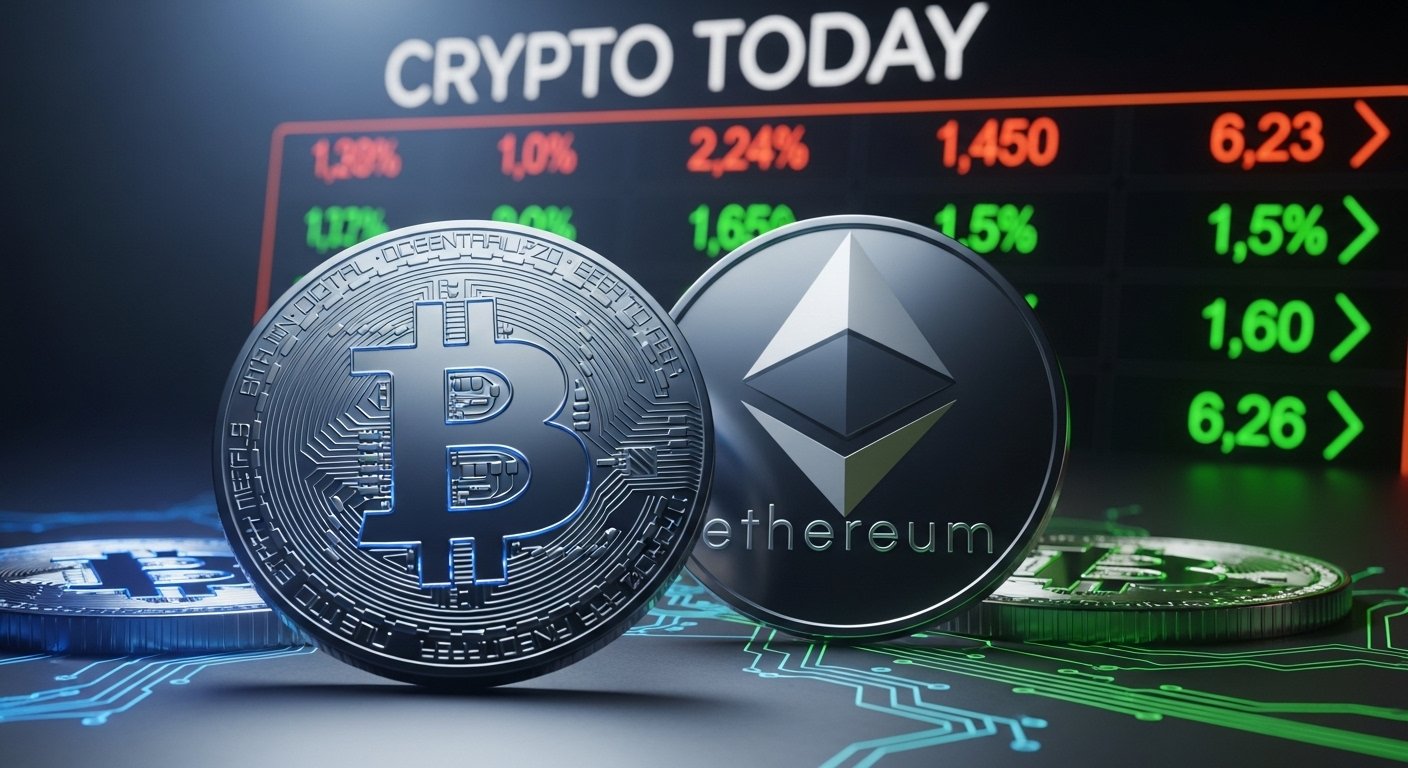
Crypto Today Bitcoin Ethereum XRP Hold Gains Amid War the global cryptocurrency market has once again demonstrated its resilience during a period of geopolitical uncertainty. As tensions escalate between the United States and Iran, financial markets across the world are experiencing volatility. Traditional markets such as equities, commodities, and foreign exchange often react sharply to geopolitical events, yet the crypto market has shown surprising stability. In the latest crypto today market update, leading digital assets including Bitcoin, Ethereum, and XRP have managed to maintain their weekly gains despite the uncertainty surrounding the US–Iran war.
For investors and analysts, this development highlights the evolving role of cryptocurrencies in the global financial system. Over the past decade, digital assets have gradually shifted from speculative instruments to alternative stores of value and hedge assets during uncertain economic conditions. While geopolitical tensions historically cause investors to move toward safe havens like gold or the US dollar, many market participants are now considering cryptocurrencies as part of their defensive investment strategies.
The current crypto today market analysis reveals that strong investor sentiment, growing institutional adoption, and increased blockchain innovation are helping major cryptocurrencies withstand macroeconomic shocks. Bitcoin price trends, Ethereum market performance, and XRP price stability are all reflecting confidence among traders even as the geopolitical landscape becomes increasingly complicated.
Understanding why the crypto market is holding its ground requires examining the interplay between global politics, investor psychology, and blockchain market fundamentals. We explores how Bitcoin, Ethereum, and XRP are performing during the US–Iran conflict, what factors are supporting their resilience, and what this could mean for the future of the cryptocurrency ecosystem.
Crypto Today Bitcoin Ethereum
Geopolitical conflicts have historically triggered turbulence in financial markets. Wars, sanctions, and diplomatic confrontations often lead to uncertainty regarding trade, energy supplies, and economic stability. When tensions rise between major global powers, investors typically respond by shifting capital toward assets perceived as safe.
The current situation involving the US–Iran conflict has already affected several traditional markets. Oil prices tend to rise due to fears of supply disruption in the Middle East, while stock markets may experience sudden sell-offs as investors attempt to reduce risk exposure. Currency markets also react quickly, with safe-haven currencies often strengthening during geopolitical crises.
However, the crypto today market environment presents a slightly different picture. Instead of experiencing panic selling, major cryptocurrencies have maintained their upward momentum over the past week. This suggests that digital assets are gradually being viewed as part of the global macroeconomic landscape rather than purely speculative instruments.
The cryptocurrency market volatility observed during geopolitical tensions can be influenced by several factors, including investor sentiment, liquidity, and global adoption. As cryptocurrencies become more integrated into mainstream finance, their behavior during global crises provides valuable insight into their long-term role within financial systems.
Crypto Today Market Overview
Despite rising geopolitical tensions, the crypto today market update shows that major cryptocurrencies remain stable and continue to hold weekly gains. Market capitalization across the digital asset sector has remained relatively steady, signaling that investors are not rushing to exit positions.
A combination of factors is supporting the current stability. Institutional investors have become more active participants in the cryptocurrency ecosystem, bringing higher liquidity and more structured trading strategies. Additionally, improvements in blockchain infrastructure and growing regulatory clarity in various countries are strengthening confidence in the market.
Another important aspect of the crypto market outlook is the increasing diversification within the sector. While Bitcoin, Ethereum, and XRP remain dominant assets, the broader ecosystem now includes decentralized finance platforms, tokenized assets, and various blockchain applications that contribute to overall market activity. This broader ecosystem creates a more resilient market structure. Rather than relying solely on speculative demand, cryptocurrencies are increasingly supported by real-world utility, technological innovation, and long-term investment strategies.
Bitcoin Holds Strong Amid Global Uncertainty
Bitcoin as a Digital Safe Haven
Among all cryptocurrencies, Bitcoin remains the most closely watched asset during periods of economic instability. Often referred to as digital gold, Bitcoin has developed a reputation as a store of value due to its limited supply and decentralized nature.
The current crypto today Bitcoin analysis shows that the asset has maintained its weekly gains despite geopolitical stress. This behavior reinforces the narrative that Bitcoin may serve as a hedge against macroeconomic risks. Investors seeking alternatives to traditional assets sometimes turn to Bitcoin when political or economic uncertainty increases. The Bitcoin market dominance remains strong, indicating that traders continue to trust the asset’s long-term value proposition.
Institutional Demand Supporting Bitcoin Price
One of the key factors supporting Bitcoin price stability is growing institutional participation. Over the past few years, hedge funds, asset managers, and financial institutions have increasingly allocated capital to cryptocurrency markets.
Institutional involvement tends to reduce extreme volatility because these investors typically adopt longer investment horizons and structured trading strategies. As a result, Bitcoin market trends often become less reactive to short-term news events. In the current crypto today market cycle, institutional demand is helping Bitcoin maintain its position even as geopolitical tensions dominate global headlines.
Ethereum Maintains Momentum in the Crypto Market
Ethereum’s Expanding Ecosystem
While Bitcoin is often seen as a store of value, Ethereum plays a different but equally important role in the cryptocurrency ecosystem. Ethereum powers a vast network of decentralized applications, smart contracts, and financial platforms.
The Ethereum market performance during the ongoing geopolitical tensions reflects the strength of this ecosystem. Even as global uncertainty grows, developers and users continue building applications on the Ethereum blockchain. This ongoing activity helps support Ethereum price stability because the network’s value extends beyond simple trading speculation.
Decentralized Finance Driving Ethereum Demand
A major driver of Ethereum market growth is the expansion of decentralized finance, commonly known as DeFi platforms. These blockchain-based financial services allow users to borrow, lend, trade, and earn interest without relying on traditional banks.
The rapid growth of decentralized finance ecosystems has increased demand for Ethereum’s native token because many DeFi applications require it for transaction fees and collateral. During periods of geopolitical uncertainty, alternative financial systems often gain attention. This dynamic helps explain why Ethereum continues to perform strongly in the crypto today market landscape.
XRP Shows Stability During Market Volatility
XRP’s Role in Cross-Border Payments
Another major cryptocurrency showing resilience is XRP, a digital asset designed primarily for cross-border payment solutions. XRP’s technology focuses on enabling fast and low-cost international transactions.
The XRP market analysis indicates that the asset has also maintained its weekly gains despite the global geopolitical climate. This stability suggests that investors continue to recognize the utility of XRP within global payment infrastructure. Financial institutions exploring blockchain-based payment systems may contribute to XRP adoption trends, further supporting its long-term potential.
Regulatory Developments Influencing XRP
Regulatory clarity plays a major role in shaping the XRP price outlook. Over recent years, legal developments and regulatory discussions surrounding XRP have influenced market sentiment. Positive developments regarding regulatory status often increase confidence among investors and institutions. As a result, the XRP market performance in the current crypto today environment reflects improving sentiment around its long-term viability.
Why the Crypto Market Remains Resilient
Increasing Global Adoption of Cryptocurrencies
One reason the crypto today market is maintaining stability is the rapid growth in global cryptocurrency adoption. Millions of new users enter the digital asset ecosystem each year, expanding the market’s user base. As adoption increases, cryptocurrencies become less dependent on speculative trading and more connected to real economic activity. This transformation strengthens the overall cryptocurrency market structure.
Technological Innovation in Blockchain
Another factor supporting crypto market resilience is continuous technological development. Blockchain networks are constantly evolving with improved scalability, security, and efficiency.
Advancements in blockchain technology innovation, smart contract platforms, and layer two scaling solutions contribute to stronger infrastructure across the digital asset ecosystem. These improvements make the market more capable of withstanding external shocks such as geopolitical conflicts.
Investor Psychology During Global Conflicts
Investor psychology plays a significant role in shaping market behavior during times of uncertainty. Traditionally, fear and uncertainty lead to risk-off sentiment in financial markets.
However, the crypto today sentiment analysis shows that many investors are maintaining confidence in digital assets. Some traders even view geopolitical instability as a catalyst for cryptocurrency adoption. The perception of cryptocurrencies as alternative financial assets is gradually gaining traction. As a result, digital assets may increasingly behave differently from traditional markets during geopolitical crises.
The Future Outlook for Crypto Markets
Looking ahead, the long-term outlook for the cryptocurrency market remains closely tied to global economic developments, regulatory frameworks, and technological innovation. If geopolitical tensions continue to rise, investors may increasingly explore decentralized financial systems as alternatives to traditional banking structures. This shift could accelerate the adoption of cryptocurrencies across different regions.
At the same time, regulatory clarity and infrastructure improvements will play crucial roles in shaping the future of digital assets. As governments establish clearer policies for cryptocurrency markets, institutional investors may feel more comfortable expanding their exposure. The current crypto today market stability during the US–Iran tensions suggests that the sector is gradually maturing. While volatility will always exist in emerging markets, cryptocurrencies are increasingly demonstrating their ability to withstand external shocks.
Conclusion
The latest crypto today market update reveals an important development in the evolution of digital assets. Despite escalating tensions in the US–Iran war, leading cryptocurrencies such as Bitcoin, Ethereum, and XRP have successfully maintained their weekly gains. This resilience highlights the growing maturity of the cryptocurrency ecosystem. Increasing institutional participation, expanding blockchain applications, and rising global adoption are all contributing to a stronger market foundation.
While geopolitical conflicts often create uncertainty across global financial markets, cryptocurrencies appear to be carving out a unique role within the modern economic landscape. Rather than collapsing under pressure, the crypto market is increasingly demonstrating stability and adaptability.
As the digital asset sector continues to evolve, its performance during periods of geopolitical stress will remain an important indicator of its long-term potential. For investors, policymakers, and technology innovators, the ability of cryptocurrencies to hold steady during global conflicts may signal a new chapter in the financial history of decentralized assets.
FAQs
Q: Why did Bitcoin, Ethereum, and XRP hold gains despite the US–Iran war?
The reason Bitcoin, Ethereum, and XRP were able to hold their gains despite the geopolitical tension between the United States and Iran is largely related to the maturity of the cryptocurrency market. Over the past decade, digital assets have evolved from niche speculative investments into widely recognized financial instruments. Institutional investors, hedge funds, and asset managers now participate actively in crypto trading, bringing more liquidity and stability to the market. Additionally, many investors view cryptocurrencies as potential hedges against economic and political uncertainty. During geopolitical crises, this perception can encourage traders to hold or even increase their crypto positions rather than panic selling.
Q: How do geopolitical conflicts usually affect cryptocurrency markets?
Geopolitical conflicts such as wars or diplomatic tensions can influence cryptocurrency markets in several ways. Initially, uncertainty often leads to increased volatility because traders react quickly to global news. However, cryptocurrencies sometimes benefit from geopolitical instability because they operate independently of traditional financial systems and government control. In some regions experiencing political instability, citizens may turn to digital assets to preserve wealth or move funds across borders. As adoption grows, the crypto market may continue developing characteristics similar to safe-haven assets during global crises.
Q: Is Bitcoin considered a safe-haven asset during global conflicts?
Many investors increasingly consider Bitcoin a potential safe-haven asset, although it does not behave exactly like traditional safe havens such as gold. Bitcoin’s fixed supply and decentralized structure make it attractive during times of monetary uncertainty or inflation concerns. During geopolitical conflicts, some investors purchase Bitcoin as a hedge against currency instability or financial system disruptions. However, it is still a relatively young asset class, and its safe-haven status continues to evolve as the cryptocurrency market matures and gains broader institutional acceptance.
Q: Why is Ethereum important to the crypto ecosystem during uncertain times?
Ethereum plays a vital role in the cryptocurrency ecosystem because it supports decentralized applications, smart contracts, and financial platforms. Unlike Bitcoin, which primarily serves as a store of value, Ethereum acts as a programmable blockchain infrastructure that powers entire ecosystems such as decentralized finance and blockchain gaming. During uncertain times, the continued development and usage of Ethereum-based applications provide fundamental demand for the network. This ongoing activity helps support Ethereum’s value and demonstrates that the crypto market is driven not only by speculation but also by technological utility.
Q: What does the resilience of XRP indicate about the future of crypto payments?
The stability of XRP during periods of global uncertainty highlights the growing interest in blockchain-based payment solutions. XRP was designed specifically to improve cross-border payment efficiency, making international transactions faster and cheaper compared to traditional banking systems. As financial institutions explore digital payment networks and blockchain integration, XRP’s underlying technology may gain increased attention. The ability of XRP to maintain market stability during geopolitical tension suggests that investors recognize the long-term potential of blockchain-driven payment infrastructure within the global financial system.
