


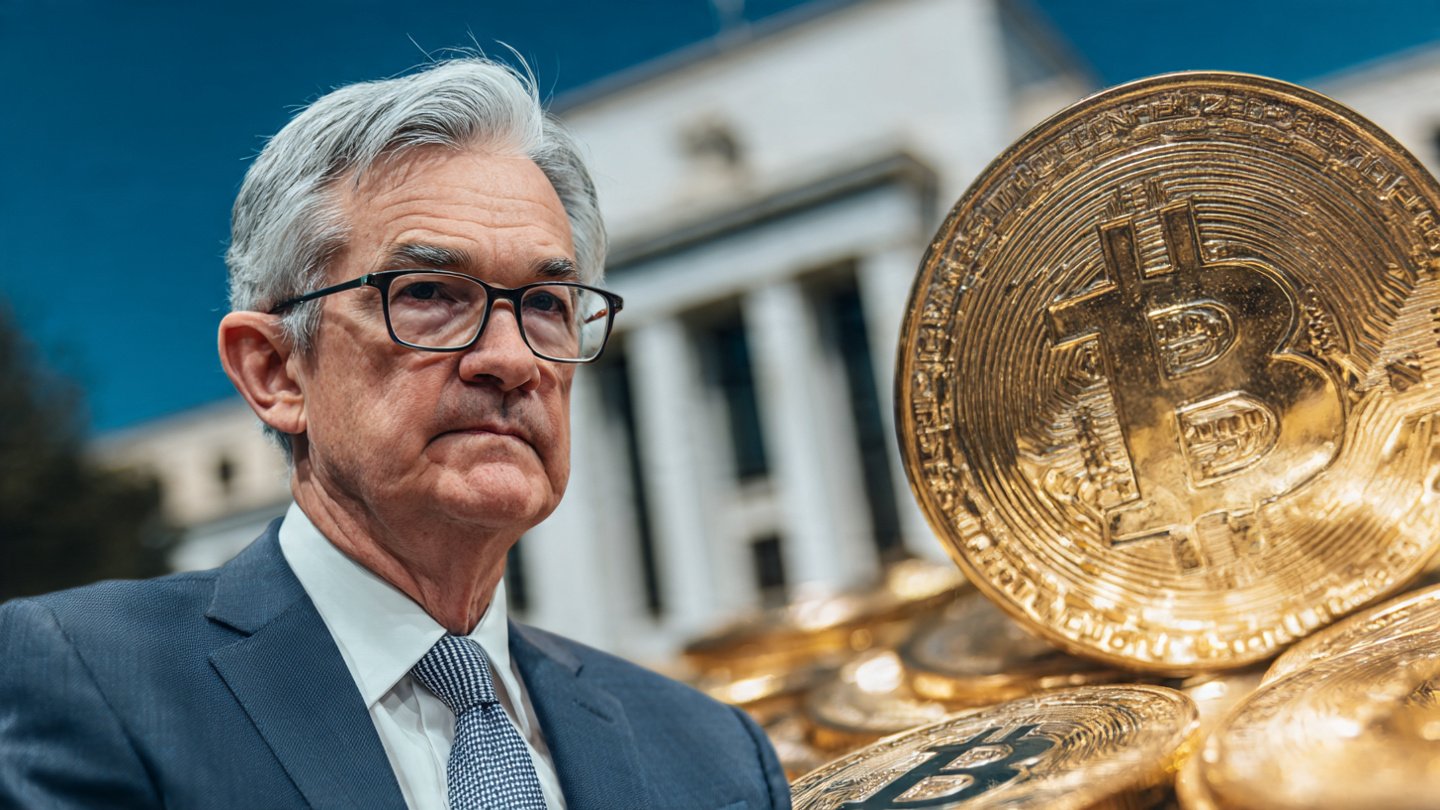
Bitcoin Fed Powell inflation The cryptocurrency market experienced dramatic turbulence dynamics created unprecedented volatility across digital asset platforms. Federal Reserve Chairman Jerome Powell’s careful balancing act between controlling rising prices and maintaining employment stability has sent shockwaves through the Bitcoin ecosystem, leaving investors scrambling to interpret the implications for their portfolios. Within the first hours of Powell’s latest policy statements, BitcoinBitcoin Fed Powell inflation prices fluctuated by more than eight percent, demonstrating the heightened sensitivity of cryptocurrency markets to traditional monetary policy decisions. As the world’s leading digital currency continues its complex dance with macroeconomic indicators, understanding the relationship between Federal Reserve actions and Bitcoin price movements has become essential for anyone navigating today’s financial landscape.
The Bitcoin Response to Federal Reserve Policy
Bitcoin Fed Powell inflation The intricate relationship between Bitcoin and Federal Reserve monetary policy has evolved dramatically over recent years. What once seemed like completely independent financial systems now demonstrate surprising interconnectedness. When Chairman Powell speaks about inflation targets or employment data, cryptocurrency traders listen with the same intensity as traditional equity investors.This connection stems from Bitcoin Fed Powell inflation growing maturation as an asset class. Institutional investors who once dismissed digital currencies now hold significant positions, treating Bitcoin with the same analytical rigor they apply to stocks, bonds, and commodities. These sophisticated market participants respond to Fed Powell inflation commentary because it directly impacts their broader investment strategies and risk management approaches.
Bitcoin Fed Powell inflation The mechanics behind this relationship involve several key factors. When the Federal Reserve signals tighter monetary policy to combat inflation, it typically strengthens the dollar and raises borrowing costs. These conditions historically pressure risk assets, including Bitcoin Fed Powell inflation, as investors retreat to safer havens. Conversely, dovish signals suggesting lower interest rates or continued accommodative policies often fuel Bitcoin rallies as investors seek alternative stores of value.Recent trading sessions have highlighted this dynamic with particular clarity. As Powell navigated questions about persistent inflation readings while acknowledging labor market softness, Bitcoin traders struggled to determine which narrative would dominate Fed policy. This uncertainty manifested in violent price swings that tested both bullish and bearish technical levels within compressed timeframes.
The Labor Market Puzzle and Cryptocurrency Implications

Chairman Powell’s emphasis on labor market conditions adds another layer of complexity to Bitcoin price predictions. The Federal Reserve’s dual mandate requires maintaining maximum employment alongside price stability, creating a delicate balancing act that reverberates through all financial markets including cryptocurrency exchanges.Current employment data presents mixed signals that complicate monetary policy decisions. While headline unemployment figures remain relatively low, other indicators suggest underlying weakness. Labor force participation rates, wage growth trends, and job quality metrics paint a nuanced picture that defies simple interpretation. Powell must weigh these competing signals when determining the appropriate trajectory for interest rates.
.The cryptocurrency community has developed sophisticated frameworks for analyzing these macro dynamics. On-chain analytics, sentiment indicators, and derivatives markets all provide clues about how traders are positioning for various Fed Powell scenarios. Options markets, in particular, reveal expectations about future volatility and directional bias, offering valuable insights for both short-term traders and long-term holdersProfessional cryptocurrency analysts increasingly incorporate traditional economic indicators into their research processes. Inflation expectations, real interest rates, and dollar strength indexes now feature prominently alongside blockchain-specific metrics. This convergence reflects Bitcoin’s evolution from fringe speculation to mainstream financial instrument subject to the same forces affecting conventional assets.
Inflation Dynamics and Bitcoin as Digital Gold
The relationship between inflation and Bitcoin remains one of the most debated topics in cryptocurrency circles. Proponents have long argued that Bitcoin’s fixed supply makes it an ideal hedge against currency debasement, earning it the nickname “digital gold.” However, recent price action has complicated this narrative, with Bitcoin sometimes moving in tandem with inflation-sensitive tech stocks rather than traditional inflation hedges.Powell’s communications about inflation trajectories carry outsized importance for this debate. When the Fed chairman acknowledges persistent price pressures, it theoretically should boost Bitcoin’s appeal as an alternative store of value. Yet market reactions don’t always follow this logical script. During recent inflation scares, Bitcoin has occasionally sold off alongside other risk assets, suggesting investors view it more as a speculative growth asset than a defensive hedge.
Looking deeper into inflation dynamics reveals additional complexities. Different types of inflation may affect Bitcoin differently. Demand-driven inflation in a growing economy creates a different backdrop than supply-shock inflation or wage-price spiral scenarios. Powell’s task involves identifying which forces are driving price increases and calibrating policy responses accordingly, with each scenario potentially triggering distinct Bitcoin market reactions.Historical analysis provides some guidance, though cryptocurrency’s relatively brief existence limits the available data. During previous inflation episodes, Bitcoin has shown both positive and negative correlations with consumer price indices depending on concurrent factors like regulatory developments, technological progress, and overall market liquidity conditions. This inconsistency makes simple rules-of-thumb unreliable for predicting Bitcoin behavior during inflation cycles.
Technical Analysis During Fed-Driven Volatility
Understanding Bitcoin’s technical position becomes crucial when fundamental drivers like Fed Powell statements create uncertainty. Chart patterns, support and resistance levels, and momentum indicators help traders navigate turbulent conditions even when macroeconomic narratives remain unclear.Recent price action has tested several key technical zones that technical analysts watch closely. The psychological threshold of certain price levels often acts as a magnet during volatile periods, with Bitcoin repeatedly testing these areas as traders reassess their positions based on evolving Fed policy expectations. Volume analysis during these tests reveals whether buying or selling pressure dominates, providing clues about likely near-term direction.
Volatility metrics deserve special attention during periods of Fed-induced uncertainty. Implied volatility derived from options markets often spikes around major policy announcements, reflecting increased uncertainty about future price movements. Historical volatility measurements help contextualize current conditions, showing whether present swings are unusual or typical for Bitcoin during monetary policy transitions.The interplay between technical and fundamental factors creates opportunities for sophisticated traders. When Powell delivers hawkish surprises that push Bitcoin to oversold technical conditions, contrarian traders may find attractive entry points. Conversely, dovish surprises pushing Bitcoin to overbought extremes might warrant profit-taking even if the fundamental narrative appears bullish.
Global Implications of US Monetary Policy on Bitcoin Markets
While the Federal Reserve operates with a domestic mandate, its decisions reverberate globally with particular force in cryptocurrency markets that operate twenty-four hours across all time zones. Powell’s policy choices influence not just American Bitcoin traders but the entire worldwide ecosystem of digital asset participants.Dollar strength represents one key transmission mechanism. When Fed policy drives dollar appreciation, it affects cryptocurrency purchasing power for international investors who typically transact in dollar-denominated pairs. A stronger dollar makes Bitcoin more expensive for buyers using euros, yen, or emerging market currencies, potentially dampening demand from these regions even as dollar-based investors remain active.
Emerging market dynamics deserve particular attention in this context. Many developing nations face heightened inflation pressures that their central banks struggle to contain. In these environments, local populations sometimes turn to Bitcoin as a store of value superior to rapidly depreciating local currencies. However, if Fed tightening triggers currency crises or capital flight from emerging markets, even these adoption drivers may be overshadowed by broader market stress.The geographic distribution of Bitcoin mining operations also intersects with Fed policy through energy costs and financing conditions. Miners operating in regions with dollar-linked economies face changing cost structures when US monetary policy shifts. Higher interest rates increase capital costs for mining equipment and operations, potentially forcing marginal miners offline and affecting network hash rate distributions.
Institutional Investment and the Fed’s Influence on Bitcoin
 Bitcoin Fed Powell inflation The entrance of institutional investors into cryptocurrency markets has fundamentally altered how Bitcoin responds to Fed Powell statements. Major asset managers, hedge funds, pension plans, and corporate treasuries now hold significant Bitcoin positions, subjecting the asset to the same risk management frameworks applied to traditional portfolios.These institutional participants employ sophisticated models incorporating Fed policy expectations, inflation forecasts, and monetary conditions when determining cryptocurrency allocations. When Powell signals policy directions that favor or disfavor risk assets broadly, institutional trading desks adjust Bitcoin exposure accordingly, often with substantial order sizes that can move markets significantly.
Regulatory considerations add complexity to institutional cryptocurrency participation. As lawmakers and regulators worldwide grapple with digital asset frameworks, Fed policy choices can indirectly influence the regulatory environment. Aggressive tightening that stresses financial systems might prompt regulatory interventions affecting cryptocurrency markets, while stable conditions could allow more measured policy development.The maturation of cryptocurrency financial infrastructure has facilitated institutional participation while simultaneously tying Bitcoin more closely to traditional finance. Regulated futures and options exchanges, custody solutions meeting institutional standards, and the emergence of Bitcoin exchange-traded products have lowered barriers to entry. However, this integration means Powell’s policy decisions now flow through multiple channels affecting Bitcoin prices.
Future Scenarios and Strategic Positioning
Bitcoin Fed Powell inflation Looking ahead, several potential scenarios could emerge from the current interplay between Fed Powell policy decisions and Bitcoin markets. Each scenario presents distinct implications for cryptocurrency investors attempting to position portfolios appropriately.One possibility involves inflation proving more persistent than currently anticipated, forcing the Fed to maintain restrictive policy longer. In this scenario, Bitcoin might face continued pressure as tight monetary conditions weigh on all risk assets. However, the same persistent inflation could eventually strengthen Bitcoin’s appeal as a monetary alternative, potentially creating attractive accumulation opportunities for patient investors willing to weather near-term volatility.
A third scenario involves stagflation-like conditions where inflation remains elevated while economic growth stalls. This difficult environment would test Powell’s policy skills and could produce particularly complex effects on Bitcoin. The asset might benefit from inflation hedge narratives while simultaneously suffering from risk-off sentiment and deteriorating economic fundamentals.Strategic positioning in this uncertain environment requires balancing multiple considerations. Dollar-cost averaging allows investors to build Bitcoin exposure gradually without attempting to time volatile swings driven by Fed announcements. Position sizing appropriate to risk tolerance ensures that inevitable volatility doesn’t force poorly timed exits. Maintaining awareness of key technical levels and Fed policy milestones helps inform tactical adjustments to core strategic holdings.
Conclusion
Bitcoin Fed Powell inflation The wild swings in Bitcoin prices triggered by Fed Powell’s careful navigation of inflation and labor market challenges underscore the growing integration between cryptocurrency markets and traditional monetary policy. Understanding this relationship has become essential for anyone serious about Bitcoin investment, whether approaching digital assets as speculative trades or long-term strategic holdings.As Chairman Powell continues balancing the Federal Reserve’s dual mandate, Bitcoin investors must develop frameworks that account for monetary policy dynamics alongside cryptocurrency-specific factors. The days of treating digital assets as completely divorced from conventional finance have passed, replaced by a more nuanced reality where Fed decisions materially impact Bitcoin prices through multiple channels.
Successfully navigating Bitcoin Fed Powell inflation dynamics requires combining macroeconomic awareness with cryptocurrency market expertise, technical analysis skills, and disciplined risk management. Investors who develop these capabilities will be better positioned to capitalize on opportunities created by volatility while avoiding the pitfalls that trap less prepared market participants.For those seeking to understand how Bitcoin will respond to future Fed Powell policy decisions regarding inflation and employment, staying informed about both monetary policy developments and cryptocurrency market structure remains crucial. The intersection of these domains will likely drive Bitcoin price action for the foreseeable future, making this knowledge essential for investment success.
