




The Bitcoin mining difficulty has concluded 2025 with a noteworthy development in its mining landscape. After experiencing a sustained three-month decline in mining difficulty, the network has registered a modest upward adjustment, signaling a potential stabilization in the competitive dynamics of cryptocurrency mining. This shift comes at a critical juncture for the industry, as miners navigate an increasingly complex environment shaped by technological advancements, economic pressures, and evolving market conditions.
The Bitcoin mining difficulty metric serves as one of the most important indicators of network health and miner participation. As we close out 2025, understanding this recent uptick requires examining the broader context of what transpired during the preceding months of decline and what it means for the future of Bitcoin mining operations worldwide.
Bitcoin Mining Difficulty and Its Significance
Bitcoin mining difficulty represents the measure of how challenging it is to find a new block on the blockchain. This self-adjusting mechanism ensures that blocks are discovered approximately every ten minutes, regardless of the total computational power deployed by miners across the globe. When more miners join the network and the hash rate increases, the difficulty adjusts upward to maintain this consistent block time. Conversely, when miners drop off the network, difficulty decreases.
For miners, difficulty directly impacts profitability. Higher difficulty means more computational resources are required to solve the cryptographic puzzles that validate transactions and mint new Bitcoin. This translates to increased electricity consumption and hardware requirements, potentially squeezing profit margins for operations that aren’t running efficiently or don’t have access to cheap power sources.
The Three-Month Decline: What Happened?
The three-month decline in Bitcoin mining difficulty that preceded the year-end uptick was unprecedented in its duration and raised important questions about the state of the mining industry. Several interconnected factors contributed to this sustained downward trend, each reflecting different pressures facing mining operations globally.Throughout the latter part of 2025, many mining operations faced mounting economic challenges. Energy costs, which typically represent the largest operational expense for miners, remained elevated in numerous regions. Additionally, the Bitcoin price volatility during this period created uncertainty around revenue projections, forcing some miners to reassess their operations or temporarily shut down less efficient equipment.
The decline also coincided with seasonal factors in certain mining hubs. Some operations in regions dependent on hydroelectric power experienced reduced capacity during dry seasons, while others faced regulatory uncertainties that prompted cautious scaling back of activities. The cumulative effect of these pressures resulted in a measurable reduction in the total network hash rate, which in turn triggered successive downward difficulty adjustments.Another contributing factor was the ongoing evolution of mining hardware. As newer, more efficient ASIC miners entered the market, some operators chose to pause operations while upgrading their equipment fleets rather than continue mining with less competitive machinery. This strategic repositioning, while temporary, contributed to the overall decline in network participation.
The Modest Year-End Recovery
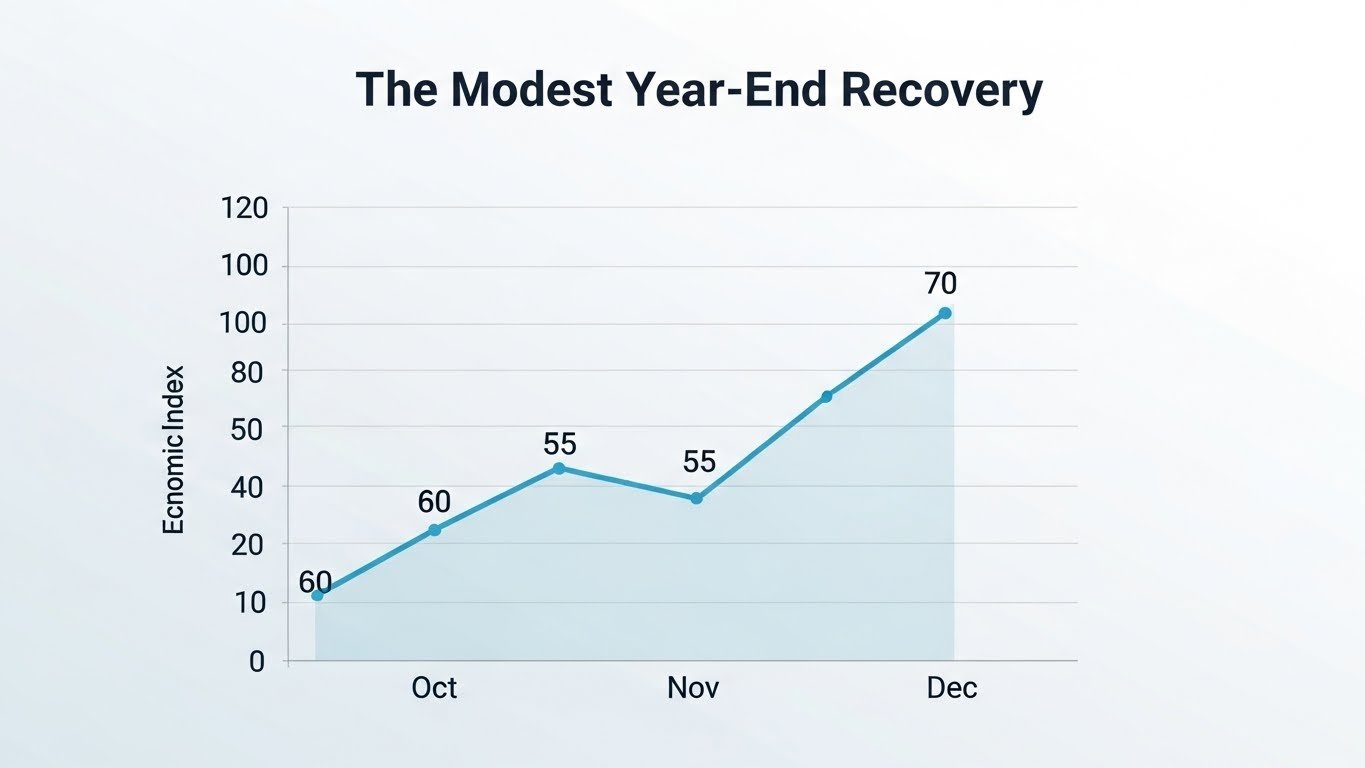

As 2025 draws to a close, the modest rise in Bitcoin mining difficulty suggests that the exodus of miners has stabilized and that some operations have either returned to the network or new participants have entered the space. While the increase is described as modest, indicating it wasn’t a dramatic surge, it nonetheless represents an important psychological and technical milestone for the industry.This uptick likely reflects several positive developments. First, miners who had been operating on the margins may have found renewed profitability as the difficulty decreased over the preceding months, making it easier to mine blocks with existing equipment. Second, the stabilization or improvement in Bitcoin’s price during the late 2025 period may have provided the economic breathing room needed for miners to recommit to their operations.
The cryptocurrency mining landscape also benefited from innovations in energy efficiency and creative solutions to power sourcing. Some mining operations successfully negotiated better electricity rates, partnered with renewable energy providers, or implemented heat recycling systems that improved their overall economics. These operational improvements allowed more miners to remain competitive even as the network difficulty began its modest recovery.Additionally, geographic diversification of mining operations continued throughout 2025, with new mining centers emerging in regions with favorable regulatory environments and abundant energy resources. This diversification not only strengthened the network’s decentralization but also provided resilience against localized disruptions that might have otherwise impacted global hash rate more severely.
Implications for Bitcoin Miners
The trajectory of Bitcoin mining difficulty through 2025 carries significant implications for mining operations of all sizes. Large-scale industrial miners with access to capital and efficient operations likely weathered the three-month decline relatively well, using the period to optimize their infrastructure and potentially acquire distressed assets from competitors who exited the market.For smaller mining operations and independent miners, the decline provided temporary relief from competitive pressures. The reduced difficulty meant that miners with less powerful equipment could still profitably participate in securing the network. However, the year-end uptick serves as a reminder that competition in Bitcoin mining remains intense and that efficiency gains are not optional but necessary for long-term survival.
The mining profitability equation extends beyond just difficulty adjustments. Miners must constantly evaluate their operational costs, equipment efficiency, and market positioning. The events of late 2025 reinforced the importance of operational excellence, strategic planning, and financial resilience. Miners who maintained their operations through the difficult period despite reduced profitability margins are now positioned to benefit from their persistence.Looking ahead, miners are likely to continue investing in next-generation mining equipment that offers superior energy efficiency. The ongoing development of more powerful ASIC chips means that the arms race in mining technology shows no signs of slowing. Miners who fail to upgrade their equipment risk becoming uncompetitive as the network difficulty continues its long-term upward trajectory despite short-term fluctuations.
Network Security and Decentralization Considerations
The health of the Bitcoin network depends fundamentally on maintaining robust security through distributed mining participation. The three-month difficulty decline raised questions about whether a sustained exodus of miners could potentially concentrate hash power among fewer participants, which could theoretically compromise the network’s decentralization.However, the modest recovery at year’s end suggests that Bitcoin’s economic incentive structure continues to function as designed. When difficulty decreases, mining becomes more accessible and profitable, naturally attracting participants back to the network. This self-balancing mechanism helps ensure that Bitcoin remains sufficiently decentralized to resist centralization risks.
The hash rate distribution across different geographic regions and mining pools also plays a crucial role in network security. Industry observers note that while individual mining operations may come and go based on economic conditions, the overall distribution of mining power has remained relatively healthy throughout 2025. No single entity or pool controls a majority of the network’s computing power, which is essential for maintaining Bitcoin’s trustless nature.From a security perspective, even during the three-month decline, the Bitcoin network maintained more than sufficient hash power to defend against potential attacks. The sheer scale of computational resources required to compromise Bitcoin’s proof-of-work security remains astronomically high, providing confidence to users and investors that their holdings remain secure regardless of short-term fluctuations in mining difficulty.
Economic Factors Shaping Mining Dynamics
The cryptocurrency market conditions throughout 2025 played a pivotal role in shaping mining dynamics and the difficulty adjustments observed. Bitcoin’s price movements directly impact miner revenue, as block rewards and transaction fees are denominated in BTC. When prices decline or remain stagnant, the dollar value of mining rewards decreases, potentially pushing marginal operations into unprofitability.Energy markets also exerted significant influence on mining economics during this period. The global energy landscape remained volatile, with some regions experiencing price spikes while others benefited from surplus renewable energy production. Miners with flexible operations that could shift resources to locations with favorable energy costs gained competitive advantages over those locked into less optimal arrangements.
The halving event that occurred in 2024 continued to reverberate through the mining industry in 2025. The reduction in block rewards from 6.25 BTC to 3.125 BTC fundamentally altered the economics of mining, requiring miners to become more efficient or rely more heavily on transaction fee revenue. This structural change contributed to the competitive pressures that some miners found unsustainable during the three-month decline period.Investment in mining infrastructure also reflected broader economic conditions. During periods of uncertainty, capital for expanding mining operations became more expensive and harder to secure. Conversely, when confidence returns to the market, investment capital flows more freely, enabling miners to upgrade equipment and expand capacity. The year-end modest recovery may signal renewed investor confidence in the sector’s long-term viability.
Technological Advancements in Mining Hardware


The continuous evolution of mining technology significantly influences difficulty trends and competitive dynamics within the industry. Throughout 2025, manufacturers released new generations of ASIC miners with improved energy efficiency and higher hash rates, creating ongoing pressure for miners to upgrade their equipment or risk obsolescence.The newest mining rigs demonstrated substantial improvements in performance-per-watt metrics, meaning they could deliver more computational power while consuming less electricity. This technological progress helps offset the long-term upward trend in mining difficulty, allowing efficient operations to maintain profitability even as competition intensifies. Miners who invested in cutting-edge equipment positioned themselves advantageously for the modest difficulty recovery at year’s end.
Innovations extended beyond just raw computational power. Cooling systems, facility design, and energy management systems all saw improvements that enhanced overall operational efficiency. Some mining operations implemented immersion cooling technology, which dramatically improves heat dissipation and allows miners to operate at higher densities without thermal throttling. These technological refinements contribute to making mining more sustainable and economically viable.The development of more efficient mining hardware also has environmental implications. As the Bitcoin mining industry faces increasing scrutiny regarding its energy consumption, improvements in efficiency help reduce the environmental footprint per unit of hash rate produced. Many mining operations are also increasingly powered by renewable energy sources, further addressing sustainability concerns while potentially benefiting from lower energy costs.
Future Outlook for Bitcoin Mining
As we move beyond 2025, the trajectory of Bitcoin mining difficulty will continue to reflect the complex interplay of economic, technological, and market factors. The modest year-end recovery suggests that the industry has found a temporary equilibrium, but ongoing developments will likely drive further adjustments in both directions.Several trends appear poised to shape the mining landscape in the coming years. First, the continued professionalization and industrialization of mining means that large-scale operations with access to cheap power and capital will likely command an increasing share of the network’s hash rate. However, innovations in home mining and small-scale operations may create new opportunities for distributed participation.
Second, regulatory developments across different jurisdictions will significantly impact where and how mining occurs. Countries that embrace cryptocurrency mining with clear regulations and support for renewable energy integration will likely attract investment and operations, while those imposing restrictions may see domestic mining activity decline. This regulatory divergence will contribute to the ongoing geographic diversification of Bitcoin mining.Third, the evolution of Bitcoin’s fee market will become increasingly important for mining economics. As block subsidy rewards continue to diminish through future halving events, transaction fees must increasingly compensate miners for securing the network. The development of second-layer solutions like the Lightning Network, alongside increased on-chain activity, will shape the revenue opportunities available to miners.
Conclusion
The modest rise in Bitcoin mining difficulty at the end of 2025, following three months of decline, represents more than just a statistical adjustment in the network’s self-regulating mechanism. It tells a story of resilience, adaptation, and the ongoing evolution of the cryptocurrency mining industry through challenging conditions. The three-month decline period tested the resolve and efficiency of mining operations worldwide, forcing marginal participants to exit while allowing the most competitive miners to strengthen their positions.The year-end recovery, though modest, signals that Bitcoin’s economic incentive structure continues to function effectively, attracting computational power back to the network when conditions improve. This demonstrates the robustness of the proof-of-work consensus mechanism and provides confidence that the network can weather various economic and operational challenges while maintaining its security and decentralization.
For miners, the lessons of 2025 are clear: efficiency, strategic planning, and operational excellence are non-negotiable requirements for long-term success. The industry continues to mature, with technological advancements, geographic diversification, and professional management practices becoming standard rather than exceptional. As Bitcoin mining moves forward, the ability to adapt to changing conditions while maintaining profitability will separate successful operations from those that cannot compete.The Bitcoin network remains secure and decentralized, with sufficient hash power to resist attacks and sufficient distribution to prevent dangerous concentration of mining power. As we look ahead, the fundamental value proposition of Bitcoin as a decentralized, censorship-resistant digital asset continues to drive mining participation, ensuring that the network remains one of the most secure computing systems ever created.
FAQs:
Q: What is Bitcoin mining difficulty and why does it matter?
Bitcoin mining difficulty is a measure of how hard it is to find a new block on the blockchain. It matters because it directly affects mining profitability and ensures that new blocks are discovered approximately every ten minutes, maintaining the network’s security and predictable issuance schedule. Higher difficulty means more competition among miners and typically indicates a healthy, secure network.
Q: Why did Bitcoin mining difficulty decline for three months in 2025?
The three-month decline resulted from multiple factors including elevated energy costs, Bitcoin price volatility, seasonal variations in renewable energy availability, and some miners temporarily shutting down operations to upgrade equipment. When miners leave the network, the total hash rate decreases, which triggers automatic downward difficulty adjustments to maintain the ten-minute block time target.
Q: How does mining difficulty affect individual miners?
Mining difficulty directly impacts profitability for individual miners. When difficulty increases, more computational power is required to mine blocks, which means higher electricity costs and potentially lower rewards per unit of hash power deployed. Conversely, when difficulty decreases, mining becomes easier and potentially more profitable for existing participants, assuming other factors like Bitcoin price remain stable.
Q: What does the year-end modest recovery indicate about the mining industry?
The modest recovery suggests stabilization in the mining industry after a period of adjustment. It indicates that some miners have returned to the network or new participants have joined, likely due to improved economic conditions, better energy pricing, or completion of equipment upgrades. This recovery demonstrates the self-correcting nature of Bitcoin’s mining ecosystem.
Q: How can miners remain profitable as difficulty continues to evolve?
Miners can maintain profitability by continuously improving operational efficiency through equipment upgrades, securing access to low-cost energy sources (particularly renewable energy), optimizing facility cooling and power management, and maintaining financial flexibility to weather market volatility. Geographic diversification and strategic planning for halving events are also crucial for long-term mining success.


