



BlackRock Warns Crypto’s AI Boom Is Over as Bitcoin Energy War Looms the cryptocurrency market is entering a decisive and uncomfortable transition. As artificial intelligence surged into the spotlight, crypto projects rushed to brand themselves as AI-powered solutions, promising revolutionary efficiency, automation, and intelligence across decentralized systems. Yet according to one of the world’s most influential asset managers, that phase may be ending. BlackRock warns crypto’s love affair with AI is over as an energy war with Bitcoin miners begins, signaling a new chapter where power consumption, infrastructure competition, and economic realism take center stage.
This warning reflects more than a temporary shift in narrative. It suggests a structural conflict emerging between two of the most energy-intensive technologies of the modern era: large-scale AI computation and proof-of-work cryptocurrency mining. As both industries scale, their demand for electricity, data centers, and grid priority is colliding. In this environment, investors, regulators, and energy providers are reassessing assumptions that once fueled optimism. Understanding why BlackRock warns crypto’s love affair with AI is over as an energy war with Bitcoin miners begins requires a deeper look at market cycles, energy economics, and the evolving priorities of institutional capital.
BlackRock Warns Crypto
Crypto’s fascination with AI did not emerge in a vacuum. It grew from a broader technological convergence where blockchain promised decentralization and AI promised intelligence. Together, they appeared to offer a powerful combination capable of transforming finance, data management, and digital ownership.
For a period, AI-themed crypto tokens, platforms, and narratives dominated market attention. Projects claimed to use machine learning for trading optimization, fraud detection, decentralized data analysis, and autonomous decision-making. This enthusiasm pushed valuations higher and drew speculative capital into AI-branded ecosystems.
However, as BlackRock warns crypto’s love affair with AI is over as an energy war with Bitcoin miners begins, it becomes clear that enthusiasm outpaced practicality. Many AI-crypto projects struggled to demonstrate real differentiation or sustainable economic models. The narrative began to weaken as investors demanded measurable results rather than conceptual synergy.
Why BlackRock’s Warning Carries Weight
BlackRock’s perspective matters because it reflects institutional thinking rather than retail speculation. As the world’s largest asset manager, BlackRock evaluates trends through the lens of risk, scalability, and long-term capital allocation.
When BlackRock warns crypto’s love affair with AI is over as an energy war with Bitcoin miners begins, it signals a reassessment of priorities. Institutional investors are less interested in thematic hype and more focused on infrastructure constraints, regulatory exposure, and cost structures. Energy consumption, once treated as an abstract concern, is now a concrete variable shaping investment decisions.
This shift highlights a broader maturation of the crypto market, where narratives must align with economic and physical realities.
Understanding the Energy Demands of AI and Bitcoin
At the heart of this transition lies energy. Both AI and Bitcoin mining require massive computational resources, which translate directly into electricity consumption.
AI’s Growing Appetite for Power
Modern AI systems rely on large-scale data centers equipped with specialized hardware. Training and running advanced models consumes enormous amounts of energy, particularly as demand for real-time inference and large datasets increases.
As AI adoption accelerates across industries, competition for power and infrastructure intensifies. Governments and corporations are prioritizing AI as a strategic asset, further increasing pressure on energy grids.
Bitcoin Mining and Proof-of-Work Economics
Bitcoin mining is inherently energy-intensive by design. The proof-of-work mechanism secures the network through computational effort, which requires electricity. While miners continually seek efficiency improvements and renewable sources, the aggregate demand remains substantial.
When BlackRock warns crypto’s love affair with AI is over as an energy war with Bitcoin miners begins, it points to a collision where two power-hungry sectors vie for the same finite resources.
The Emerging Energy War Explained
The term energy war does not imply open conflict but rather economic competition. Energy providers, regulators, and policymakers must decide how limited resources are allocated.
Competing for Grid Priority
As AI data centers and Bitcoin mining operations expand, both seek reliable, low-cost electricity. In regions where grid capacity is constrained, prioritization becomes inevitable. Governments may favor AI due to its perceived economic and strategic benefits, leaving Bitcoin miners at a disadvantage.
Rising Energy Costs and Profit Margins
Increased competition drives up energy prices, squeezing profit margins. For Bitcoin miners, higher electricity costs directly affect viability. For AI-driven crypto projects, operational expenses rise, challenging sustainability.
This dynamic reinforces why BlackRock warns crypto’s love affair with AI is over as an energy war with Bitcoin miners begins, emphasizing cost realities over conceptual appeal.
Investor Sentiment Shifts Away From AI Hype
Market sentiment often moves faster than fundamentals, but it eventually aligns with them. The cooling of AI enthusiasm in crypto reflects this process.
From Narrative to Numbers
Investors are increasingly scrutinizing revenue models, operational costs, and scalability. AI integration alone is no longer enough to justify valuation. Projects must demonstrate tangible benefits that outweigh their energy and infrastructure demands.
Reduced Tolerance for Speculative Themes
As macroeconomic conditions tighten and capital becomes more selective, speculative themes lose traction. BlackRock’s warning encapsulates this shift, suggesting that crypto’s AI narrative no longer offers the risk-adjusted appeal it once did.
Bitcoin Miners Under Pressure
Bitcoin miners are directly impacted by the emerging energy competition. Their business models depend on predictable access to affordable electricity.
Regulatory and Environmental Scrutiny
Bitcoin mining already faces environmental criticism. As AI gains political and economic favor, regulators may impose stricter rules on mining operations to redirect energy toward prioritized industries.
Consolidation and Survival of the Efficient
Rising costs may force smaller or less efficient miners out of the market. This consolidation could strengthen the network long-term but adds short-term stress and uncertainty.
The notion that BlackRock warns crypto’s love affair with AI is over as an energy war with Bitcoin miners begins reflects these mounting pressures on mining economics.
The Broader Impact on the Crypto Ecosystem
The energy war extends beyond miners and AI projects. It influences how the entire crypto ecosystem evolves.
Shift Toward Energy-Efficient Models
Projects may increasingly favor proof-of-stake, layer-two scaling, and off-chain computation to reduce energy consumption. This shift aligns with investor and regulatory preferences.
Reevaluating Innovation Priorities
Innovation does not disappear, but its focus changes. Rather than chasing AI integration, developers may prioritize efficiency, interoperability, and real-world utility.
Institutional Capital and Strategic Realignment
Institutional investors shape long-term trends by directing capital toward sectors with favorable risk-reward profiles.
Infrastructure Over Experimentation
BlackRock’s warning suggests a preference for infrastructure investments that support stable growth. Energy-efficient blockchain platforms, compliant financial products, and regulated access points may attract more capital than experimental AI-crypto hybrids.
Risk Management in a Resource-Constrained World
Energy scarcity introduces a new risk dimension. Institutional portfolios must account for physical constraints alongside financial metrics. This perspective reinforces the message that crypto’s AI phase may be giving way to a more grounded era.
Geopolitics and Energy Allocation
Energy allocation is not purely economic; it is geopolitical. Governments view AI as critical to national competitiveness, security, and productivity.
Favoring Strategic Technologies
AI development often receives policy support, subsidies, and priority access to resources. Bitcoin mining, by contrast, may be seen as less strategically essential, influencing regulatory outcomes.
Regional Impacts on Mining and AI Growth
Regions with abundant renewable energy may continue hosting both industries, but competition will intensify. Where resources are scarce, choices will favor politically prioritized sectors.
Can Crypto Adapt to the New Reality
Despite challenges, crypto has a history of adaptation. The end of one narrative does not imply the end of innovation.
Embracing Efficiency and Sustainability
Projects that reduce energy consumption while maintaining security and functionality may thrive. This transition aligns with broader environmental and economic trends.
Redefining the Role of AI in Crypto
AI may still play a role, but in more targeted, efficient ways. Rather than being the centerpiece, AI could become a supportive tool within optimized systems.
Lessons From Past Market Cycles
Crypto markets have repeatedly cycled through themes, from ICOs to DeFi to NFTs and AI. Each phase brought innovation and excess.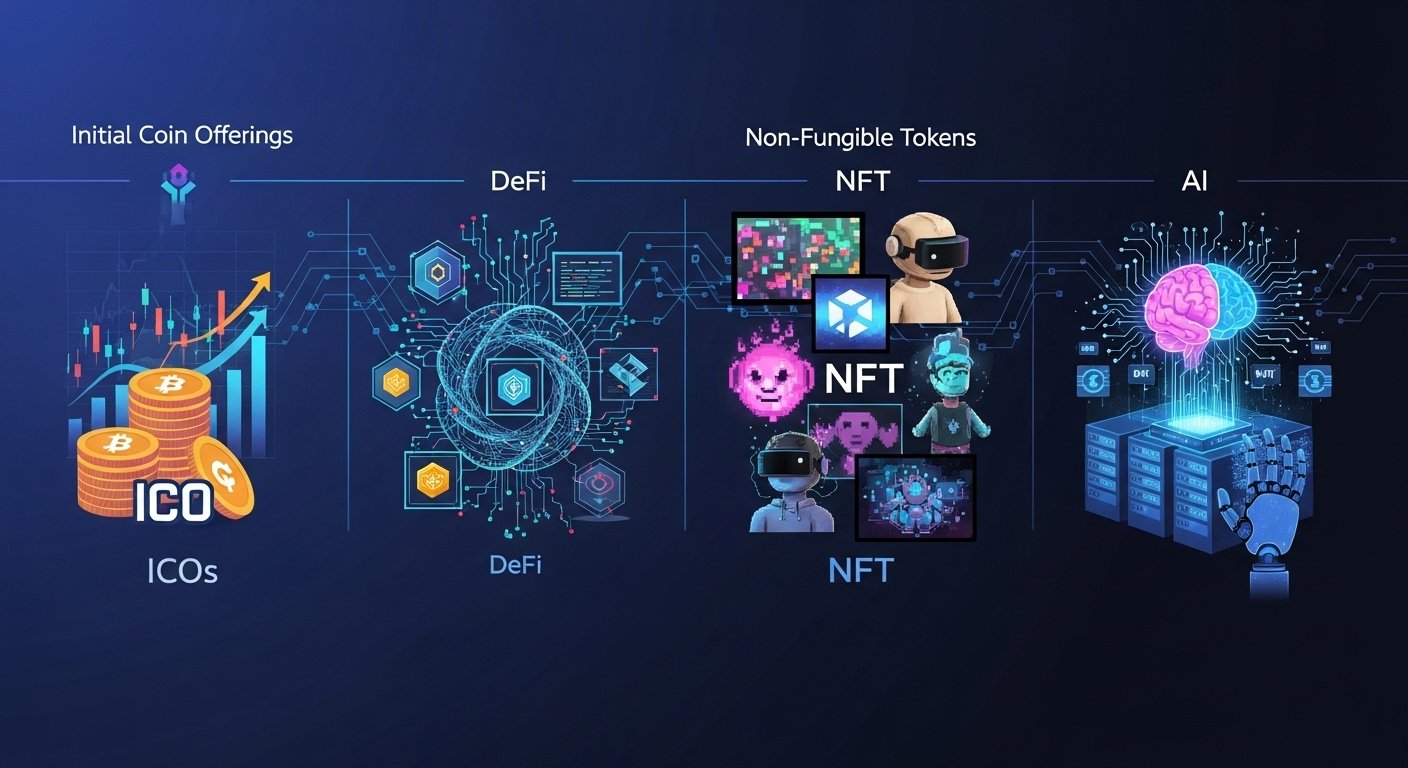
BlackRock warns crypto’s love affair with AI is over as an energy war with Bitcoin miners begins echoes past transitions where hype gave way to consolidation and realism. Survivors of these phases often emerge stronger and more focused.
What This Means for Long-Term Investors
For long-term investors, the current shift emphasizes discernment.
Prioritizing Fundamentals Over Narratives
Sustainable projects with clear utility, manageable costs, and regulatory alignment are better positioned than those reliant on thematic appeal.
Understanding Energy as an Investment Variable
Energy access and efficiency are now core considerations. Investors who account for these factors may navigate the next phase more effectively.
The Future of Bitcoin Amid the Energy War
Bitcoin’s future is not defined solely by energy challenges, but those challenges will shape its trajectory.
Innovation in Mining Efficiency
Advances in hardware, renewable integration, and grid partnerships may mitigate some pressures. However, competition with AI ensures that energy remains a central concern.
Reinforcing Bitcoin’s Value Proposition
As narratives fade, Bitcoin’s core proposition as a decentralized, censorship-resistant asset becomes more prominent. This clarity may strengthen its long-term appeal despite short-term challenges.
Conclusion
BlackRock warns crypto’s love affair with AI is over as an energy war with Bitcoin miners begins, marking a turning point for the digital asset industry. This warning reflects a shift from narrative-driven optimism to reality-based assessment, where energy constraints, infrastructure competition, and institutional priorities redefine what matters.
The collision between AI and Bitcoin mining underscores the importance of efficiency, sustainability, and strategic alignment. While some projects may struggle, others will adapt and evolve, shaping a more mature and resilient crypto ecosystem. For investors and builders alike, this moment is less about the end of innovation and more about its necessary transformation.
FAQs
Q: Why does BlackRock warn crypto’s love affair with AI is over
BlackRock warns crypto’s love affair with AI is over because many AI-crypto projects lack sustainable economics, and rising energy costs make large-scale AI integration increasingly impractical within crypto ecosystems.
Q: What does the energy war with Bitcoin miners mean
The energy war refers to growing competition between AI data centers and Bitcoin miners for limited electricity resources, leading to higher costs, regulatory scrutiny, and prioritization challenges.
Q: How does this shift affect Bitcoin mining profitability
Increased energy competition raises electricity prices and regulatory pressure, squeezing miner margins and potentially accelerating consolidation among more efficient operators.
Q: Is AI completely irrelevant to crypto going forward
AI is not irrelevant, but its role may become more targeted and efficient rather than headline-driven. Integration will need to justify energy and cost requirements.
Q: What should investors focus on in this new phase
Investors should focus on fundamentals such as energy efficiency, regulatory alignment, real-world utility, and long-term sustainability rather than short-lived thematic narratives.
