


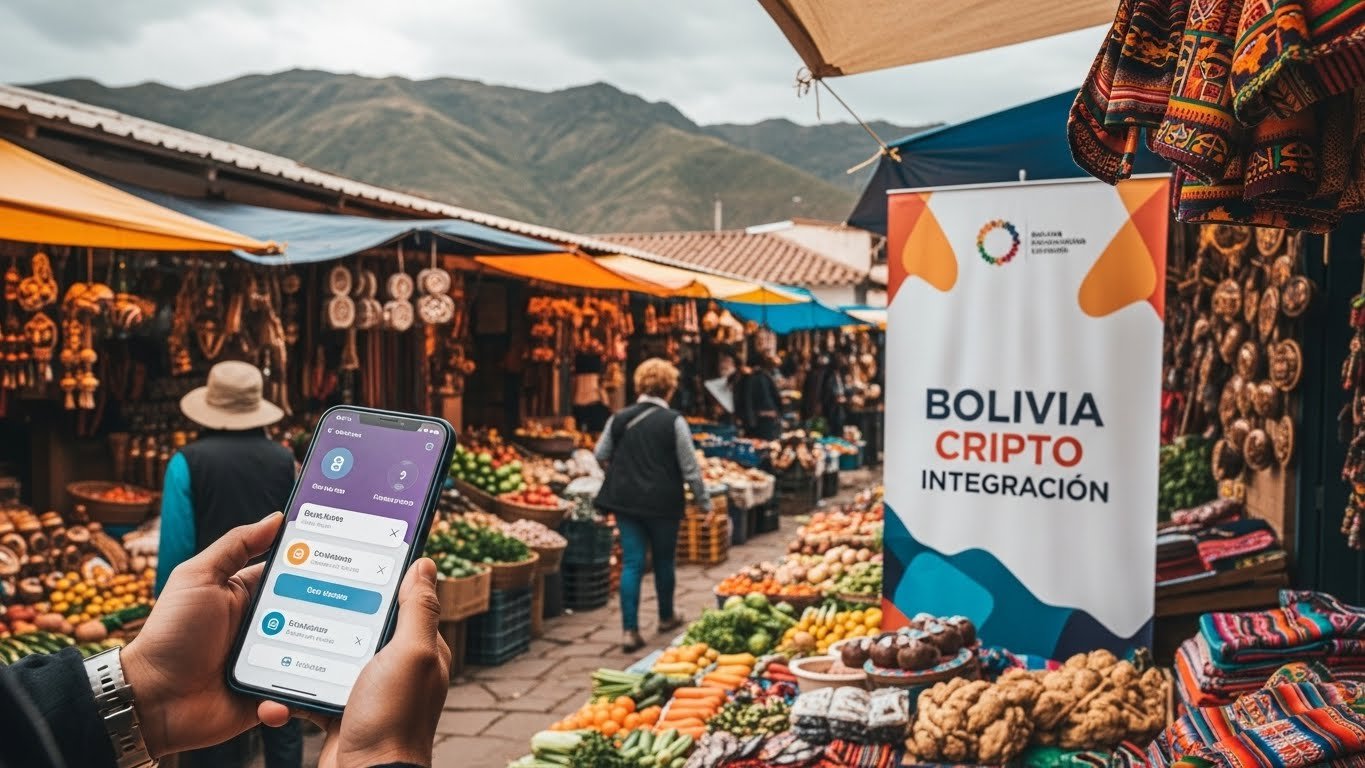
Bolivia Integrates Crypto why Bolivia’s current decision is so important, it helps to look back at the era of prohibition. For several years, the government and central bank maintained a very strict stance against cryptocurrencies. Officials were concerned that cryptocurrency trading would undermine confidence in the national currency, encourage money laundering, and expose citizens to scams.At that time, the easiest solution seemed to be a complete ban.Banks and financial institutions were not allowed to work with Bitcoin or other Bolivia Integrates Crypto assets, and public messaging from authorities was focused on warning people about the dangers of unregulated digital money.
This reinforced the perception that crypto was an unsafe and unnecessary experiment, far removed from the needs of the average Bolivian.However, technology and economic reality do not stand still. While the official position was rigid, people who had access to international platforms quietly started experimenting with stablecoins and other digital currencies. These early users were often migrants, freelancers, or small businesses seeking faster payments, cheaper remittances, or protection from local currency risks.
The Turning Point: Rethinking Crypto in a Changing Economy
Several developments pushed Bolivia to rethink its position. The global growth of Bolivia Integrates Crypto adoption made it clear that digital assets were not a passing trend. At the same time, domestic challenges such as inflation, currency shortages, and high transaction costs highlighted the limitations of traditional financial infrastructure.As more Bolivians discovered stablecoin adoption as a way to hold value in digital dollars or move money across borders, it became increasingly difficult to ignore this parallel financial ecosystem.
Continuing to ban Bolivia Integrates Crypto outright risked driving innovation underground, where it would be harder to supervise and regulate.Gradually, authorities began to shift from a mindset of prohibition to one of controlled integration. Instead of asking how to stop people from using crypto, they started asking how to bring it into the formal banking system under clear rules. This change in attitude paved the way for today’s historic move to integrate crypto and stablecoins into mainstream financial services.
What Crypto and Stablecoin Integration Means in Practice

Stablecoins as a Bridge Between Traditional and Digital Money
The decision to integrate stablecoins into Bolivia’s banking framework is especially significant. Stablecoins are digital tokens that are typically pegged to a stable asset, such as the U.S. dollar. This means their value tends to be far less volatile than that of many other cryptocurrencies.For Bolivians who worry about local currency depreciation or limited access to physical dollars, stablecoins offer a digital alternative. By allowing banks to work with these instruments, Bolivia is building a bridge between traditional finance and the crypto economy.
People can move between local currency accounts and stablecoin balances without having to rely on unregulated platforms.This integration can make everyday transactions easier. A user might receive income in stablecoins, convert part of it into the local currency for daily expenses, and keep the rest as a digital dollar savings buffer. All of this could happen within the same bank or connected financial app, protected by national laws and regulations.
Bank Products Powered by Crypto and Stablecoins
One of the most exciting aspects of this historic move is the potential range of new financial products. Banks may begin offering crypto savings accounts, where customers can choose to hold part of their balance in stablecoins. They might provide credit cards or debit cards linked to digital asset balances, allowing people to spend stablecoins as easily as local currency.Loans are another promising area. A customer who holds cryptocurrencies could use them as collateral for a loan denominated in the local currency or even in stablecoins.
This approach would allow individuals and businesses to unlock the value of their digital assets without having to sell them.By embedding these features into the banking system, Bolivia is transforming banks from passive observers into active participants in the crypto ecosystem. Customers benefit from familiar customer service, dispute resolution processes, and regulatory oversight, while still enjoying the advantages of modern blockchain-based finance.
The Central Bank and Regulatory Framework
Such a significant transformation cannot happen without a strong regulatory backbone. Bolivia’s central bank and financial authorities are expected to set clear guidelines for how banks can hold, manage, and account for crypto and stablecoin assets.These rules will likely cover capital requirements, custody standards, and risk management procedures. They may also specify what kinds of crypto assets are allowed, with a focus on well-collateralized stablecoins and compliant platforms.
The aim is to ensure that integrating crypto strengthens the financial system instead of destabilizing it.A robust framework will also help Bolivia align with international standards. Global bodies encourage countries to regulate virtual asset service providers using clear crypto regulation based on anti-money laundering and counter-terrorist financing principles. By following these guidelines, Bolivia can attract legitimate businesses while discouraging illicit activity.
Benefits for Citizens: Financial Inclusion and Protection of Savings
Expanding Access to Financial Services
One of the most compelling reasons for integrating crypto and stablecoins into the banking sector is the promise of greater financial inclusion. Many Bolivians, especially in rural areas or informal urban settlements, struggle to access traditional banking services. Documentation requirements, distance to branches, and lack of trust in institutions can all be barriers.By combining mobile technology with digital assets, banks and fintech companies can offer simpler, more accessible services. A person with a smartphone may be able to open a basic account, \
receive stablecoin payments, and convert them into local currency at a nearby agent or ATM, all without navigating complex bureaucracy.This flexibility can draw more people into the formal economy. It can also make it easier for them to build a financial history, which is often essential for accessing credit, renting housing, or starting a business. As crypto wallets and bank apps become more user-friendly, the line between the banked and unbanked begins to blur.
Protecting Value in a Volatile Economic Environment
In an economy where inflation and currency pressures affect daily life, the ability to hold value in stablecoins is particularly attractive. Traditional savings accounts in local currency can lose purchasing power when prices rise quickly. Physical dollars may be difficult to obtain or store safely.With stablecoin-based savings, people can keep part of their money in a digital form that tracks the value of the U.S. dollar or another strong currency.
This does not eliminate economic risk,but it offers an additional tool to manage it. When such savings are held through regulated banks, customers also gain layers of protection, such as account records, customer support, and possible recourse in case of disputes.This combination of stability and oversight makes stablecoins a powerful complement to traditional savings, especially when integrated into the official banking system. Over time, this can help households better plan for the future, smooth out income shocks, and invest with greater confidence.
Opportunities for Businesses and the Wider Economy

Faster Payments and Cross-Border Transactions Bolivia Integrates Crypto
Bolivia Integrates Crypto Businesses stand to benefit enormously from Bolivia’s integration of crypto and stablecoins. Many companies rely on cross-border trade, imports, and exports, which often involve slow and expensive international transfers. Bolivia Integrates Crypto Traditional channels can take days and charge high fees, especially for smaller firms.By using stablecoins processed through regulated banks and payment providers, businesses can send and receive funds across borders much more quickly.
Transactions that once required multiple intermediaries can be settled in a short time directly on Bolivia Integrates Crypto blockchain networks, while banks handle compliance checks and fiat conversions.This efficiency can improve cash flow, reduce costs, and make Bolivian firms more competitive in regional and global markets. It can also encourage more foreign partners to do business with Bolivian counterparts, knowing that modern, transparent payment rails are available.
Innovation, Fintech Growth, and Job Creation Bolivia Integrates Crypto
Bolivia Integrates Crypto The historic move to integrate crypto and stablecoins is also a catalyst for innovation. As the regulatory environment becomes clearer, more entrepreneurs will be willing to launch fintech startups that build services on top of Bolivia Integrates Crypto digital assets.These companies might develop applications for merchant payments, salary distribution, micro-lending, or tokenized loyalty programs.
Bolivia Integrates Crypto Banks may partner with them to outsource certain functions or to reach customer segments they could not serve efficiently on their own.This ecosystem can generate new jobs in areas such as software development, cybersecurity, compliance, and customer support. It can also foster education and training in Bolivia Integrates Crypto blockchain technology, equipping young professionals with skills that are in high demand worldwide.In this way, Bolivia’s decision is more than a financial reform. It is an investment in the country’s digital future and human capital.
Challenges and Risks in Bolivia’s Crypto Integration
Volatility, Confusion, and Investor Protection
Bolivia Integrates Crypto While integratingBolivia Integrates Crypto and stablecoins into the banking system offers many advantages, it also introduces important challenges. One of the biggest is volatility. Even if the focus is on relatively stable tokens, the broader crypto market is known for dramatic price swings and speculative bubbles.There is a risk that some people may mis the nature of different crypto assets, confusing stablecoins with highly volatile tokens.
If they invest money they cannot afford to lose, hoping for quick gains, they may suffer significant losses.To address this, regulators and banks will need to prioritize investor protection. Clear information, risk disclosures, and suitability checks should accompany any product that exposes customers to market fluctuations. Educational campaigns explaining the difference between stablecoins, utility tokens, and speculative cryptocurrencies will be vital for responsible adoption.
Cybersecurity and Financial Crime Bolivia Integrates Crypto
Bolivia Integrates Crypto Another serious challenge involves cybersecurity and financial crime. Digital assets can be targets for hackers, scammers, and money launderers. When crypto services are integrated into the banking system, any weakness in security can have broad consequences.Bolivian institutions will need to invest in strong technological defenses, including secure custody solutions, multi-factor authentication, transaction monitoring, and incident response plans.Bolivia Integrates Crypto
Staff will require training to recognize suspicious patterns and emerging threats.At the regulatory level, robust anti-money laundering and know-your-customer rules must be applied to crypto transactions. Collaboration with international partners and information-sharing networks can help authorities track illicit flows and respond to new methods used by criminals.Balancing security and user convenience is not easy, but it is essential for building long-term trust in the system.
Bridging the Knowledge Gap Bolivia Integrates Crypto
Bolivia Integrates Crypto A further hurdle is the knowledge gap. Many citizens, and even some professionals, are not yet familiar with how crypto and stablecoins work. Concepts like private keys, public addresses, and blockchain confirmations can seem foreign or intimidating.For Bolivia’s historic move to deliver its full potential, there must be a focus on education and digital literacy.
Schools, universities, banks, fintech companies, and community organizations can all Bolivia Integrates Crypto contribute by offering workshops, courses, and simple explanatory materials.When people both the benefits and the risks of digital assets, they are more likely to use them wisely. This also reduces the likelihood of falling victim to scams or misinformation.
Regional and Global Implications of Bolivia’s Decision

A New Voice in Latin American Bolivia Integrates Crypto Policy
Bolivia’s integration of crypto and stablecoins into its banking sector gives it a new voice in regional conversations about digital finance. Latin America has become one of the most dynamic regions for Bolivia Integrates Crypto regulation and experimentation, with different countries exploring diverse paths. By moving from a rigid ban to a nuanced, bank-centered integration model, Bolivia brings a distinctive perspective.
It shows that a country can change course, learn from global experiences, and design a framework that reflects its own economic realities.Other nations facing similar challenges, such as inflation, remittance dependence, and financial exclusion, may look to Bolivia as an example of how to re-evaluate past policies. The combination of stablecoin adoption, bank involvement, and regulatory oversight may inspire new approaches elsewhere.
Potential Pathways to Future Innovation Bolivia Integrates Crypto
Bolivia Integrates Crypto This historic step could also be the foundation for future innovations. Once banks and regulators are comfortable handling digital assets, it becomes easier to explore advanced concepts such as tokenized securities, digital bonds, or even a central bank digital currency.In the long term, Bolivia could develop a hybrid financial architecture where blockchain technology supports parts of the national payment system, social programs, or government finance. While these ideas are still speculative,
They demonstrate how the current integration of crypto and stablecoins can open doors to broader transformations.For now, the focus is rightly on making sure the basics work: safe custody, reliable payments, accessible accounts, and transparent rules. Yet the direction of travel suggests that Bolivia aims to position itself not on the sidelines of financial innovation, but as an active participant.
Conclusion
Bolivia’s move to integrate Bolivia Integrates Crypto and stablecoins into its banking system marks a historic shift in the country’s financial trajectory. It represents a departure from years of prohibition and a bold embrace of innovation, framed by an that digital assets are here to stay. By allowing banks to offer stablecoin-based services, savings accounts, cards, and potentially loans linked to crypto assets, Bolivia is giving its citizens and businesses new tools to navigate economic uncertainty, improve payment efficiency, and connect with global markets.
The journey, however, is just beginning. Success will depend on strong crypto regulation, effective supervision, and a commitment to education and consumer protection. If Bolivia can balance opportunity with caution, it will not only transform its own economy but also provide a valuable example for other countries seeking to harness the power of Bolivia Integrates Crypto and stablecoins in a responsible way.This historic decision is more than a headline. It is the starting point of a long-term transformation in how money moves, how value is stored, and how people participate in the financial system.
FAQs
Q: What does Bolivia’s integration of crypto and stablecoins into the banking system actually mean?
It means that crypto and stablecoins are moving from the fringes of the economy into the heart of the formal banking system. Instead of being restricted to unregulated platforms, these digital assets can now be handled by banks under clear rules. Customers may be able to open accounts that include stablecoin balances, make payments using digital currencies, or apply for products that are supported by crypto holdings, all within a supervised environment.
Q: How will ordinary citizens benefit from this historic move?
Ordinary citizens can benefit in several ways. People who previously lacked access to traditional bank accounts may find it easier to join the financial system through mobile-based services that support stablecoins. Savers gain an additional way to protect their money against inflation by holding part of their wealth in digital dollars. Everyday payments, remittances, and online purchases can become faster and cheaper when processed via Bolivia Integrates Crypto -enabled banking services. At the same time, regulatory oversight aims to provide more safety than informal channels.
Q: Are there risks involved in using Bolivia Integrates Crypto and stablecoins through banks?
Yes, there are risks, even when services are offered by banks. Some crypto assets are highly volatile, and people who buy them for speculation can incur losses. Bolivia Integrates Crypto Cybersecurity threats, fraud, and attempts to use digital assets for illegal activities are also concerns. That is why Bolivia’s move is accompanied by a focus on crypto regulation, anti-money laundering controls, and consumer protection. Users will need to stay informed, follow security best practices, and that no financial product is completely risk-free.
Q: How will this integration affect Bolivian businesses and trade?
For businesses, especially those involved in cross-border commerce, integration can be a major advantage. Companies can use stablecoins to pay suppliers or receive funds from clients abroad more quickly and at lower cost than through many traditional channels. Access to Bolivia Integrates Crypto digital asset services via banks can improve cash flow, reduce friction in international trade, and make it easier for foreign partners to work with Bolivian firms. Over time, this can strengthen competitiveness and encourage greater participation in regional and global markets.
Q: Could Bolivia’s decision influence other countries in Latin America?
Bolivia’s historic decision is likely to attract attention from policymakers across Latin America and beyond. Many countries are grappling with questions about how to regulate crypto, how to harness stablecoin adoption, and how to modernize their banking systems without sacrificing stability. By moving from a ban to a structured integration model, Bolivia offers a concrete example of how attitudes and policies can evolve. If the approach proves successful, it may encourage other nations to explore similar frameworks tailored to their own economic and social contexts.
