


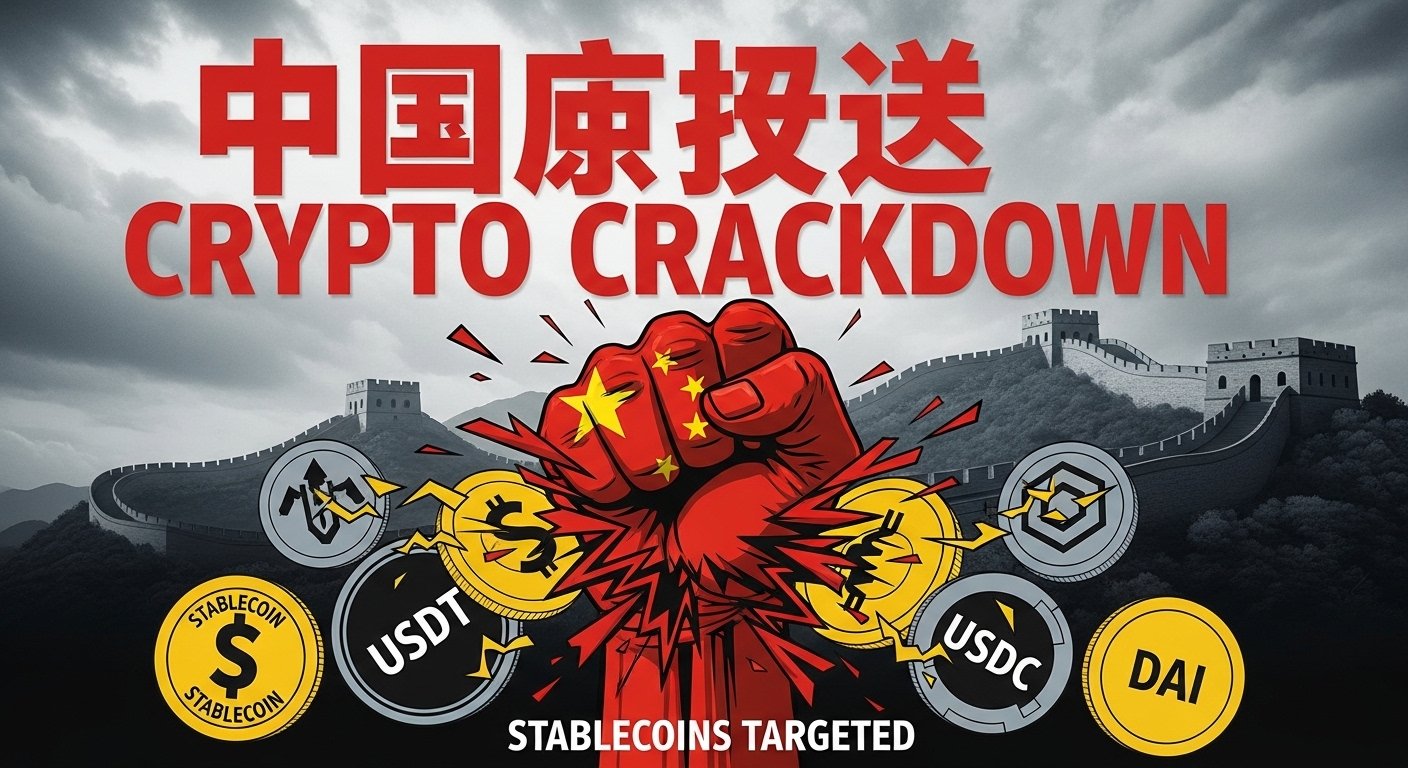
China Expands Crypto Crackdown to Stablecoins china’s approach to digital assets has always been shaped by caution, state control, and a long-term strategic vision. Over the past few years, the country has moved from restricting crypto exchanges and banning mining operations to implementing a sweeping ban on most forms of cryptocurrency trading. Now, the focus appears to be widening. Reports and regulatory signals suggest that China is expanding its crypto crackdown to include stablecoins and asset tokenization, marking a new phase in the country’s evolving digital finance strategy.
This shift reflects more than simple opposition to crypto speculation. China is positioning itself as a leader in central bank digital currency (CBDC) development while simultaneously limiting the influence of decentralized and privately issued digital assets. As a result, the tightening grip on stablecoin markets and tokenized assets signals deeper concerns about financial sovereignty, capital controls, and systemic risks.
The expansion of the crypto crackdown could reshape the global digital asset ecosystem, affect liquidity across exchanges, and influence how other countries approach crypto regulation. Understanding the motivations behind China’s move provides valuable insight into the broader trajectory of the cryptocurrency industry.
China Expands Crypto Crackdown to Stablecoins
China’s relationship with cryptocurrency has always been complex. In the early years of Bitcoin, the country was one of the largest hubs for crypto mining and trading activity. Chinese exchanges dominated global volumes, and local manufacturers supplied the majority of mining hardware.
However, as the market grew, regulators became concerned about financial stability, capital flight, and speculative behavior. The decentralized nature of cryptocurrencies conflicted with China’s tightly controlled financial system, where the government maintains strict oversight over currency flows.
Exchange Bans and Mining Restrictions
In 2017, Chinese authorities began cracking down on initial coin offerings (ICOs) and domestic crypto exchanges. These measures were followed by increasingly strict rules targeting mining operations, culminating in a nationwide mining ban in 2021.
The crackdown forced major mining companies to relocate abroad, shifting the global hashrate distribution and weakening China’s direct involvement in Bitcoin’s infrastructure. Yet, despite these restrictions, Chinese regulators continued monitoring the growth of digital assets worldwide.
Why Stablecoins Are Now in the Spotlight
The Rise of Stablecoins in Global Finance
Stablecoins have become one of the most important segments of the crypto market. These digital tokens pegged to fiat currencies are widely used for trading, cross-border payments, and decentralized finance applications.
Because stablecoins often mirror the value of traditional currencies, they serve as a bridge between the traditional financial system and the crypto ecosystem. This dual role makes them particularly sensitive from a regulatory standpoint.
For China, the rise of dollar-backed stablecoins poses a direct challenge to its monetary control. If stablecoins become widely used for payments or savings, they could undermine capital controls and weaken the country’s financial authority.
Concerns Over Monetary Sovereignty
China’s government has long prioritized currency sovereignty. The widespread adoption of stablecoins could allow individuals and businesses to bypass official channels, potentially enabling capital outflows. Authorities are especially wary of stablecoins tied to foreign currencies. The increasing use of these tokens could expand the influence of external monetary systems within China’s economy.
By expanding the crypto crackdown to stablecoins, regulators aim to prevent unofficial digital currencies from competing with the digital yuan, China’s state-backed CBDC.
The Role of Asset Tokenization in the Crackdown
What Is Asset Tokenization?
Asset tokenization refers to the process of representing real-world assets, such as real estate, stocks, or commodities, on a blockchain. These tokenized assets can be traded more easily and offer fractional ownership.
Globally, tokenization is seen as a major innovation in financial technology, with the potential to improve liquidity and accessibility. However, from China’s perspective, tokenization also introduces risks.
Risks Associated With Tokenized Assets
Tokenization can blur the lines between traditional securities and digital assets. Without strict oversight, tokenized securities could be traded outside regulated markets, potentially creating shadow financial systems. China’s financial regulators have historically taken a cautious approach toward financial innovation. The expansion of the crackdown to asset tokenization suggests that authorities want to prevent the rise of unregulated markets that could threaten financial stability.
China’s Digital Yuan Strategy
Building a State-Controlled Digital Currency
While cracking down on private cryptocurrencies, China has been actively developing its own central bank digital currency. The digital yuan, also known as e-CNY, is designed to function as a state-backed digital payment system.
Unlike decentralized cryptocurrencies, the digital yuan is fully controlled by the People’s Bank of China. It allows the government to monitor transactions, enforce compliance, and maintain control over the monetary system.
Competing With Stablecoins
The digital yuan serves as a direct alternative to stablecoins. By expanding the crypto crackdown to stablecoins, China can clear the path for wider adoption of its own CBDC. This strategy aligns with the country’s broader goals of reducing reliance on foreign payment systems and strengthening the renminbi’s global role.
Impact on the Global Crypto Market
Reduced Liquidity and Trading Activity
China’s influence on the crypto market has declined since the mining ban, but the country still plays an important role in global trading volumes and liquidity.
If the crackdown on stablecoins becomes more aggressive, it could affect major trading pairs and reduce liquidity across exchanges. Stablecoins are a key component of crypto market infrastructure, and restrictions in one of the world’s largest economies could have ripple effects.
Regulatory Influence Beyond China
China’s regulatory moves often set precedents that other countries observe closely. When China banned ICOs in 2017, several other jurisdictions introduced similar restrictions. The expansion of the crackdown to stablecoins and tokenization could influence global crypto regulatory frameworks, particularly in emerging markets.
How Crypto Firms May Respond
Shifting Operations to Friendlier Jurisdictions
In the past, crypto companies have responded to Chinese crackdowns by relocating to countries with more favorable regulations. This trend is likely to continue if the crackdown intensifies.
Many exchanges, mining companies, and blockchain startups have already established operations in regions such as Southeast Asia, Europe, and the Middle East.
Increasing Focus on Compliance
As regulatory scrutiny increases worldwide, crypto firms may adopt more robust compliance measures. This could include stronger know-your-customer (KYC) procedures, enhanced reporting systems, and closer collaboration with regulators.
While these changes may reduce the appeal of anonymity in crypto, they could also increase institutional confidence in the industry.
Potential Long-Term Consequences
A More Fragmented Crypto Landscape
China’s expansion of the crypto crackdown could contribute to a more fragmented global crypto market. Different regions may adopt distinct regulatory approaches, leading to separate digital asset ecosystems.
For example, some countries may encourage innovation in tokenized securities and stablecoins, while others impose strict controls.
Strengthening State-Backed Digital Currencies
China’s strategy may accelerate the development of CBDCs worldwide. As governments observe the risks associated with private digital currencies, they may prioritize their own state-backed alternatives.
This trend could reshape the future of digital payments, with central bank digital currencies playing a more prominent role than decentralized tokens.
The Balance Between Innovation and Control
China’s Regulatory Philosophy
China’s approach to crypto reflects a broader philosophy of balancing innovation with state control. The government supports blockchain technology for supply chains, finance, and public services, but opposes decentralized currencies that operate outside official oversight.
By targeting stablecoins and tokenization, regulators are attempting to close perceived loopholes in the financial system.
Global Implications of This Strategy
China’s actions could push the global crypto industry toward greater regulation and institutionalization. While this may reduce some of the sector’s original decentralization ideals, it could also bring increased legitimacy. The expansion of the crypto crackdown highlights the ongoing tension between financial innovation and regulatory control, a dynamic that will likely shape the industry for years to come.
Conclusion
China’s decision to expand its crypto crackdown to stablecoins and asset tokenization marks a significant turning point in the country’s digital asset policy. By targeting these emerging segments, regulators are reinforcing their commitment to financial control and monetary sovereignty. The move aligns with China’s broader strategy of promoting the digital yuan while limiting the influence of decentralized and privately issued digital currencies. As the crackdown evolves, its impact will extend beyond China’s borders, influencing global liquidity, regulatory approaches, and the future of digital finance.
For investors, developers, and policymakers, China’s actions serve as a reminder that the cryptocurrency industry remains deeply connected to national regulatory priorities. The expansion of the crypto crackdown underscores the importance of compliance, adaptability, and long-term strategic planning in the ever-changing world of digital assets.
FAQs
Q: Why is China expanding its crypto crackdown to stablecoins and asset tokenization?
China is expanding its crypto crackdown to stablecoins and asset tokenization because these digital assets could undermine its financial control and capital regulations. Stablecoins, especially those tied to foreign currencies, may enable capital outflows and reduce the effectiveness of domestic monetary policies. Tokenized assets also introduce the risk of unregulated markets that operate outside the country’s financial oversight.
Q: How does the digital yuan relate to the crackdown on stablecoins?
The digital yuan is China’s state-backed central bank digital currency designed to modernize payments while maintaining government oversight. By restricting stablecoins, authorities can reduce competition from private digital currencies and encourage the adoption of the digital yuan as the primary digital payment solution.
Q: What impact could this crackdown have on the global crypto market?
The crackdown could reduce liquidity, especially in trading pairs that rely heavily on stablecoins. It may also influence how other countries regulate digital assets, potentially leading to stricter global oversight and more compliance requirements for crypto firms.
Q: Will asset tokenization be completely banned in China?
China is unlikely to ban blockchain-based innovation entirely, but it may impose strict regulations on tokenized assets to ensure they remain within the official financial system. The government generally supports blockchain technology while opposing decentralized financial structures that operate beyond state control.
Q: How are crypto companies likely to respond to these new restrictions?
Crypto companies will likely continue relocating operations to jurisdictions with more favorable regulations. Many firms may also strengthen compliance measures, adopt stricter KYC policies, and work more closely with regulators to maintain access to global markets.
