



The Metaverse Market Insights metaverse market is moving from buzzword to business reality. What started as a futuristic concept of shared virtual worlds is rapidly evolving into a multi-trillion-dollar opportunity that is reshaping how people work, shop, socialize, learn, and play. With forecasts suggesting the metaverse market could develop at a CAGR of 41.2% by 2032, organizations that understand its dynamics today will be better positioned to lead tomorrow.In simple terms, the metaverse is a persistent digital environment where users can interact with each other and digital objects in real time.
It is enabled by technologies such as virtual reality (VR), augmented reality (AR), blockchain, 5G connectivity, and advanced 3D immersive experiences. While the metaverse is still in a formative stage, the foundations are being laid across gaming, retail, education, healthcare, manufacturing, and enterprise collaboration.This article explores key metaverse market insights, the main growth drivers, emerging business models, technological enablers, future opportunities across industries, and strategic steps companies can take to position themselves for success. By the end, you will have a clear understanding of how the metaverse market is evolving and where the most promising opportunities lie as we approach 2032.
Understanding the Metaverse Market Landscape
The Metaverse Market Insights is often misunderstood as a single platform or app. In reality, it is a broad ecosystem made up of multiple layers: infrastructure, enabling technologies, platforms, content, and user experiences.
From Concept to Commercial Ecosystem
Initially popularized by science fiction and early online virtual worlds, the metaverse has now become a serious focus for big tech companies, startups, and enterprises across sectors. Investments are flowing into metaverse platforms, digital twins, NFTs, and 3D content creation tools.
As technology matures and user adoption grows, the metaverse is evolving from an entertainment-focused concept to a multidimensional digital economy. Brands are building virtual stores, educators are delivering immersive classrooms, and manufacturers are designing and testing products in virtual simulations before they exist in physical form.
Market Growth and CAGR Projection
The projected CAGR of 41.2% up to 2032 reflects strong expectations of sustained expansion. This growth is driven by an increase in connected devices, rising consumer comfort with digital assets, and broader enterprise adoption of immersive technologies. Metaverse Market Insights While exact market size estimates vary, most analysts agree that the metaverse has the potential to reach into the trillions of dollars in value over the coming decade.
In the early years, growth is particularly strong in gaming, immersive entertainment, and social experiences. Over time, however, the fastest expansion is expected in business applications such as remote collaboration, virtual training, virtual events, and industrial metaverse use cases.
Key Drivers Shaping Metaverse Market Insights
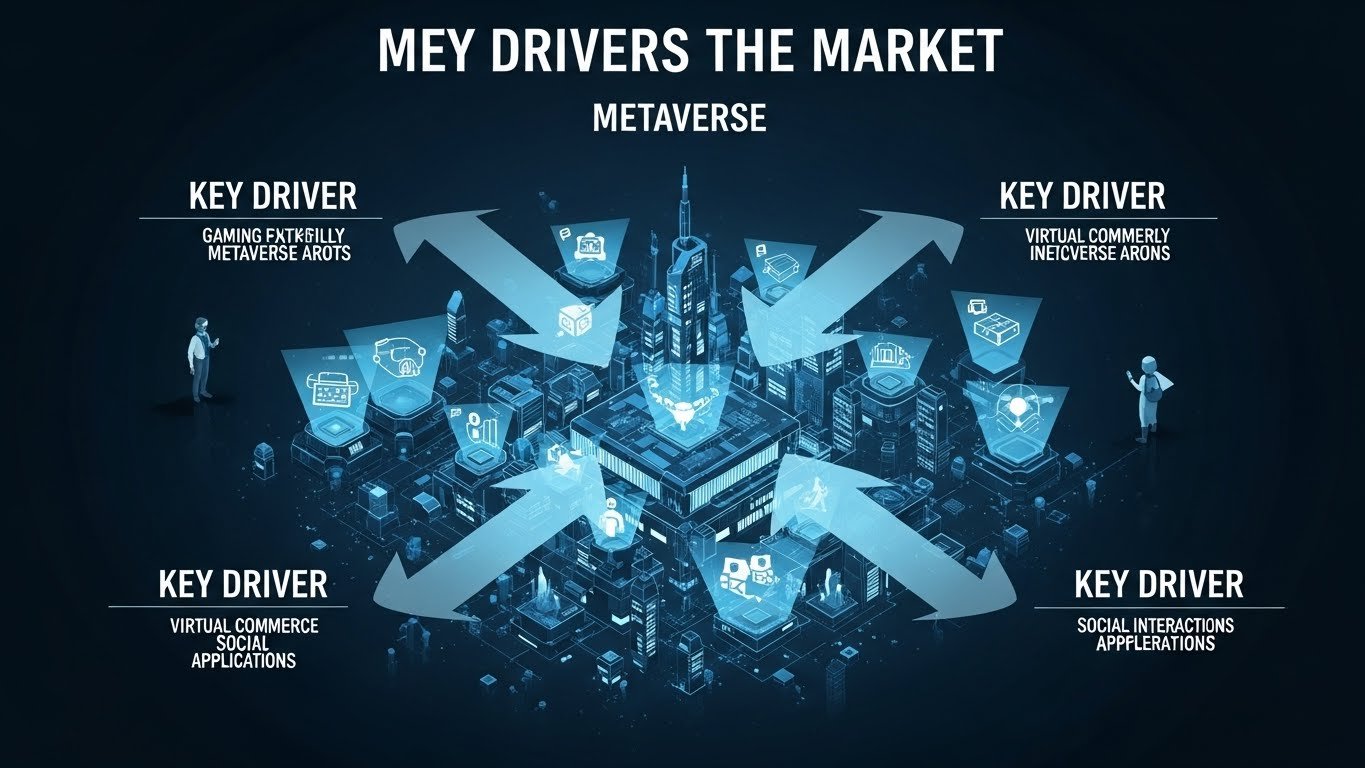
Understanding what is driving metaverse growth is essential to spotting future opportunities. The Metaverse Market Insights is not expanding in a vacuum; it is the result of converging technology trends and changing user behaviors.
Technological Convergence and Infrastructure Readiness
One of the most important drivers behind the metaverse market is the convergence of several advanced technologies. High-speed networks like 5G, powerful GPUs, cloud computing, and edge computing are enabling low-latency, high-fidelity experiences that were not feasible a decade ago.
At the same time, virtual reality and augmented reality hardware is becoming more affordable, comfortable, and user-friendly. Lighter headsets, better graphics, and intuitive controllers are making immersive experiences more accessible to mainstream users. This shift is crucial to unlocking mass adoption and sustaining a 41.2% CAGR trajectory.
Rise of Digital-First Consumers Metaverse Market Insights
Younger generations are growing up with online games, virtual hangouts, and digital communities as a normal part of life. For them, switching between physical and digital worlds is natural. This is driving demand for persistent, social, and immersive digital environments where identity, social status, and ownership carry real meaning.
The popularity of digital fashion, virtual concerts, and in-game purchases shows that consumers are willing to spend money on purely digital experiences and assets. This behavioral shift underpins the economic potential of the metaverse.
Growth of Digital Economies and Virtual Assets
The emergence of blockchain-based assets, cryptocurrencies, and NFTs has enabled verifiable ownership of digital items. In the metaverse, users can buy, sell, trade, and own digital goods, from virtual real estate to branded wearables.
This creates a robust creator economy, where artists, designers, and developers can monetize their work in new ways. Businesses can launch virtual products, run token-based loyalty programs, and experiment with new revenue models that blend physical and digital experiences.
Core Components of the Metaverse Ecosystem
To fully grasp metaverse market insights, it is helpful to break the ecosystem into its main building blocks. Each layer offers distinct opportunities for innovation and investment.
Infrastructure and Hardware
At the foundation of the metaverse are networks, data centers, and devices. High-performance servers, edge computing nodes, and optimized content delivery networks support the low-latency interactions required for realistic 3D environments.
On the user side, VR headsets, AR glasses, smartphones, and PCs act as gateways to the metaverse. As hardware evolves to become more comfortable, affordable, and powerful, user adoption is likely to accelerate. Companies that innovate in holographic displays, spatial audio, and motion tracking will find strong opportunities in this layer.
Platforms and Virtual Worlds Metaverse Market Insights
Metaverse Market Insights Above the infrastructure layer are metaverse platforms that host virtual worlds and experiences. These platforms provide tools for user identity, social interactions, commerce, and content creation. Some focus on gaming and entertainment, while others target corporate collaboration or industry-specific applications.
Open, interoperable platforms are especially important for long-term growth. Users want their digital identities and assets to move seamlessly across environments, which requires common standards, APIs, and protocols. This interoperability is a key theme in metaverse market discussions and an important area for future innovation.
Content, Applications, and Experiences
Ultimately, the success of the metaverse depends on compelling content. Users are drawn to engaging 3D immersive experiences, such as virtual events, interactive learning environments, realistic simulations, and social spaces.
Developers, brands, educators, and enterprises are building a wide range of applications, from virtual showrooms and metaverse marketing campaigns to remote training simulations for complex machinery. As tooling improves and no-code/low-code platforms emerge, more creators will be able to build rich metaverse experiences without needing deep technical skills.
Future Opportunities Across Key Sectors
The metaverse market is not limited to entertainment. Its future opportunities span industries, enabling new ways of delivering value to customers, employees, and partners.
Gaming and Immersive Entertainment
Gaming remains at the forefront of metaverse innovation. Players are already comfortable with persistent online worlds, character customization, and in-game economies. As graphics, physics, and social features improve, games will increasingly resemble living digital universes.
Future opportunities in this sector include play-to-earn models, cross-platform avatars, and sophisticated user-generated content ecosystems. Publishers and developers who create strong communities, reward creators, and integrate virtual goods in meaningful ways are poised to capture a significant share of spending.
Retail, E-commerce, and Virtual Commerce
Retailers and brands are experimenting with virtual stores, 3D product try-ons, and immersive shopping journeys. In a metaverse environment, customers can explore digital showrooms, interact with products, and receive personalized recommendations from AI-driven virtual assistants.
By 2032, virtual commerce could become a standard complement to traditional online shopping. Digital twins of physical products, virtual fashion shows, and branded metaverse hubs will enable deeper engagement and higher conversion rates. Brands that embrace omnichannel metaverse strategies will have an advantage in attracting younger, digitally native consumers.
Enterprise Collaboration and Remote Work
The shift to hybrid work has highlighted the limitations of flat video calls and text-based communication. The metaverse offers a more immersive alternative, where teams can collaborate in virtual offices, 3D project rooms, and digital innovation labs.
With spatial computing, employees can interact with data, prototypes, and colleagues in ways that mimic in-person collaboration. Virtual whiteboards, interactive dashboards, and 3D models make complex information easier to understand and explore. This translates into better decision-making, faster innovation cycles, and more engaging remote work experiences.
Education, Training, and Skills Development
The metaverse is set to transform how people learn. Immersive classrooms can simulate historical events, scientific environments, or industrial settings, allowing students to explore concepts hands-on rather than passively consuming information.
For corporate training, virtual simulations are particularly powerful. Organizations can create realistic scenarios for customer service, emergency response, or equipment handling without real-world risks. As the metaverse market matures, skill-based learning, gamified training, and collaborative virtual labs will become mainstream, improving retention and performance.
Healthcare, Wellness, and Therapies
In healthcare, the metaverse opens new possibilities for remote consultations, virtual diagnostics, and therapeutic experiences. Surgeons can practice on digital twins of organs, therapists can guide patients through VR-based treatments, and patients can join virtual support groups that Metaverse Market Insights reduce isolation.
Wellness brands are also exploring virtual fitness classes, guided meditation environments, and personalized health coaching within immersive environments. These Metaverse Market Insights experiences can help users stay engaged in their wellness routines and access support regardless of location.
Industrial Metaverse and Smart Manufacturing
The industrial metaverse is one of the most promising future opportunities. By combining IoT data, AI analytics, and 3D digital twins, manufacturers can create highly accurate virtual replicas of factories, supply chains, and products.
In these virtual environments, engineers can test process changes, simulate production scenarios, and predict equipment failures before they occur. This leads to improved efficiency, reduced downtime, and more sustainable operations. As the metaverse market develops toward 2032, industrial use cases are expected to represent a significant portion of overall value creation.
Metaverse Business Models and Revenue Streams
To fully interpret metaverse market insights, it is important to understand how businesses can generate revenue within this new digital economy.
Virtual Goods, Assets, and Subscriptions
One of the most visible revenue drivers in the metaverse is the sale of virtual goods. These include avatars, skins, digital clothing, virtual real estate, and other customizable items. Ownership can be recorded on blockchain through NFTs, giving users confidence in the scarcity and authenticity of their assets.
Subscription models are also common. Users may pay for premium access, exclusive events, or additional functionality within metaverse platforms. Enterprises may subscribe to metaverse collaboration tools, training solutions, or immersive SaaS platforms that support remote work and innovation.
Advertising, Sponsorships, and Branded Experiences
Brands are already experimenting with immersive advertising, sponsoring virtual concerts, and building branded environments. As the metaverse audience grows, advertising spend is expected to follow. The advantage of metaverse advertising is that it can be highly interactive and contextually relevant, blending entertainment and promotion in natural ways.
Native advertising formats like branded mini-games, interactive product demos, and virtual pop-up stores offer deeper engagement than traditional banners or video ads. Businesses that design authentic, value-adding experiences will likely see the strongest results.
Platform Fees and Creator Economies
Metaverse platforms often earn revenue by taking a percentage of transactions, such as sales of digital goods, tickets to virtual events, or services provided by creators. This encourages platforms to nurture vibrant ecosystems where creators can thrive.
In turn, creators monetize their work through virtual performances, 3D art, digital architecture, or experience design. The creator economy is a key part of the metaverse’s long-term growth, driving continual innovation and fresh content.
Challenges and Risks in the Metaverse Market
Despite its potential, the metaverse market also faces challenges that must be addressed to sustain its projected 41.2% CAGR through 2032.
Privacy, Security, and Trust
Metaverse environments collect large amounts of data, including behavioral patterns, biometric information from VR/AR devices, and personal interactions. Without robust privacy protections and transparent policies, user trust could be undermined.
Security threats such as identity theft, fraud, and asset hacking pose further risks. Strong encryption, decentralized identity solutions, and reliable digital wallets will be essential to protect users and maintain confidence in virtual economies.
Interoperability and Standards
If each platform builds its own closed ecosystem, users will face friction when trying to move assets, identities, or experiences across environments. Lack of interoperability could limit the metaverse’s overall value and slow adoption.
Industry collaboration on open standards, shared protocols, and cross-platform asset frameworks is critical. Organizations that contribute to these standards-building efforts will help shape the future landscape and gain strategic influence.
Accessibility and Digital Divide
The metaverse depends on access to powerful devices and fast, stable internet connections. Without careful planning, it could deepen the digital divide between those with high-end technology and those without.
Ensuring accessibility through optimized experiences on smartphones, affordable headsets, and inclusive design is important. Policy makers, educators, and businesses must work together to widen access and ensure that the benefits of the metaverse are broadly shared.
Strategic Steps for Businesses Entering the Metaverse
Given these metaverse market insights & future opportunities, how should businesses respond? While every organization has unique needs, some common strategic steps can help guide early moves.
Start with Clear Objectives and Use Cases
Rather than jumping in because it is fashionable, companies should define what they want to achieve. Objectives might include improving customer engagement, enhancing training, enabling remote collaboration, or exploring new revenue streams.
From these objectives, organizations can identify specific use cases such as virtual showrooms, immersive training modules, or metaverse-based customer support. Starting with focused pilots makes it easier to measure impact and refine strategies.
Build Internal Capabilities and Partnerships
Success in the metaverse requires a blend of skills: 3D design, game engine development, UX design, cybersecurity, and digital marketing. Many organizations will need to build new internal teams or partner with specialized studios and technology providers.
Collaborations with metaverse platforms, VR/AR developers, and blockchain experts can accelerate time-to-market. Over time, companies can develop their own frameworks, best practices, and reusable components to scale metaverse initiatives efficiently.
Prioritize User Experience and Ethical Design
User experience is central to long-term engagement. Experiences should be intuitive, meaningful, and respectful of users’ time and privacy. Fast load times, responsive interactions, and accessible navigation are crucial.
Ethical design principles should also guide metaverse strategies. Transparent data usage, inclusive avatars, and safeguards against harassment or abuse help create safe and welcoming environments. Businesses that take ethics seriously can differentiate their brands and build loyal communities.
The Road to 2032: What Comes Next?
Looking ahead to 2032, the metaverse market is expected to be far more mature, with many of today’s experiments evolving into mainstream products and services. Virtual and physical experiences will increasingly blend, making it hard to draw clear lines between them.Consumers may attend concerts, conferences, and classrooms in mixed reality environments that overlay digital content on the physical world. Workplaces might be designed from the start with metaverse collaboration in mind,
reducing the importance of physical offices.As the market develops along its projected 41.2% CAGR path, new categories will emerge that we can only partially see today. Just as smartphones enabled entire industries that few predicted, the metaverse is likely to spawn unexpected innovations. Organizations that remain curious, adaptable, and user-centered will be best placed to capitalize on these future opportunities.
Conclusion
The metaverse is no longer just a speculative concept; it is an evolving digital ecosystem with real economic momentum. With an anticipated CAGR of 41.2% through 2032, the metaverse market presents significant opportunities across gaming, retail, enterprise collaboration, education, healthcare, and industrial applications.Key metaverse market insights highlight the importance of technological convergence, digital-first consumer behavior,
The rise of virtual economies powered by blockchain, NFTs, and 3D immersive experiences. At the same time, organizations must carefully manage challenges related to privacy, security, interoperability, and accessibility.The companies that will thrive are those that set clear objectives, experiment thoughtfully, invest in the right capabilities, and design experiences that genuinely add value to users. By doing so, they can transform the metaverse from a distant vision into a practical engine of growth and innovation.
FAQs
Q: What is the metaverse market and why is it growing so quickly?
The metaverse market refers to the ecosystem of technologies, platforms, virtual worlds, and digital experiences that enable persistent, interactive, and immersive environments. It is growing quickly because of advances in virtual reality, augmented reality, high-speed connectivity, and 3D content, along with rising consumer demand for rich digital experiences and new forms of online interaction.
Q: How does the projected 41.2% CAGR affect businesses?
A projected CAGR of 41.2% through 2032 indicates rapid, sustained growth, suggesting that the metaverse will move from a niche concept to a mainstream platform for commerce, collaboration, and entertainment. For businesses, this creates opportunities to build new revenue streams, reach younger digital-native audiences, and enhance internal operations through immersive tools and virtual environments.
Q: Which industries will benefit most from metaverse future opportunities?
While almost every sector can benefit, some of the most promising include gaming and entertainment, retail and e-commerce, enterprise collaboration, education and training, healthcare, and industrial manufacturing. These industries can use metaverse technologies to create virtual simulations, digital twins, immersive learning spaces, and engaging customer experiences that are difficult or expensive to replicate in the physical world.
Q: Do companies need advanced technical expertise to enter the metaverse?
Technical expertise is important, but companies do not need to build everything from scratch. Many metaverse platforms and no-code/low-code tools make it easier to create experiences without deep programming skills. Strategic partnerships with specialized developers, 3D artists, and technology providers can also help businesses design and launch metaverse initiatives while gradually building internal capabilities.
Q: What are the main risks companies should consider in the metaverse?
The main risks include data privacy and security concerns, potential regulatory changes, lack of interoperability between platforms, and the possibility of overinvesting in unproven concepts. Companies should mitigate these risks by prioritizing ethical design, adopting robust cybersecurity practices, engaging with industry standards initiatives, and starting with targeted pilot projects that have clear business objectives and measurable outcomes.
