



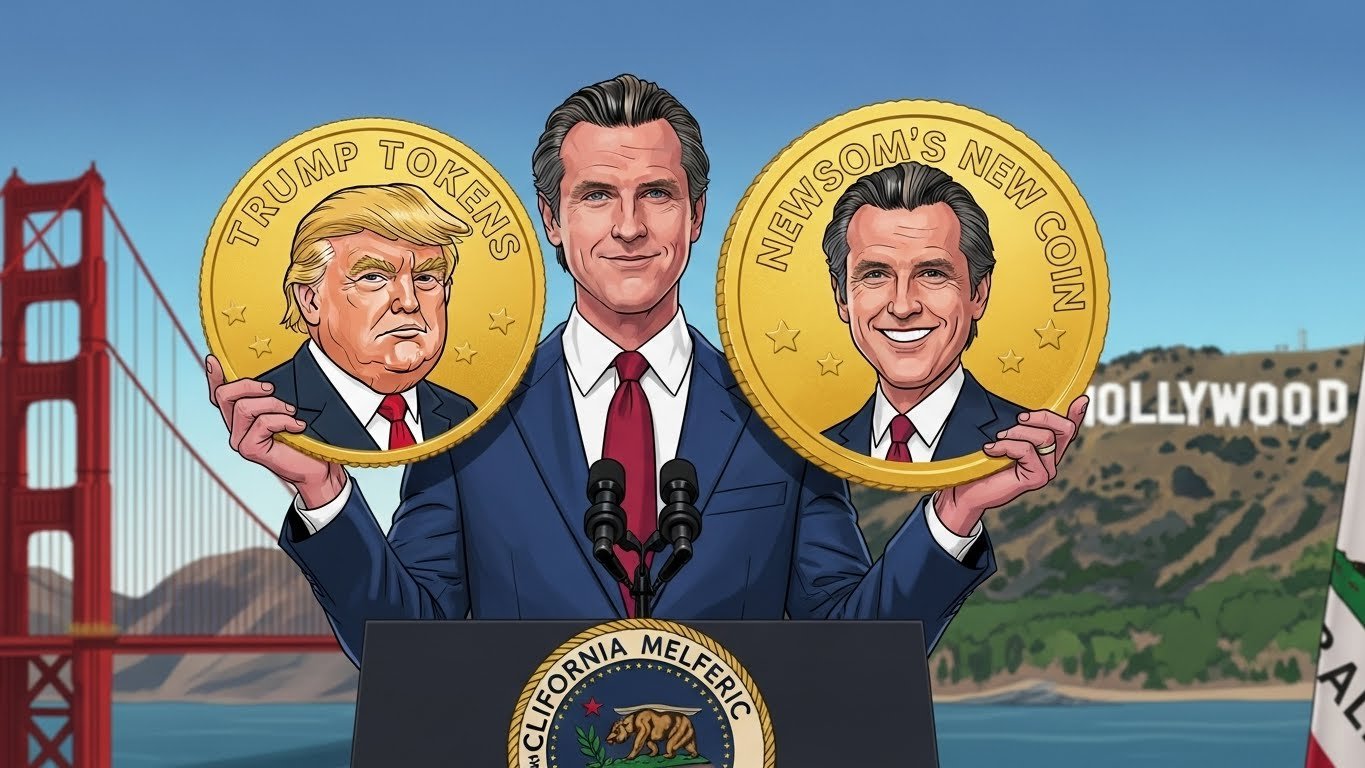
Newsom Plans Anti-Trump Meme Coin Called Corruption Token the intersection of politics and cryptocurrency has taken an unexpected and provocative turn as Newsom plans anti-Trump meme coin called Corruption Token. In an era where digital culture, blockchain technology, and political messaging increasingly overlap, this development has sparked widespread debate across political circles, crypto communities, and social media platforms. Meme coins, once dismissed as internet jokes, have evolved into powerful tools for storytelling, protest, and ideological expression. The idea that a high-profile political figure could leverage this format to make a statement reflects how deeply digital assets have penetrated mainstream discourse.
At its core, the announcement that Newsom plans anti-Trump meme coin called Corruption Token is not just about cryptocurrency. It represents a broader shift in how political narratives are shaped, shared, and monetized in the digital age. Supporters view it as a bold and creative critique, while critics argue it trivializes serious political issues. Understanding this development requires examining meme coin culture, political symbolism, and the changing role of blockchain technology in public debate.
Newsom Plans Anti-Trump Meme Coin
Meme coins began as playful experiments within the crypto ecosystem, often inspired by internet humor and viral trends. Over time, they gained real economic value, fueled by online communities and speculative trading. What started as jokes gradually transformed into cultural artifacts that reflect collective sentiment.
As meme coins grew in popularity, they became vehicles for commentary. Political themes naturally found their way into this space, as memes have long been a staple of online political expression. The announcement that Newsom plans anti-Trump meme coin called Corruption Token fits squarely within this evolution, blending satire, critique, and blockchain technology into a single digital symbol.
Politics and Crypto Are Colliding
Cryptocurrency was originally envisioned as an apolitical technology focused on decentralization and financial freedom. However, as adoption expanded, crypto became intertwined with broader social and political movements. Blockchain technology offers transparency, censorship resistance, and global reach, making it attractive for activists and commentators seeking alternative channels of expression.
When Newsom plans anti-Trump meme coin called Corruption Token, it highlights how crypto is no longer confined to finance. Instead, it has become a medium for political satire, digital protest, and ideological branding. This collision reflects changing attitudes toward both politics and technology in a hyperconnected world.
The Concept Behind Corruption Token
The name Corruption Token itself is intentionally provocative. It draws on existing political narratives and frames them within a digital asset that thrives on attention and virality. Meme coins succeed not because of complex utility but because of symbolism, storytelling, and community engagement.
By choosing a meme coin format, the message becomes accessible and shareable. When Newsom plans anti-Trump meme coin called Corruption Token, the goal appears to be sparking conversation rather than building a traditional financial product. The token functions as a digital meme, carrying political meaning encoded within its branding.
Satire as a Political Tool
Satire has always played a role in political discourse. From cartoons to late-night comedy, humor often delivers criticism more effectively than direct confrontation. Meme coins extend this tradition into the blockchain era.
Corruption Token uses satire to frame its message. The humor and exaggeration inherent in meme culture allow complex political critiques to spread quickly, especially among younger, digitally native audiences.
Symbolism Over Utility
Unlike blockchain projects that emphasize technical innovation, Corruption Token’s value lies in symbolism. Its purpose is not to revolutionize finance but to represent a political stance. This distinction is important when evaluating why Newsom plans anti-Trump meme coin called Corruption Token instead of pursuing more conventional communication strategies.
Public Reaction and Media Attention
The announcement has generated significant media attention, largely because of its novelty. Political figures rarely engage directly with meme coin culture, making this move both surprising and controversial.
Supporters praise the creativity and willingness to engage with modern digital culture. They argue that traditional political messaging often fails to resonate in online spaces dominated by memes and viral content. Critics, however, question whether such tactics undermine the seriousness of political leadership.
The polarized reaction underscores how deeply divided public opinion has become, not just on political issues but on the methods used to discuss them.
The Role of Social Media in Amplifying the Message
Social media platforms play a crucial role in the spread of meme coins. Algorithms favor engaging and shareable content, and political memes often perform well in these environments. When Newsom plans anti-Trump meme coin called Corruption Token, social media becomes the primary distribution channel for both the message and the debate surrounding it.
Crypto communities, political commentators, and casual observers all contribute to the conversation. Each share, comment, or parody adds another layer to the narrative, increasing visibility and influence.
Legal and Ethical Questions Surrounding Political Meme Coins
The blending of politics and cryptocurrency raises important legal and ethical questions. While meme coins are often created without formal backing or promises, their association with political figures introduces new complexities.
Campaign Finance and Transparency Concerns
One concern is whether political meme coins could blur the lines between expression and fundraising. Even if not intended as financial instruments, tokens can gain market value, leading to questions about regulation and disclosure.

When Newsom plans anti-Trump meme coin called Corruption Token, observers naturally ask how such initiatives fit within existing political and financial frameworks. Transparency and accountability become especially important in this context.
Ethical Implications of Tokenized Politics
Tokenizing political messages can amplify voices but also risk oversimplifying serious issues. Critics argue that reducing complex debates to meme coins may encourage superficial engagement rather than informed discussion. Supporters counter that memes are simply a new language of political communication, reflecting how people already consume information online.
Meme Coins as Modern Political Messaging
The emergence of political meme coins reflects broader changes in communication. Traditional speeches and press releases struggle to compete with viral content in capturing attention. By embracing meme culture, political figures acknowledge this reality.
When Newsom plans anti-Trump meme coin called Corruption Token, it signals a willingness to adapt messaging strategies to contemporary digital norms.
Reaching Younger Audiences
Younger generations are more likely to engage with politics through social media and digital communities. Meme coins resonate within these spaces, offering a familiar format for expression. This approach may not replace traditional campaigning, but it complements it by reaching audiences that might otherwise disengage from conventional political discourse.
Risks of Misinterpretation
The downside of meme-based messaging is the risk of misinterpretation. Humor and satire can be misunderstood, especially in polarized environments. A meme coin intended as critique may be seen as trivialization or provocation.
Crypto Culture and the Power of Narratives
Crypto markets are driven as much by narratives as by fundamentals. Meme coins exemplify this phenomenon, thriving on stories, identities, and collective belief.
When Newsom plans anti-Trump meme coin called Corruption Token, the narrative becomes the product. Its success or failure depends less on technical features and more on how effectively the story resonates with its audience.
Community Engagement and Identity
Meme coins often foster strong communities united by shared humor or ideology. These communities amplify messages and sustain interest beyond initial launches.
In a political context, this dynamic can strengthen group identity but also deepen divisions, reflecting the broader polarization of society.
Potential Long-Term Impact on Politics and Crypto
The long-term implications of political meme coins are still unclear. They may remain niche experiments or evolve into common tools for digital activism.
If successful, Corruption Token could inspire similar initiatives across the political spectrum. This would further entrench cryptocurrency as a medium for ideological expression, not just financial innovation.
However, increased politicization could also introduce regulatory scrutiny and reputational risks for the broader crypto industry.
Balancing Innovation With Responsibility
Innovation often pushes boundaries, and political meme coins are no exception. While creativity can energize discourse, it also requires responsibility.
When Newsom plans anti-Trump meme coin called Corruption Token, the challenge lies in balancing expression with respect for democratic processes and public trust. How this balance is managed may influence how similar efforts are perceived in the future.
Conclusion
The announcement that Newsom plans anti-Trump meme coin called Corruption Token marks a striking moment in the convergence of politics, technology, and internet culture. It highlights how meme coins have evolved beyond financial speculation into tools for satire and political commentary. While opinions differ sharply on its appropriateness and effectiveness, the move reflects broader changes in how messages are communicated in the digital age.
As cryptocurrency continues to intersect with cultural and political life, initiatives like Corruption Token raise important questions about expression, ethics, and the future of public discourse. Whether seen as a bold critique or a controversial gimmick, this development underscores that the boundaries between politics and digital innovation are becoming increasingly fluid.
FAQs
Q: What does it mean that Newsom plans anti-Trump meme coin called Corruption Token
It means a political message is being expressed through a meme coin format, using blockchain-based digital satire to critique and comment on political narratives associated with Trump.
Q: Is Corruption Token intended as a serious cryptocurrency investment
Corruption Token is primarily symbolic and satirical rather than a traditional investment. Its purpose is messaging and commentary, not delivering financial utility or long-term returns.
Q: Why are meme coins being used for political expression
Meme coins align with internet culture and social media dynamics, making them effective tools for viral political messaging and engagement, especially among younger audiences.
Q: Could political meme coins face legal or regulatory challenges
Yes, political meme coins could raise legal and ethical questions related to campaign finance, transparency, and regulation, particularly if they gain financial value or widespread adoption.
Q: Does this trend signal a broader shift in political communication
The use of meme coins for political expression suggests a broader shift toward digital-first, culture-driven communication strategies that reflect how people engage with information online today.


