


Pakistan eyes cooperation with UAE-based business group in blockchain, AI, tokenization at a time when the global economy is rapidly shifting toward digital-first models, decentralized technologies, and intelligent automation. This emerging partnership reflects Pakistan’s growing determination to position itself as a competitive player in the global digital economy while leveraging the technological expertise and financial strength of the United Arab Emirates.
Over the past few years, Pakistan has actively pursued digital transformation across governance, finance, industry, and public services. The interest in collaborating with a UAE-based business group specializing in blockchain technology, artificial intelligence, and tokenized assets signals a strategic move to attract foreign investment, modernize infrastructure, and empower local talent. As the UAE continues to lead the Middle East in advanced technologies and innovation-friendly regulation, Pakistan sees a natural partner in its Gulf ally.
This potential cooperation is not merely about technology adoption; it is about building an ecosystem where innovation, investment, and regulatory collaboration converge. From improving transparency in financial systems to enabling AI-driven decision-making and introducing tokenization across assets, this partnership could have far-reaching implications for Pakistan’s economy, startups, and global standing.
Pakistan–UAE Relations: A Strong Foundation for Tech Collaboration
Historical and Economic Ties
Pakistan and the UAE share deep-rooted diplomatic, economic, and cultural relations. For decades, the UAE has been one of Pakistan’s most reliable partners in trade, investment, and employment. Millions of Pakistani expatriates contribute to the UAE economy while sending valuable remittances back home. These longstanding ties provide a strong foundation for expanding cooperation into emerging technologies.
As Pakistan eyes cooperation with UAE-based business group in blockchain, AI, tokenization, it builds on a relationship already characterized by trust and mutual economic interests. The UAE’s investment footprint in Pakistan spans real estate, energy, logistics, and finance, making the transition into digital innovation sectors both logical and timely.
UAE’s Leadership in Emerging Technologies
The UAE has positioned itself as a global hub for blockchain innovation, AI governance, and digital asset regulation. Initiatives such as Dubai’s Blockchain Strategy and the UAE’s National Artificial Intelligence Strategy demonstrate the country’s commitment to future-ready technologies. Pakistani policymakers recognize that collaboration with UAE-based entities can accelerate knowledge transfer, regulatory best practices, and access to international markets.
Blockchain, AI, and Tokenization Matter for Pakistan
Blockchain as a Tool for Transparency and Trust
Blockchain technology has the potential to transform Pakistan’s financial systems, supply chains, and public sector operations. By enabling immutable records, secure transactions, and decentralized verification, blockchain can address long-standing challenges such as corruption, inefficiency, and lack of transparency.
When Pakistan eyes cooperation with UAE-based business group in blockchain, AI, tokenization, it is acknowledging blockchain’s ability to modernize banking, land registries, trade finance, and even voting systems. UAE-based blockchain firms bring practical experience from large-scale implementations, which could significantly shorten Pakistan’s learning curve.
Artificial Intelligence Driving Smart Growth
Artificial intelligence is increasingly seen as the backbone of modern economies. From predictive analytics in agriculture to AI-powered diagnostics in healthcare, the applications are vast. Pakistan, with its large population and growing data footprint, stands to benefit enormously from AI-driven solutions.
Through collaboration with a UAE-based business group, Pakistan could gain access to advanced AI models, cloud infrastructure, and expertise in ethical AI governance. This cooperation could help local industries improve productivity, reduce costs, and create high-value jobs in data science and machine learning.
Tokenization and the Future of Digital Assets
Tokenization involves converting physical or financial assets into digital tokens on a blockchain, enabling fractional ownership, increased liquidity, and global accessibility. For Pakistan, tokenization could unlock new value in real estate, commodities, art, and even government bonds.
As Pakistan eyes cooperation with UAE-based business group in blockchain, AI, tokenization, it is exploring ways to integrate into the global digital asset economy while ensuring compliance with international standards. The UAE’s experience with regulated digital asset frameworks makes it a valuable partner in navigating this complex space.
Strategic Objectives Behind the Cooperation
Attracting Foreign Direct Investment
One of the primary motivations behind this initiative is attracting foreign direct investment (FDI) into Pakistan’s technology sector.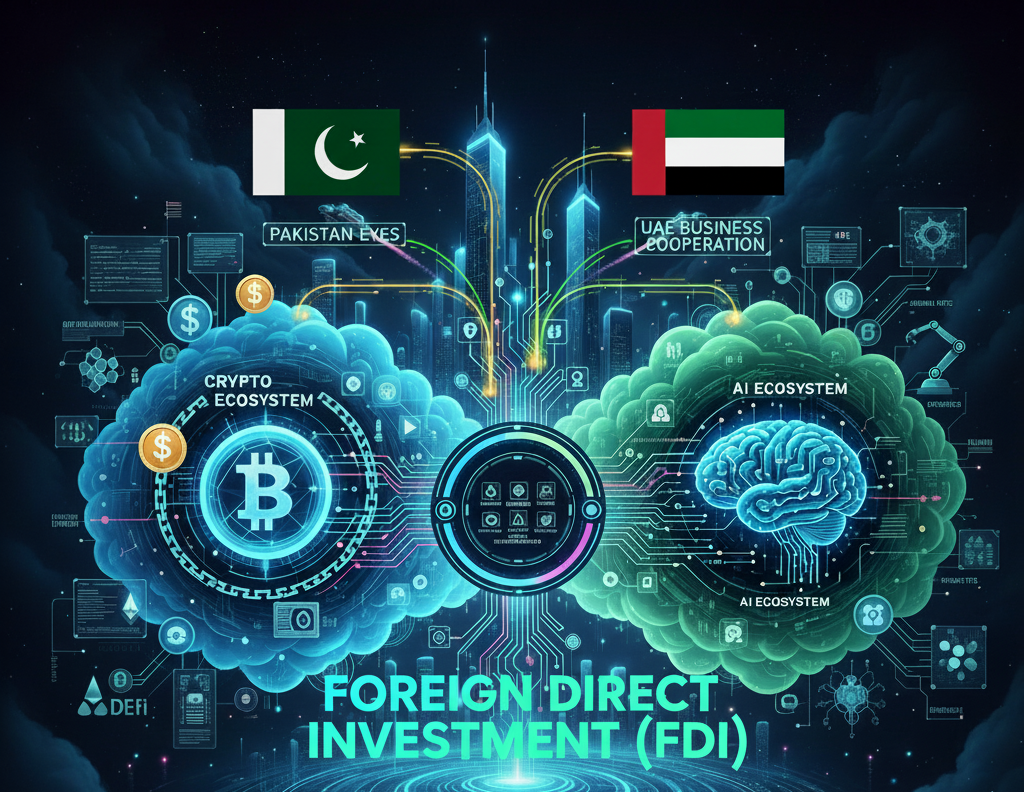
UAE-based business groups have access to global capital markets and investor networks that can channel funding into Pakistani startups, infrastructure projects, and innovation hubs. By positioning itself as open to blockchain, AI, and tokenization, Pakistan sends a strong signal to international investors that it is serious about economic modernization and regulatory reform.
Strengthening Pakistan’s Digital Economy
Pakistan’s digital economy has grown rapidly, driven by fintech startups, e-commerce platforms, and a young, tech-savvy population. However, gaps remain in advanced technologies and large-scale implementation. Cooperation with a UAE-based business group could bridge these gaps by introducing enterprise-grade solutions and global best practices.
This partnership could also support government initiatives aimed at digitizing public services, improving tax collection, and enhancing cybersecurity through blockchain and AI tools.
Building Local Capacity and Skills
Another critical objective is human capital development. Technology transfer is most effective when paired with training, education, and local participation. Collaborative projects could include joint research centers, incubation programs, and skills development initiatives that empower Pakistani professionals.
As Pakistan eyes cooperation with UAE-based business group in blockchain, AI, tokenization, the emphasis is not only on importing technology but also on nurturing domestic expertise that can sustain long-term growth.
Regulatory and Policy Considerations
Creating a Supportive Legal Framework
For blockchain, AI, and tokenization to thrive, a clear and supportive regulatory environment is essential. Pakistan has made progress in digital banking regulations and data protection policies, but emerging technologies require continuous policy evolution.
Collaboration with UAE-based firms can provide insights into regulatory sandboxes, digital asset licensing, and AI governance frameworks that balance innovation with consumer protection.
Ensuring Compliance and Security
Security and compliance are critical concerns in blockchain and AI adoption. Pakistan must ensure that new technologies align with international standards on data privacy, anti-money laundering, and cybersecurity.
Working with experienced UAE-based business groups can help Pakistan design systems that are secure, scalable, and compliant, reducing risks associated with rapid digital transformation.
Economic Impact and Industry Transformation
Financial Services and Fintech Innovation
The financial sector is likely to be one of the biggest beneficiaries of this cooperation. Blockchain-based payment systems, AI-driven credit scoring, and tokenized financial instruments could significantly enhance financial inclusion in Pakistan.
As Pakistan eyes cooperation with UAE-based business group in blockchain, AI, tokenization, local banks and fintech companies could gain access to cutting-edge technologies that improve efficiency and customer experience.
Real Estate, Trade, and Supply Chains
Tokenization can revolutionize real estate by enabling fractional ownership and attracting overseas investors. Similarly, blockchain-based trade platforms can streamline customs processes and reduce fraud in supply chains.
UAE-based expertise in logistics and trade finance could complement Pakistan’s strategic geographic position, enhancing its role in regional and global commerce.
Public Sector Modernization
Beyond the private sector, government services stand to benefit from blockchain and AI. From transparent procurement systems to AI-assisted policy planning, these technologies can improve governance outcomes and public trust.
Challenges and Risks to Address
Infrastructure and Digital Readiness
Despite its potential, Pakistan faces challenges related to digital infrastructure, including internet penetration and data center capacity. Successful cooperation will require parallel investments in connectivity and cloud infrastructure.
Managing Technological Disruption
Rapid adoption of AI and blockchain can disrupt traditional industries and labor markets. Policymakers must balance innovation with social stability by investing in reskilling and inclusive growth strategies.
Ensuring Sustainable Collaboration
Long-term success depends on aligning goals, managing expectations, and ensuring mutual benefit. Clear governance structures and transparent agreements will be essential to sustain cooperation between Pakistan and UAE-based business groups.
The Road Ahead: A Vision for Digital Partnership
As Pakistan eyes cooperation with UAE-based business group in blockchain, AI, tokenization, it is stepping into a future defined by digital resilience, innovation-driven growth, and global integration. This partnership has the potential to reshape Pakistan’s economic trajectory by embedding advanced technologies across sectors and empowering a new generation of innovators.
The UAE’s experience, combined with Pakistan’s market potential and talent pool, creates a powerful synergy. If managed effectively, this collaboration could position Pakistan as a regional hub for blockchain and AI innovation, attracting investment and enhancing economic stability.
Conclusion
Pakistan’s interest in cooperating with a UAE-based business group in blockchain, AI, and tokenization reflects a forward-looking vision aimed at transforming its economy. By embracing emerging technologies and leveraging international partnerships, Pakistan can address structural challenges while unlocking new growth opportunities.
This initiative is not just about technology adoption; it is about building trust, fostering innovation, and creating a sustainable digital ecosystem. As Pakistan eyes cooperation with UAE-based business group in blockchain, AI, tokenization, the success of this endeavor will depend on thoughtful policy, inclusive development, and a shared commitment to long-term progress.
FAQs
Q. Why is Pakistan interested in blockchain, AI, and tokenization?
Pakistan sees these technologies as tools to modernize its economy, improve transparency, and attract foreign investment while enhancing efficiency across sectors.
Q. Why partner with a UAE-based business group?
The UAE has advanced expertise, strong regulatory frameworks, and global investor networks that can accelerate Pakistan’s digital transformation.
Q. How can blockchain benefit Pakistan’s economy?
Blockchain can improve financial inclusion, reduce fraud, enhance supply chain transparency, and modernize public sector systems.
Q. What role does AI play in this cooperation?
AI can drive smarter decision-making, boost productivity, and support innovation in healthcare, agriculture, finance, and governance.
Q. Is tokenization legally allowed in Pakistan?
Tokenization is still evolving in Pakistan’s regulatory landscape, but cooperation with experienced partners can help develop compliant frameworks.
