



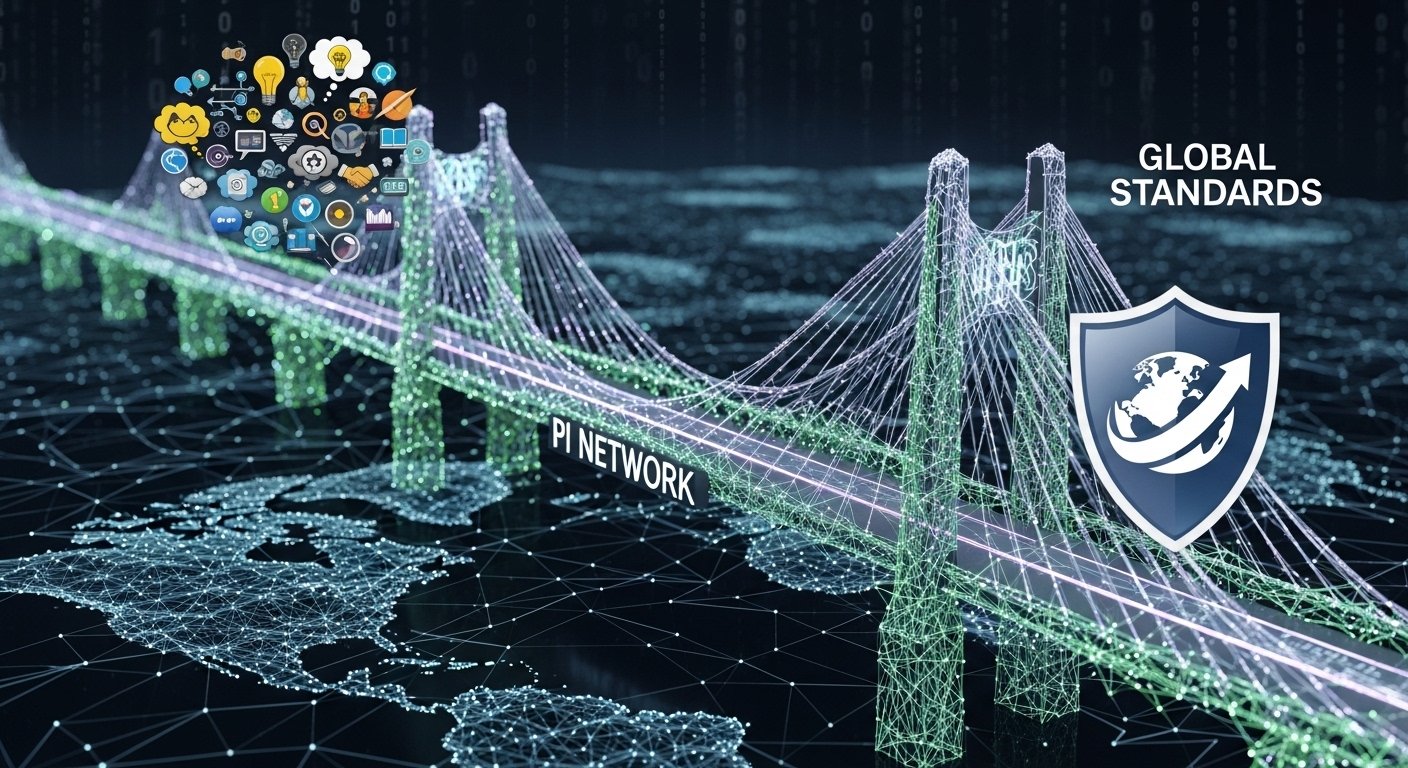
Pi Network Bridges Ideas to Global Standards in Web3 the digital economy is evolving at an unprecedented pace, and blockchain technology continues to reshape how people interact with money, data, and online services. Among the many projects competing for attention in this rapidly changing landscape, Pi Network has positioned itself as a platform that aims to make Web3 accessible to the masses. Instead of focusing only on technical breakthroughs or speculative markets, Pi Network centers its mission on real-world usability, global participation, and inclusive innovation.
The core idea behind Pi Network is simple yet ambitious: build a decentralized ecosystem that anyone can join using a smartphone. While many blockchain platforms demand expensive hardware, complex knowledge, or high transaction fees, Pi Network aims to remove these barriers. This vision has attracted tens of millions of users worldwide, forming what many consider one of the most expansive Web3 communities ever assembled.
As the project matures, Pi Network is working to bridge the gap between raw ideas and internationally accepted digital standards. The goal is not just to create a cryptocurrency, but to build a functioning digital economy supported by applications, services, and real-world transactions. This approach places Pi Network at the center of discussions about the future of Web3 and the next phase of blockchain adoption.
Pi Network Bridges Ideas to Global Standards
Pi Network’s journey began with a concept known as mobile mining, a method that allows users to earn digital currency simply by verifying their presence on the network through a smartphone app. Unlike traditional mining processes that consume massive amounts of electricity and specialized equipment, Pi Network introduced an energy-efficient model designed for everyday users.
This innovation helped the project gain rapid traction. By lowering the entry barrier, Pi Network created a massive user base across different regions, including areas where access to financial services remains limited. The result is a global Web3 ecosystem that is not confined to tech-savvy audiences or wealthy investors.
As the community grew, so did the network’s ambitions. Instead of remaining a simple mining application, Pi Network began evolving into a full blockchain platform designed to support decentralized applications, digital payments, and community-driven marketplaces.
Community-Driven Growth and Network Effects
One of the defining features of Pi Network is its emphasis on social trust and network growth. The platform uses a consensus model inspired by the Stellar Consensus Protocol, which relies on trusted circles rather than brute-force computational power. This design encourages users to invite others into the network, creating a strong sense of community and shared purpose.
The effect is similar to the early days of social media platforms, where user growth fueled adoption and value. In the case of Pi Network, the expanding community also contributes to the development of applications, marketplaces, and services within the ecosystem. This community-first approach is a key factor behind Pi Network’s claim of being one of the largest Web3 ecosystems today.
Bridging Ideas with Global Standards
The Need for Standardization in Web3
Web3 remains a fragmented space. Different blockchains operate with their own rules, tokens, and governance models. While innovation thrives in this environment, the lack of unified standards often creates confusion for users and developers. Pi Network aims to address this challenge by aligning its ecosystem with broader global blockchain standards. This includes focusing on regulatory compliance, identity verification, and user-friendly design principles that make blockchain technology accessible to mainstream audiences.
By emphasizing know-your-customer frameworks, secure wallets, and scalable infrastructure, Pi Network is attempting to position itself as a bridge between experimental Web3 ideas and practical, real-world systems.
Building a Real-World Digital Economy
A major step in bridging ideas with global standards involves creating real-world utility. Pi Network encourages developers to build applications that allow users to spend, exchange, and utilize Pi in everyday transactions.

This includes peer-to-peer marketplaces, service platforms, and decentralized apps that operate within the network. The goal is to create a self-sustaining token-based economy where value is generated through real activity rather than speculation alone. As more developers join the ecosystem, the number of use cases continues to grow. This expansion is crucial for transforming Pi Network from a concept into a fully functional digital economy.
The Technology Behind Pi Network’s Growth
Consensus Mechanism and Energy Efficiency
Unlike proof-of-work systems that rely on heavy computing power, Pi Network uses a consensus algorithm designed for efficiency and scalability. This approach allows the network to maintain security without consuming excessive energy. The model is particularly appealing in a time when environmental concerns are shaping the future of blockchain technology. By promoting an energy-efficient blockchain, Pi Network aligns itself with global sustainability goals.
Scalability and Infrastructure Development
As the user base expands, scalability becomes a critical issue. Pi Network is working on infrastructure that can handle millions of transactions while maintaining low fees and high speeds.
This includes improvements to its mainnet architecture, developer tools, and smart contract capabilities. By focusing on scalability, the project aims to support a growing number of applications and services without compromising performance.
The Role of Developers in the Pi Network Ecosystem
Encouraging Decentralized Application Development
A successful Web3 platform depends heavily on developers. Pi Network recognizes this and has created programs to support the growth of its developer ecosystem.
Developers are encouraged to build decentralized applications, or dApps, that serve real user needs. These applications can range from digital marketplaces to social platforms and financial services. The presence of active developers helps transform Pi Network from a simple currency into a multifunctional ecosystem.
Hackathons, Grants, and Innovation Programs
To attract talent, Pi Network has introduced various initiatives, including hackathons and development grants. These programs provide resources and incentives for developers to build on the platform. Such efforts not only stimulate innovation but also help establish a diverse range of applications that contribute to the overall strength of the ecosystem.
Real-World Adoption and Use Cases
Everyday Transactions and Merchant Integration
One of the most promising aspects of Pi Network is its focus on real-world transactions. The platform aims to enable users to pay for goods and services using Pi, creating a practical use case for the currency.
Some communities have already experimented with local marketplaces where users exchange products and services for Pi. These early experiments offer a glimpse into how a decentralized payment system could function at scale.
Financial Inclusion and Global Reach
Pi Network’s mobile-first approach makes it accessible to people in regions where traditional banking services are limited. This positions the project as a potential tool for financial inclusion. By providing a digital currency that can be accessed through a smartphone, Pi Network offers a pathway for millions of people to participate in the global digital economy.
Challenges Facing Pi Network
Regulatory and Compliance Issues
As with any large-scale blockchain project, regulatory concerns remain a major challenge. Governments around the world are still developing frameworks for digital assets, and compliance requirements vary widely. Pi Network’s focus on identity verification and compliance may help it navigate these challenges, but the evolving regulatory landscape continues to pose uncertainties.
Transition from Testnet to Full Mainnet Utility
Another critical milestone is the transition from the enclosed mainnet phase to a fully open ecosystem. This step will determine how effectively Pi Network can integrate with other blockchains, exchanges, and global markets.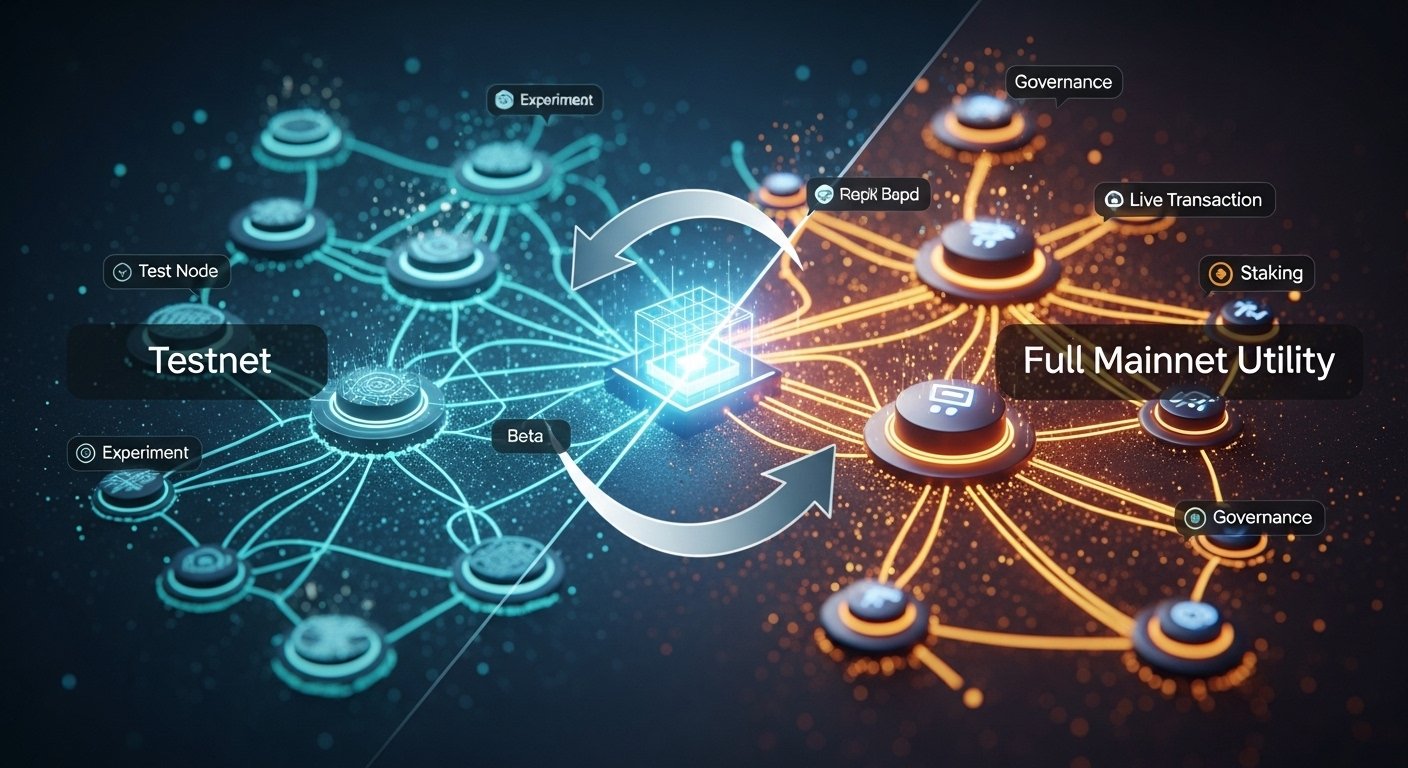
The success of this transition will play a significant role in shaping the network’s long-term value and credibility.
The Future of Pi Network in the Global Web3 Landscape
Competing with Established Blockchain Platforms
Pi Network operates in a highly competitive environment that includes platforms like Ethereum, Solana, and other major blockchain ecosystems. Each of these platforms offers unique advantages, from advanced smart contracts to high-speed transactions.
To compete effectively, Pi Network must continue expanding its decentralized infrastructure, developer base, and real-world use cases.
Potential as the Largest Web3 Ecosystem
With tens of millions of users already participating, Pi Network has the potential to become one of the largest Web3 ecosystems in terms of community size. However, true success will depend on active engagement, real-world utility, and sustainable economic activity.
If the network can successfully bridge the gap between ideas and global standards, it may play a significant role in shaping the next phase of Web3 adoption.
Conclusion
Pi Network represents an ambitious attempt to make blockchain technology accessible to everyone. By focusing on mobile accessibility, community growth, and real-world applications, the project aims to create a truly inclusive digital economy. Its emphasis on bridging ideas with global standards sets it apart from many other blockchain initiatives. Instead of focusing solely on technical innovation or speculative trading, Pi Network is working toward practical adoption and everyday usability.
While challenges remain, particularly in terms of regulation and global integration, the network’s large community and growing ecosystem provide a strong foundation. If Pi Network can successfully execute its vision, it could become a major force in the global Web3 movement, connecting millions of users to the decentralized future.
FAQs
Q: What makes Pi Network different from other cryptocurrencies?
Pi Network stands out because it focuses on accessibility and community participation rather than technical complexity or high-cost mining. Its mobile-first approach allows users to earn and use digital currency through a smartphone, making it more inclusive than many traditional blockchain platforms. The project also emphasizes real-world utility and ecosystem development instead of relying solely on trading activity.
Q: Is Pi Network really the largest Web3 ecosystem today?
Pi Network claims one of the largest user bases in the Web3 space, with tens of millions of participants across different countries. While the definition of the largest ecosystem can vary depending on metrics such as transaction volume or developer activity, Pi Network’s community size is undeniably significant. Its true position will depend on how effectively it converts this user base into active economic participation.
Q: How does Pi Network achieve energy-efficient mining?
Pi Network uses a consensus mechanism inspired by trust-based protocols rather than energy-intensive proof-of-work systems. This allows users to participate in the network without specialized hardware or high electricity consumption. As a result, the platform aligns with global trends toward more sustainable blockchain technologies.
Q: What real-world uses does Pi Network currently offer?
Within its ecosystem, Pi Network supports peer-to-peer marketplaces, service exchanges, and various decentralized applications. These use cases are still evolving, but the goal is to create a functioning digital economy where users can buy goods, pay for services, and interact with apps using Pi as a medium of exchange.
Q: What is the future outlook for Pi Network in the Web3 industry?
The future of Pi Network depends largely on its ability to transition to a fully open mainnet, expand its developer ecosystem, and achieve real-world adoption. If it can successfully integrate with global standards and regulatory frameworks while maintaining its large community, it has the potential to become a major player in the Web3 landscape.


