



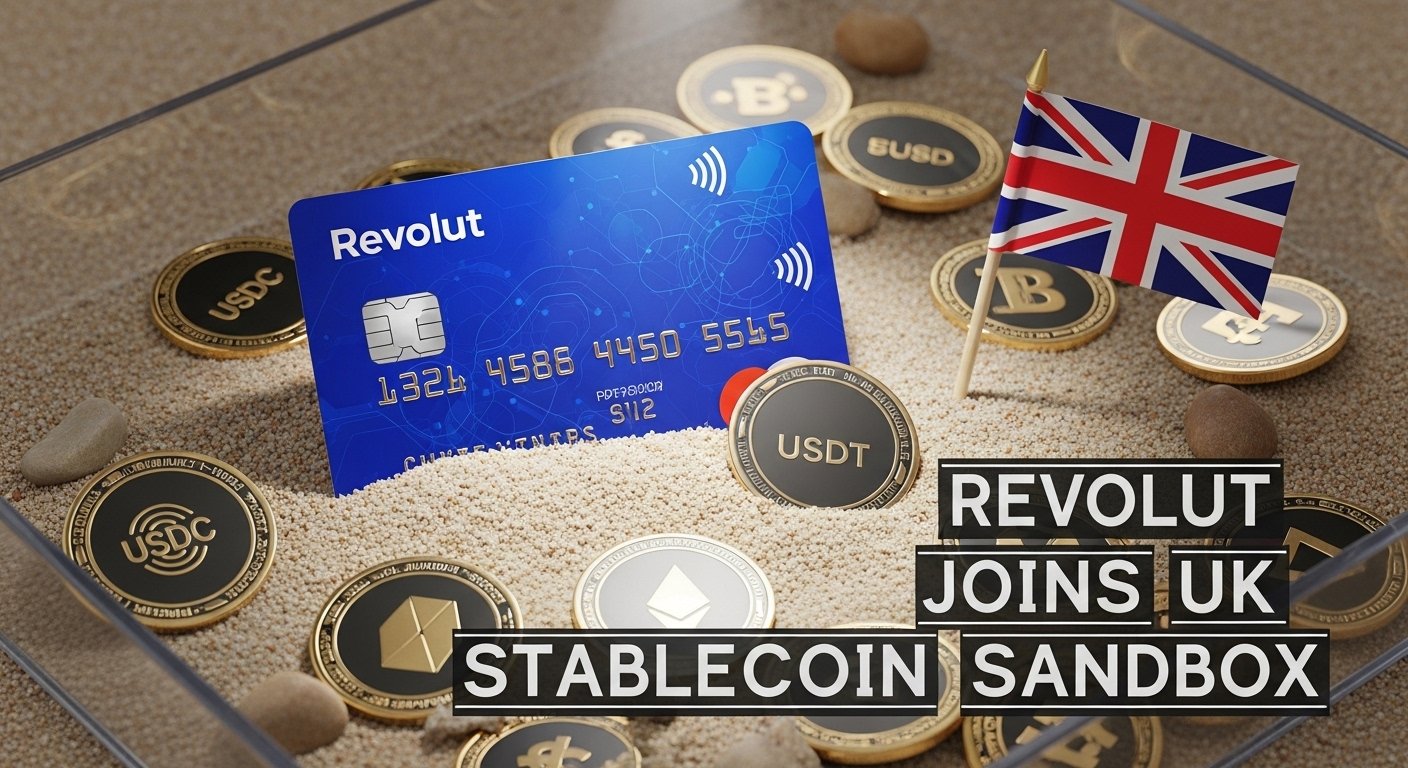
Revolut Joins UK Stablecoin Sandbox Amid US Race the announcement that Revolut joins financial watchdog’s stablecoin sandbox as UK rushes to catch up to US marks a defining moment in the evolution of Britain’s digital asset ambitions. As global financial centers compete to establish leadership in crypto innovation, the United Kingdom is intensifying its efforts to shape a regulatory environment that balances innovation with oversight. The decision by Revolut to participate in the sandbox initiative signals growing institutional confidence in the UK’s emerging framework for stablecoins and digital finance.
Across the Atlantic, the United States has accelerated its own approach to stablecoin oversight, pushing forward policy discussions and legislative frameworks designed to bring clarity to digital asset markets. The UK’s renewed urgency reflects a desire not only to remain competitive but to position London as a global hub for digital currency innovation, regulated crypto markets, and blockchain-based payments.
The move comes at a time when stablecoins have become central to the broader cryptocurrency ecosystem. Unlike volatile digital tokens, stablecoins are pegged to traditional assets such as fiat currencies, offering relative price stability. Their role in facilitating cross-border payments, decentralized finance applications, and tokenized settlements has placed them at the forefront of regulatory conversations worldwide.
Revolut Joins UK Stablecoin Sandbox Amid
The decision that Revolut joins financial watchdog’s stablecoin sandbox as UK rushes to catch up to US is closely tied to the sandbox mechanism introduced by the Financial Conduct Authority. Regulatory sandboxes allow companies to test innovative financial products under controlled supervision. This approach has been widely praised for encouraging fintech innovation while maintaining consumer protection standards.
The Purpose of the Sandbox
The UK stablecoin sandbox provides a controlled environment where firms can experiment with issuing or integrating stablecoins without facing the full weight of regulatory obligations from day one. Instead, regulators monitor these experiments, evaluate risks, and gather insights to refine broader rules.
This flexible structure is critical as policymakers navigate uncharted territory. Stablecoins blur the lines between traditional banking, payments infrastructure, and decentralized networks. Through sandbox participation, companies can demonstrate how their digital payment solutions function in real-world settings while regulators assess systemic risks.
Why Stablecoins Matter in Modern Finance
Stablecoins are increasingly seen as foundational to the future of digital finance. They enable instant settlement, lower transaction costs, and programmable payments. In decentralized finance ecosystems, stablecoins act as liquidity anchors, supporting lending, trading, and yield strategies.
For governments and regulators, however, stablecoins also present risks. Questions around reserve backing, redemption rights, operational resilience, and financial stability remain central to policy debates. The UK’s sandbox aims to address these concerns through practical testing rather than theoretical policymaking.
Revolut’s Strategic Move into Stablecoin Development
The headline that Revolut joins financial watchdog’s stablecoin sandbox as UK rushes to catch up to US reflects more than regulatory compliance. It signals a strategic expansion for one of Europe’s most prominent fintech firms.
Founded in London, Revolut has grown rapidly into a global financial platform offering banking services, foreign exchange, stock trading, and cryptocurrency access. By entering the stablecoin sandbox, the company positions itself at the intersection of digital banking transformation and blockchain integration.
Expanding Beyond Traditional Fintech Services
Revolut’s entry into the sandbox suggests ambitions beyond merely facilitating crypto trading. Stablecoin participation could allow the firm to issue its own digital currency, integrate on-chain settlements, or enhance cross-border remittance services.
Such capabilities align with growing demand for faster, cheaper international payments. Stablecoins can dramatically reduce friction in cross-border transfers, bypassing legacy correspondent banking networks. For a company already focused on global finance, this represents a natural evolution.
Building Trust Through Regulatory Engagement
Rather than launching experimental products in loosely regulated environments, Revolut’s choice to collaborate directly with UK authorities strengthens its credibility. Participation in the sandbox demonstrates commitment to compliance, transparency, and financial stability.
This approach may prove advantageous as global regulators increase scrutiny of crypto firms. By proactively engaging with oversight bodies, Revolut positions itself as a responsible innovator in the rapidly evolving crypto regulatory landscape.
UK’s Race to Compete with the United States
The phrase Revolut joins financial watchdog’s stablecoin sandbox as UK rushes to catch up to US underscores geopolitical competition. The United States has made notable strides in clarifying stablecoin oversight, with discussions involving the U.S. Department of the Treasury and other financial authorities shaping the direction of digital asset regulation.
Diverging Regulatory Philosophies
The US approach has often involved multi-agency coordination, with regulators debating whether stablecoins resemble bank deposits, securities, or payment instruments. In contrast, the UK has leaned toward a more centralized and sandbox-driven method.
By accelerating sandbox participation, the UK signals a willingness to refine policy in parallel with innovation. This strategy may enable faster adaptation to technological shifts while maintaining rigorous standards.
The Global Implications of Regulatory Competition
Financial hubs thrive on clarity. If the US establishes comprehensive stablecoin legislation ahead of the UK, capital and talent could gravitate toward American markets. Conversely, a forward-thinking UK framework may attract global fintech firms seeking predictable oversight.
Revolut’s participation sends a message that major companies view the UK as a viable environment for stablecoin regulation development and digital asset compliance frameworks.
Economic and Financial Stability Considerations
When Revolut joins financial watchdog’s stablecoin sandbox as UK rushes to catch up to US, the decision carries implications beyond fintech innovation. Stablecoins have potential systemic effects on monetary policy, banking liquidity, and payment infrastructure.
Impact on Traditional Banks
If stablecoins become widely adopted for everyday transactions, traditional banks may face competition in deposit gathering and payment processing. Policymakers must evaluate whether stablecoin issuers should meet capital requirements similar to banks.
The sandbox environment allows regulators to observe these dynamics in real time. By analyzing redemption patterns, reserve management practices, and user adoption trends, authorities can anticipate risks before they scale.
Consumer Protection and Transparency
Stablecoin failures in the past have highlighted the importance of transparency. Users need assurance that digital tokens are fully backed by high-quality reserves and redeemable at par value.
Through sandbox oversight, the Financial Conduct Authority can require clear disclosures, operational audits, and contingency planning. These measures reinforce trust in regulated digital currencies while safeguarding consumers.
Technological Innovation and Blockchain Integration
The move that Revolut joins financial watchdog’s stablecoin sandbox as UK rushes to catch up to US also emphasizes the technological dimension of financial reform. Stablecoins are built on blockchain networks, enabling programmable transactions and automated compliance.
Smart Contracts and Programmable Money
Blockchain technology supports smart contracts, allowing payments to execute automatically when predefined conditions are met. This capability could revolutionize supply chain finance, insurance payouts, and subscription services.

Revolut’s potential integration of stablecoin functionality may extend its ecosystem into decentralized finance and tokenized assets. Such developments align with broader trends toward blockchain-based financial services.
Enhancing Cross-Border Payments
Cross-border transactions often involve delays and high fees. Stablecoins can settle transactions within minutes, offering efficiency gains for businesses and individuals alike.
By participating in the sandbox, Revolut can test how stablecoins improve its international remittance offerings. This innovation could strengthen London’s reputation as a leader in digital payments infrastructure.
Regulatory Challenges Ahead
Despite optimism, the journey will not be without hurdles. The narrative that Revolut joins financial watchdog’s stablecoin sandbox as UK rushes to catch up to US reflects both ambition and uncertainty.
Balancing Innovation and Risk
Overregulation could stifle innovation, while underregulation could expose consumers to harm. The sandbox model attempts to strike a middle ground, but scaling experimental insights into comprehensive legislation remains complex.
Authorities must determine reserve asset standards, custodial requirements, anti-money laundering safeguards, and operational resilience benchmarks. Each decision shapes the future of the UK’s digital finance ecosystem.
International Coordination
Stablecoins operate across borders. Without international coordination, regulatory arbitrage may occur, with firms relocating to jurisdictions offering lighter oversight.
The UK’s proactive stance may encourage collaboration with US and European authorities, fostering consistent global standards for crypto asset supervision.
The Broader Future of Stablecoins in the UK
The development that Revolut joins financial watchdog’s stablecoin sandbox as UK rushes to catch up to US may prove to be a catalyst for broader change. If successful, sandbox experiments could inform permanent legislation that integrates stablecoins into mainstream finance.
As governments explore central bank digital currencies, privately issued stablecoins may coexist within regulated frameworks. The UK’s strategy emphasizes controlled experimentation rather than blanket prohibition or unchecked expansion. For Revolut, the sandbox offers an opportunity to shape policy while refining its technological capabilities. For the UK, it represents a chance to assert leadership in a rapidly transforming financial landscape.
Conclusion
The moment Revolut joins financial watchdog’s stablecoin sandbox as UK rushes to catch up to US encapsulates a pivotal chapter in digital finance. The UK’s sandbox initiative reflects a deliberate effort to foster innovation without sacrificing stability. By engaging directly with regulators, Revolut reinforces its commitment to responsible growth in the crypto innovation ecosystem.
As competition between financial centers intensifies, regulatory clarity will determine which jurisdictions attract investment and talent. The UK’s approach may offer a balanced model for navigating the complexities of stablecoin oversight. Whether it succeeds in outpacing the United States remains to be seen, but the sandbox marks a decisive step toward redefining the future of digital money.
FAQs
Q: Why is Revolut joining the UK stablecoin sandbox significant for the broader financial industry?
Revolut’s participation is significant because it signals mainstream fintech engagement with regulated stablecoin experimentation. By entering the sandbox, the company demonstrates that stablecoins are moving from niche crypto markets into structured financial oversight environments. This development could encourage other firms to pursue compliant digital asset initiatives, accelerating the integration of stablecoins into everyday banking and payments while maintaining consumer protections.
Q: How does the UK’s stablecoin sandbox differ from regulatory approaches in the United States?
The UK’s sandbox emphasizes controlled experimentation under direct supervision from the Financial Conduct Authority, allowing firms to test products before full-scale authorization. In contrast, the United States has often relied on multi-agency guidance and legislative proposals that define stablecoins through broader financial laws. The UK model prioritizes iterative testing and real-time data collection, which may enable more flexible and adaptive regulation.
Q: What potential benefits could stablecoins bring to consumers and businesses in the UK?
Stablecoins could offer faster settlement times, lower transaction costs, and improved cross-border payment efficiency. For businesses, programmable features enable automation of contracts and supply chain payments. Consumers may benefit from enhanced transparency and reduced fees compared to traditional remittance channels. However, these advantages depend on robust oversight to ensure asset backing and operational reliability.
Q: Could stablecoin adoption impact traditional banks in the UK?
Yes, widespread stablecoin adoption could influence deposit flows and payment processing models within traditional banks. If consumers choose stablecoins for transactions, banks may face competitive pressure to innovate or integrate blockchain-based solutions. Regulators will need to assess how these dynamics affect financial stability and whether stablecoin issuers should meet similar prudential standards as banks.
Q: What does this development mean for the UK’s position in global digital finance?
By encouraging sandbox participation from major fintech firms, the UK strengthens its reputation as a forward-looking regulatory hub. If the framework proves effective, it could attract international investment and position London as a center for regulated digital asset innovation. Success will depend on maintaining a careful balance between fostering growth and protecting the integrity of the financial system.


