



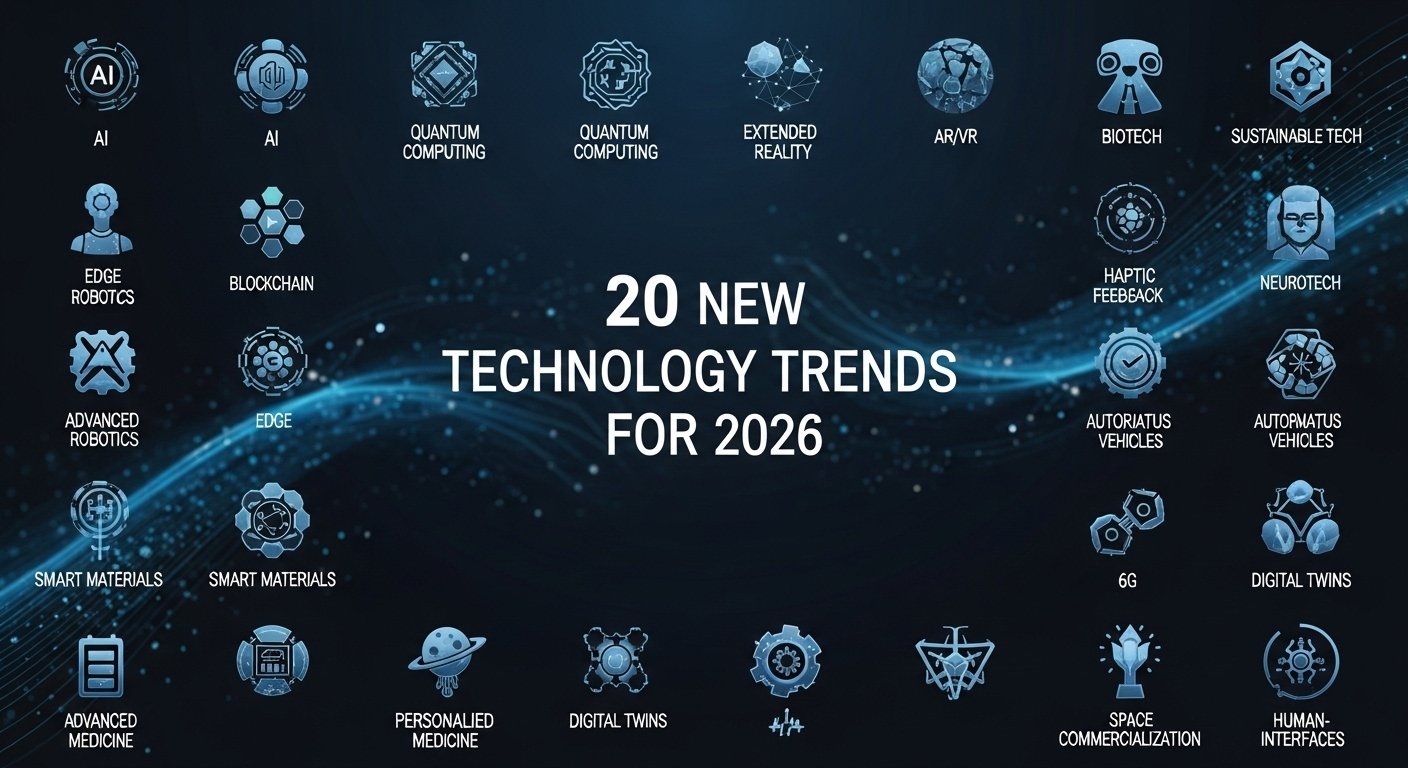
20 New Technology Trends for 2026 That Will Transform the Future Technology never stands still, and as we approach 2026, the pace of innovation is accelerating faster than ever before. Businesses, governments, and individuals are navigating a rapidly evolving digital ecosystem driven by artificial intelligence, automation, connectivity, and sustainability. The 20 new technology trends for 2026 are not just incremental improvements but transformational shifts that will redefine industries, create new markets, and reshape the global economy.
From artificial intelligence advancements and quantum computing breakthroughs to green technology innovations and next-generation cybersecurity, these developments are poised to impact everything from healthcare and finance to education and manufacturing. As digital transformation becomes a strategic necessity rather than a choice, understanding these 20 new technology trends for 2026 is critical for businesses aiming to remain competitive.
This comprehensive guide explores each of the 20 new technology trends for 2026 in depth, explaining how they work, why they matter, and what they mean for the future of innovation.
20 New Technology Trends for 2026
Artificial intelligence continues to dominate the conversation around new technology trends for 2026. However, the shift is no longer about basic automation. The focus is now on autonomous AI systems capable of context-aware decision-making. These systems can analyze vast datasets in real time, learn continuously, and adapt without constant human oversight.
In 2026, machine learning algorithms, deep learning models, and generative AI systems will become more specialized and industry-focused. Enterprises will rely on AI-driven analytics to predict consumer behavior, optimize supply chains, and automate complex workflows. The integration of AI into everyday business processes will make it one of the most influential technology trends shaping the decade.
Generative AI Expands Beyond Content Creation
Generative AI has already transformed creative industries, but in 2026, its applications will go far beyond writing and image generation. Businesses will leverage generative models for product design simulation, drug discovery, and automated software development.
As one of the leading new technology trends for 2026, generative AI will accelerate innovation cycles. Engineers will use AI to prototype products virtually, reducing costs and time-to-market. In healthcare, generative models will assist researchers in identifying new compounds, dramatically improving medical research efficiency.
Quantum Computing Moves Toward Commercialization
Quantum computing is transitioning from experimental labs to real-world applications. Although still in early stages, 2026 is expected to mark significant milestones in quantum algorithms and error correction techniques.
Among the 20 new technology trends for 2026, quantum computing stands out for its potential to revolutionize encryption, optimization, and complex simulations. Financial institutions may use quantum systems to enhance risk modeling, while pharmaceutical companies could simulate molecular interactions at unprecedented speeds.
6G Research and Hyperconnectivity
While 5G adoption continues globally, research into 6G is gaining momentum. Hyperconnectivity will enable faster data transfer rates, ultra-low latency, and seamless communication between devices.

As part of the new technology trends for 2026, advanced connectivity will power smart cities, Internet of Things ecosystems, and real-time augmented experiences. The expansion of ultra-fast networks will support autonomous vehicles, remote surgeries, and immersive digital environments.
Extended Reality Redefines Digital Interaction
Extended Reality, including virtual reality, augmented reality, and mixed reality, is becoming more immersive and accessible. In 2026, XR will integrate with enterprise systems to enhance training, collaboration, and customer engagement.
Businesses adopting these technology trends will use immersive simulations for workforce training and virtual collaboration platforms for global teams. Retailers may implement augmented experiences to allow customers to visualize products before purchasing.
Blockchain Evolves Beyond Cryptocurrency
Blockchain technology is expanding beyond digital currencies. By 2026, enterprises will use blockchain for secure data management, supply chain transparency, and smart contract automation.
Among the 20 new technology trends for 2026, blockchain’s ability to provide decentralized trust mechanisms will make it crucial for industries requiring secure transactions and record-keeping. Governments may adopt blockchain for digital identity systems, improving transparency and efficiency.
Cybersecurity Becomes AI-Driven and Proactive
As cyber threats grow more sophisticated, cybersecurity solutions are evolving rapidly. In 2026, organizations will implement AI-powered threat detection systems capable of identifying anomalies in real time.
The rise of zero trust architecture, behavioral analytics, and endpoint protection platforms will define cybersecurity within the broader new technology trends for 2026. Instead of reacting to attacks, companies will proactively prevent breaches using predictive security analytics.
Edge Computing Gains Mainstream Adoption
Edge computing reduces latency by processing data closer to its source. With billions of IoT devices generating real-time data, centralized cloud systems alone are no longer sufficient.
One of the critical technology trends in 2026 will be the integration of edge computing with AI to enable real-time data processing, particularly in industries such as healthcare, manufacturing, and autonomous transportation.
Sustainable and Green Technology Innovation
Environmental sustainability is becoming a priority across industries. In 2026, green technology will focus on renewable energy solutions, carbon capture systems, and energy-efficient data centers.
Among the 20 new technology trends for 2026, sustainability-driven innovation will play a major role in reducing environmental impact while maintaining technological growth. Companies investing in clean energy technologies will gain both economic and reputational advantages.
Autonomous Vehicles and Smart Mobility
Autonomous vehicles are steadily advancing toward widespread deployment. Enhanced sensors, AI-driven navigation, and real-time connectivity are making self-driving systems more reliable.
Smart mobility solutions will transform urban infrastructure, making transportation safer and more efficient. As one of the defining new technology trends for 2026, autonomous systems will reshape logistics, ride-sharing, and public transportation networks.
Robotics and Intelligent Automation
Robotics is entering a new era of collaborative intelligence. In 2026, robots will work alongside humans in manufacturing, healthcare, and retail.
These systems will rely on computer vision technology, advanced sensors, and AI-powered control systems. As businesses adopt automation to improve productivity, robotics will remain a core component of the evolving technology landscape.
Biotechnology and AI-Driven Healthcare
Healthcare innovation is accelerating due to AI and biotechnology convergence. Personalized medicine, gene editing, and predictive diagnostics are becoming mainstream.
Within the 20 new technology trends for 2026, biotech advancements such as CRISPR-based therapies and AI-driven drug discovery will significantly improve patient outcomes. Hospitals will use predictive analytics to detect diseases earlier and tailor treatments to individual genetic profiles.
Digital Twins Transform Industrial Operations
Digital twin technology creates virtual replicas of physical assets. In 2026, industries will use digital twins to monitor equipment performance and simulate operational changes. This technology will optimize manufacturing processes, reduce downtime, and enhance efficiency. As part of the broader new technology trends for 2026, digital twins will enable data-driven decision-making in real time.
Advanced Semiconductor Innovations
The global demand for computing power continues to grow. Advanced semiconductor technologies will focus on smaller, faster, and more energy-efficient chips. These developments will support AI workloads, edge computing, and next-generation devices. Semiconductor innovation remains central to enabling many of the 20 new technology trends for 2026.
Human Augmentation Technologies
Human augmentation, including wearable technology and brain-computer interfaces, is advancing rapidly. These innovations aim to enhance cognitive and physical abilities. By 2026, wearable devices will monitor health metrics in real time, while brain-computer research may open new possibilities for communication and rehabilitation therapies.
Smart Cities and Urban Tech
Smart city initiatives are integrating IoT sensors, AI analytics, and sustainable infrastructure to improve urban living. Among the leading new technology trends for 2026, smart cities will focus on energy efficiency, traffic management, and public safety through data-driven governance models.
Advanced Cloud Computing Models
Cloud computing is evolving toward multi-cloud and hybrid architectures. Businesses are adopting flexible infrastructure strategies to improve scalability and resilience. Cloud-native applications, containerization, and serverless computing will shape enterprise IT environments in 2026.
Voice and Conversational AI Expansion
Voice technology is becoming more natural and context-aware. Conversational AI systems will support customer service, healthcare consultations, and enterprise communication.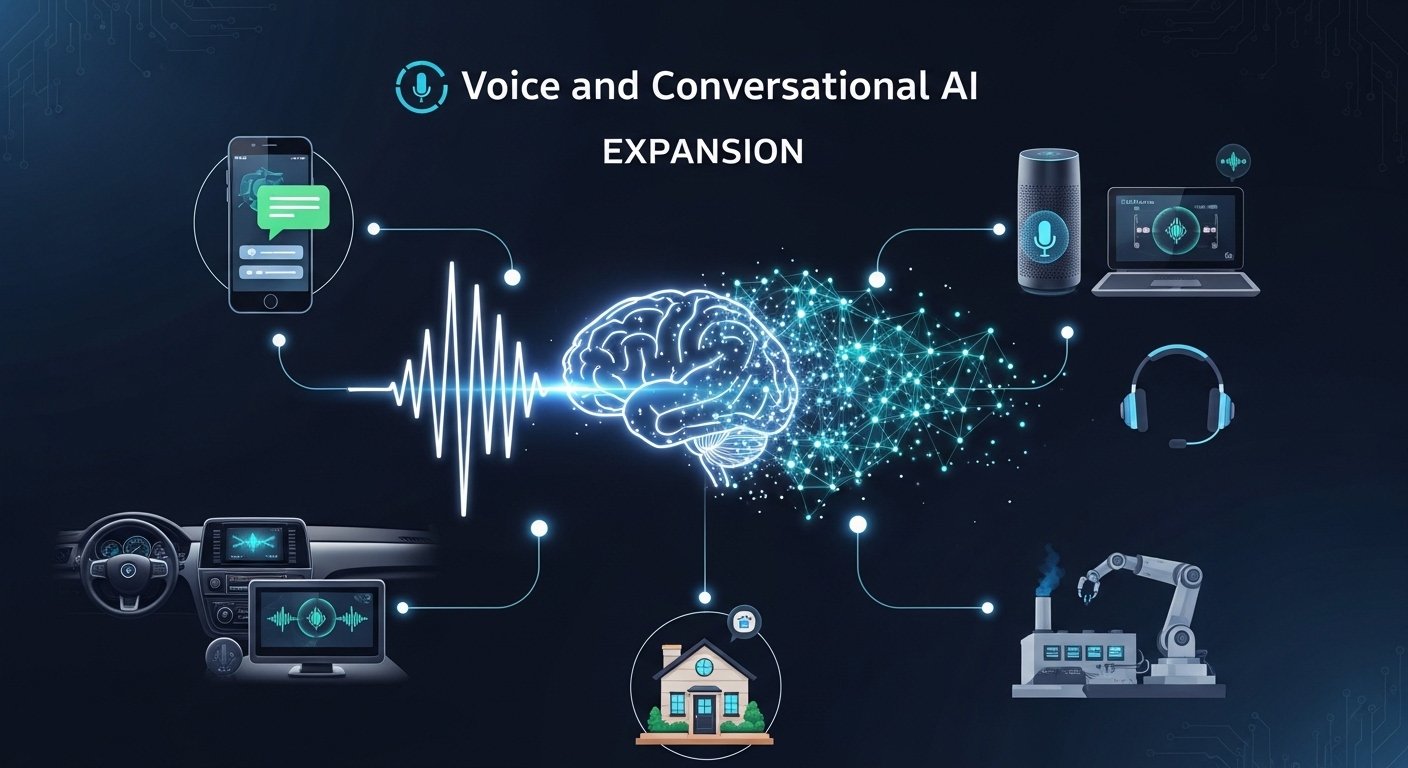
Improved natural language processing will make interactions seamless and intuitive.
Space Technology Commercialization
Private companies are accelerating innovation in space exploration. Satellite networks, reusable rockets, and space tourism are gaining traction. Space technology is emerging as one of the most ambitious new technology trends for 2026, with applications in global communication and climate monitoring.
Advanced Data Analytics and Predictive Intelligence
Data remains a strategic asset. In 2026, organizations will rely heavily on predictive analytics and AI-driven insights to guide decision-making. Advanced analytics platforms will enable businesses to extract actionable intelligence from massive datasets.
The Rise of Decentralized Digital Economies
Decentralized platforms are reshaping finance, governance, and digital ownership models. Blockchain-based ecosystems will empower peer-to-peer transactions and digital asset management.
As part of the 20 new technology trends for 2026, decentralized digital economies will reduce reliance on centralized intermediaries and enhance transparency.
Conclusion
The 20 new technology trends for 2026 highlight a future driven by intelligence, connectivity, sustainability, and decentralization. These innovations will not only redefine industries but also reshape how societies function and interact. Businesses that proactively adapt to these emerging technology trends will position themselves for long-term success in an increasingly digital world. As we move toward 2026, staying informed and agile will be essential for navigating the next era of technological transformation.
FAQs
Q: What are the most important new technology trends for 2026 for businesses to focus on?
The most important new technology trends for 2026 for businesses include artificial intelligence, cybersecurity advancements, cloud computing evolution, and edge computing integration. These technologies directly impact operational efficiency, customer experience, and competitive advantage. Companies that invest in AI-driven analytics, secure digital infrastructure, and scalable cloud solutions will be better positioned to handle future market disruptions.
Q: How will artificial intelligence shape the new technology trends for 2026?
Artificial intelligence will play a central role in shaping the new technology trends for 2026 by enabling automation, predictive analytics, and personalized services. AI systems will become more autonomous, capable of real-time decision-making, and deeply integrated into industries such as healthcare, finance, and manufacturing. This widespread adoption will significantly increase productivity and innovation.
Q: Are sustainable innovations part of the 20 new technology trends for 2026?
Yes, sustainable and green technology innovations are a critical component of the 20 new technology trends for 2026. Companies are prioritizing renewable energy solutions, carbon reduction technologies, and energy-efficient infrastructure. Sustainability is no longer optional but a strategic necessity for long-term growth and regulatory compliance.
Q: How can individuals prepare for the technology trends emerging in 2026?
Individuals can prepare for emerging technology trends by developing digital skills in areas such as artificial intelligence, data analytics, cybersecurity, and cloud computing. Continuous learning and adaptability will be essential as automation and digital transformation reshape the job market and create new career opportunities.
Q: Why is understanding the 20 new technology trends for 2026 important today?
Understanding the 20 new technology trends for 2026 is important because technological shifts often occur faster than expected. Early awareness allows businesses and professionals to adapt strategies, invest wisely, and stay ahead of competitors. Being proactive rather than reactive will determine success in the evolving digital economy.


