




Bitcoin hashrate post halving drop the cryptocurrency mining landscape has witnessed an unprecedented shift as the Bitcoin hashrate post halving drop has reached its most dramatic decline since the April 2024 halving event. Network data reveals that Bitcoin’s computational power has experienced a significant contraction, primarily attributed to widespread machine shutdowns across China’s mining regions. This development marks a critical turning point for the world’s leading cryptocurrency, raising questions about network security, miner profitability, and the broader implications for Bitcoin’s decentralized infrastructure. As mining operations grapple with reduced block rewards and operational pressures, the Bitcoin network hashrate has shed substantial computational capacity, creating ripples throughout the entire digital asset ecosystem.
The Bitcoin Hashrate and Its Significance
The Bitcoin mining hashrate represents the total computational power dedicated to processing transactions and securing the blockchain network. Measured in exahashes per second, this metric serves as a fundamental indicator of network health and security strength. When miners commit more computing resources to the network, the hashrate increases, making it exponentially more difficult for malicious actors to compromise the blockchain’s integrity.
The relationship between hashrate and network security cannot be overstated. A higher hashrate means greater decentralization and resilience against potential attacks, including the theoretical fifty-one percent attack scenario. Conversely, when the Bitcoin hashrate drops, it potentially creates vulnerabilities, though Bitcoin’s difficulty adjustment mechanism helps maintain equilibrium over time.
Mining operations involve specialized hardware known as Application Specific Integrated Circuits that solve complex mathematical problems to validate transactions and mint new bitcoins. The collective power of all these machines worldwide constitutes the total network hashrate. This figure fluctuates based on numerous factors including electricity costs, hardware efficiency, Bitcoin’s price, and most significantly, the halving events that occur approximately every four years.
The 2024 Bitcoin Halving Event and Its Immediate Aftermath
The Bitcoin halving that occurred in April 2024 reduced the block reward from six point two five bitcoins to three point one two five bitcoins per block. This programmed reduction, embedded in Bitcoin’s code by its pseudonymous creator Satoshi Nakamoto, ensures the cryptocurrency’s scarcity by limiting supply over time. However, this mechanism also creates immediate financial pressure on mining operations worldwide.Following the post halving hashrate decline, miners faced an instant fifty percent reduction in revenue from block rewards. For operations running on thin profit margins,
Historical patterns from previous halvings in two thousand twelve, two thousand sixteen, and two thousand twenty showed temporary hashrate contractions as unprofitable miners exited the network. However, the magnitude of the current Bitcoin hashrate post halving drop has exceeded expectations, with some estimates suggesting a decline of fifteen to twenty percent from peak levels observed immediately before the halving event.The economic calculus for miners changed dramatically overnight.
China’s Machine Shutdowns: The Primary Catalyst
Despite the Chinese government’s comprehensive ban on cryptocurrency mining activities implemented in mid two thousand twenty one, significant mining infrastructure remained either dormant or operated covertly within the country’s borders. Recent enforcement actions and infrastructure shutdowns in key Chinese provinces have resulted in substantial Bitcoin mining capacity being taken offline, contributing significantly to the current ork.
The provinces most affected include Inner Mongolia, Xinjiang, Sichuan, and Yunnan, regions that historically hosted massive mining operations due to abundant cheap electricity from coal and hydroelectric sources. Local authorities have reportedly conducted inspections of industrial facilities, targeting suspicious electricity consumption patterns that indicate cryptocurrency mining activities.
Technical Analysis of the Hashrate Decline


Network monitoring data from major mining pools and blockchain analytics firms reveals that the Bitcoin network hashrate peaked at approximately seven hundred exahashes per second in the weeks leading up to the halving event. Following the halving and subsequent Chinese shutdowns, the hashrate dropped to levels ranging between five hundred fifty to six hundred exahashes per second, representing a decline of fourteen to twenty one percent depending on measurement timing.
The geographic distribution of hashrate has shifted noticeably, with increased concentration in regions like North America, Kazakhstan, Russia, and parts of Northern Europe. United States based mining operations have absorbed some of the displaced capacity, though not enough to fully offset the Chinese shutdowns. This redistribution has implications for decentralization, as hashrate becomes more concentrated in fewer jurisdictions.
Economic Implications for Bitcoin Miners
The combination of halved block rewards and reduced Bitcoin hashrate has created a challenging economic environment for mining operations worldwide. Profitability calculations that once showed comfortable margins now reveal razor thin profits or outright losses, particularly for operations using older generation mining hardware or facing above average electricity costs.Miners operating Application Specific Integrated Circuits from the nineteenth series or earlier have been hit hardest, as these machines lack the energy efficiency needed to remain profitable under current conditions.
Large scale institutional miners with access to capital markets have responded by accelerating hardware refresh cycles, investing heavily in the latest generation twenty one nanometer and upcoming eighteen nanometer chips that offer dramatically improved efficiency ratios. This technology upgrade cycle, while expensive upfront, positions these operations to weather the reduced reward environment more effectively.The mining profitability crisis has accelerated industry consolidation, with smaller independent miners selling operations to larger publicly traded mining companies.
Impact on Bitcoin Network Security and Decentralization
The significant Bitcoin hashrate post halving drop has reignited discussions about network security implications and the delicate balance between mining economics and decentralization principles. While the absolute hashrate remains historically high compared to levels from several years ago, the rapid decline raises questions about how vulnerable the network might be during transition periods.Security experts generally agree that Bitcoin’s current hashrate, even after the decline, provides robust protection against realistic attack scenarios. The computational resources required to mount a successful attack remain astronomically expensive,
The decentralization question proves more nuanced. On one hand, the exit of Chinese mining capacity removes influence from a jurisdiction with demonstrated willingness to intervene in cryptocurrency operations. This geographic redistribution arguably enhances decentralization by reducing concentration in any single country. On the other hand, the consolidation among large institutional miners in remaining jurisdictions concentrates power among fewer entities.Network participants monitor the distribution of hashrate among mining pools carefully,
Mining Difficulty Adjustments and Network Adaptation
Bitcoin’s self regulating difficulty adjustment mechanism has proven crucial in maintaining network stability despite the hashrate drop. This algorithmic feature ensures that blocks continue to be discovered approximately every ten minutes regardless of total computational power dedicated to mining, preserving the predictable issuance schedule that defines Bitcoin’s monetary policy.Following the initial post halving decline, the network underwent several downward difficulty adjustments totaling approximately sixteen to twenty percent cumulatively.
The difficulty adjustment mechanism creates a natural equilibrium point where mining becomes profitable enough to attract sufficient hashrate to secure the network, but not so profitable that it triggers massive overcapacity. This dynamic system has functioned reliably since Bitcoin’s inception, weathering numerous boom and bust cycles in mining economicCurrent projections suggest that difficulty will continue adjusting downward in subsequent periods if the Bitcoin hashrate remains suppressed,
Global Mining Industry Response and Adaptation
Mining operations worldwide have implemented various strategies to navigate the challenging post halving environment. These responses range from geographic relocation and hardware upgrades to innovative energy sourcing arrangements and diversification into alternative revenue streams beyond block rewards and transaction fees.
North American miners have aggressively expanded capacity, with publicly traded companies announcing installation of hundreds of thousands of new generation mining rigs. These operations benefit from relatively stable regulatory environments, access to renewable energy sources, and proximity to capital markets for financing expansion. Several major mining facilities in Texas, Kentucky, and North Dakota have come online or significantly expanded in recent months.
Market Reaction and Bitcoin Price Correlation
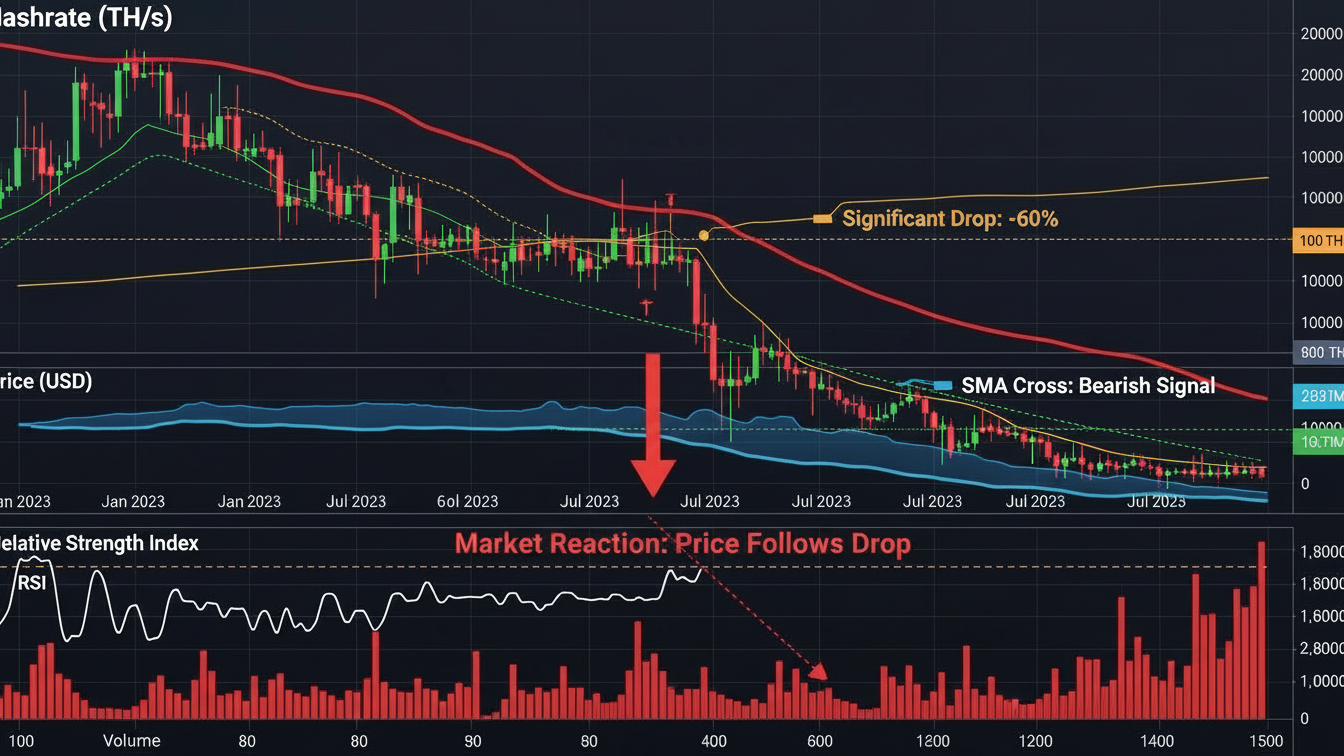

The Bitcoin hashrate post halving drop has occurred against a complex market backdrop, with Bitcoin’s price exhibiting significant volatility throughout the period. Historical analysis reveals complicated relationships between hashrate changes and price movements, with causation flowing in both directions depending on circumstances.In theory, reduced hashrate could signal miner capitulation and bearish sentiment, potentially pressuring prices downward. Conversely, some analysts interpret hashrate declines as clearing events that remove weak hands from the mining sector, ultimately strengthening the network’s foundation for future growth.
Market participants monitor miner wallet activity closely for signs of capitulation, as miners selling bitcoin reserves to cover operational expenses can create selling pressure. Data indicates moderate increases in miner outflows to exchanges during the post halving period, though these flows remain well below panic selling levels observed during previous major downturns.The reduced block reward combined with lower hashrate has implications for Bitcoin’s security budget, the total value protecting the network through mining incentives.
Environmental and Energy Considerations
The hashrate reduction has significant implications for Bitcoin’s energy consumption and environmental footprint, topics that generate substantial debate among supporters and critics. Reduced computational power directly translates to decreased electricity consumption across the global mining network, potentially reducing Bitcoin’s total energy draw by ten to twenty percent corresponding to the hashrate decline.
Environmental critics often focus on mining’s electricity consumption and associated carbon emissions, particularly from operations powered by fossil fuels. The current hashrate contraction, driven partly by Chinese coal powered operations shutting down, represents a net reduction in the most environmentally problematic mining activities. Meanwhile, the industry’s shift toward renewable energy sources has accelerated.
Regulatory Landscape and Future Outlook
The regulatory environment for Bitcoin mining continues evolving globally, with jurisdictions adopting vastly different approaches ranging from outright bans to active encouragement through tax incentives and infrastructure support. The Chinese shutdowns that contributed to the current hashrate drop represent one extreme of regulatory hostility, while other countries actively court mining investments.
United States policy remains fragmented across state and federal levels, with some states like Texas and Wyoming offering favorable regulatory frameworks and energy partnerships, while others impose restrictions or additional taxes on mining activities. Federal agencies continue debating appropriate oversight mechanisms, environmental standards, and energy reporting requirements.
Conclusion
The Bitcoin hashrate post halving drop represents a significant but manageable transition for the cryptocurrency network. While the combination of reduced block rewards and Chinese machine shutdowns has created the sharpest decline since the two thousand twenty four halving event, Bitcoin’s self adjusting protocol continues demonstrating remarkable resilience. The mining industry’s response through hardware upgrades, geographic redistribution, and operational optimization positions the network for long term stability despite short term challenges.
For investors, miners, and Bitcoin stakeholders, understanding these dynamics provides crucial context for evaluating the network’s security and future prospects. The current environment separates efficient, well capitalized operations from marginal participants, ultimately strengthening the mining sector’s foundation. As the Bitcoin mining network continues adapting to post halving economics, monitoring hashrate trends, difficulty adjustments, and geographic distribution patterns offers valuable insights into ecosystem health.


