



The digital transformation landscape has witnessed a groundbreaking milestone with the Alliance for OpenUSD unveiling its OpenUSD Core Specification 1.0, marking a pivotal moment for the industrial metaverse ecosystem. This comprehensive framework establishes universal standards that promise to revolutionize how enterprises create, share, and collaborate on complex 3D content across diverse platforms and applications. The OpenUSD Core Specification 1.0 represents years of collaborative effort from industry leaders committed to building an interoperable foundation for next-generation spatial computing experiences. As organizations increasingly recognize the strategic value of immersive technologies, this specification arrives at a critical juncture, offering the standardization necessary to accelerate adoption and innovation across manufacturing, automotive, entertainment, architecture, and countless other sectors seeking to leverage three-dimensional digital workflows.
The Alliance for OpenUSD and Its Mission
The Alliance for OpenUSD emerged as a collaborative consortium bringing together technology giants, creative studios, and industrial enterprises united by a common vision of establishing open standards for three-dimensional content creation and interchange. Founded through the stewardship of organizations including Pixar Animation Studios, NVIDIA, Adobe, Apple, and Autodesk, this alliance represents an unprecedented level of cooperation across traditionally competitive boundaries. The primary objective centers on advancing Universal Scene Description as the foundational language for describing, composing, simulating, and collaborating within virtual worlds.
This collaborative framework addresses a fundamental challenge that has plagued the three-dimensional content industry for decades: the lack of standardized formats and workflows that enable seamless data exchange between different software applications and platforms. Before the formalization of OpenUSD standards, organizations routinely encountered significant friction when attempting to move assets between creation tools, rendering engines, simulation environments, and collaborative platforms. The resulting inefficiencies consumed countless hours of technical work, introduced quality degradation through multiple conversion processes, and created barriers to effective collaboration across distributed teams.
Breaking Down OpenUSD Core Specification 1.0 Features
The OpenUSD Core Specification 1.0 encompasses a comprehensive technical framework that defines how three-dimensional scenes, assets, and workflows should be structured, composed, and exchanged across different systems. At its foundation lies a sophisticated scene description language that enables artists, engineers, and developers to construct arbitrarily complex virtual environments through hierarchical composition of smaller, reusable components. This compositional approach mirrors modern software development practices, allowing teams to work on different aspects of a project simultaneously while maintaining consistency and enabling non-destructive workflows.
One of the most significant aspects of the specification involves its layering system, which permits multiple contributors to make additive or overriding changes to scene descriptions without modifying original source data. This capability proves invaluable in collaborative production environments where lighting artists, modeling teams, animation departments, and technical directors need to work concurrently on shared assets. The OpenUSD framework maintains complete edit histories and supports sophisticated merging strategies that preserve creative intent while enabling parallel workflows that would be impossible with traditional monolithic file formats.
Industrial Metaverse Applications and Use Cases
The industrial metaverse represents the convergence of physical and digital manufacturing, design, and operational workflows, creating persistent virtual environments where enterprises can simulate, optimize, and collaborate on real-world systems before committing to physical implementation. The OpenUSD Core Specification 1.0 provides the technical foundation necessary for building these sophisticated digital twin ecosystems, enabling organizations to maintain synchronized representations of factories, products, infrastructure, and processes that remain accurate throughout their entire lifecycle.
Manufacturing organizations are leveraging OpenUSD standards to create comprehensive digital factory representations that integrate CAD models, simulation data, sensor information, and operational parameters into unified environments. Engineers can visualize entire production lines, test equipment layouts, simulate material flows, and identify potential bottlenecks before making costly physical changes. The standardized format ensures that data generated by specialized engineering tools can be consumed by visualization platforms, training simulators, and maintenance applications without extensive conversion workflows.
Technical Advantages Over Competing Standards
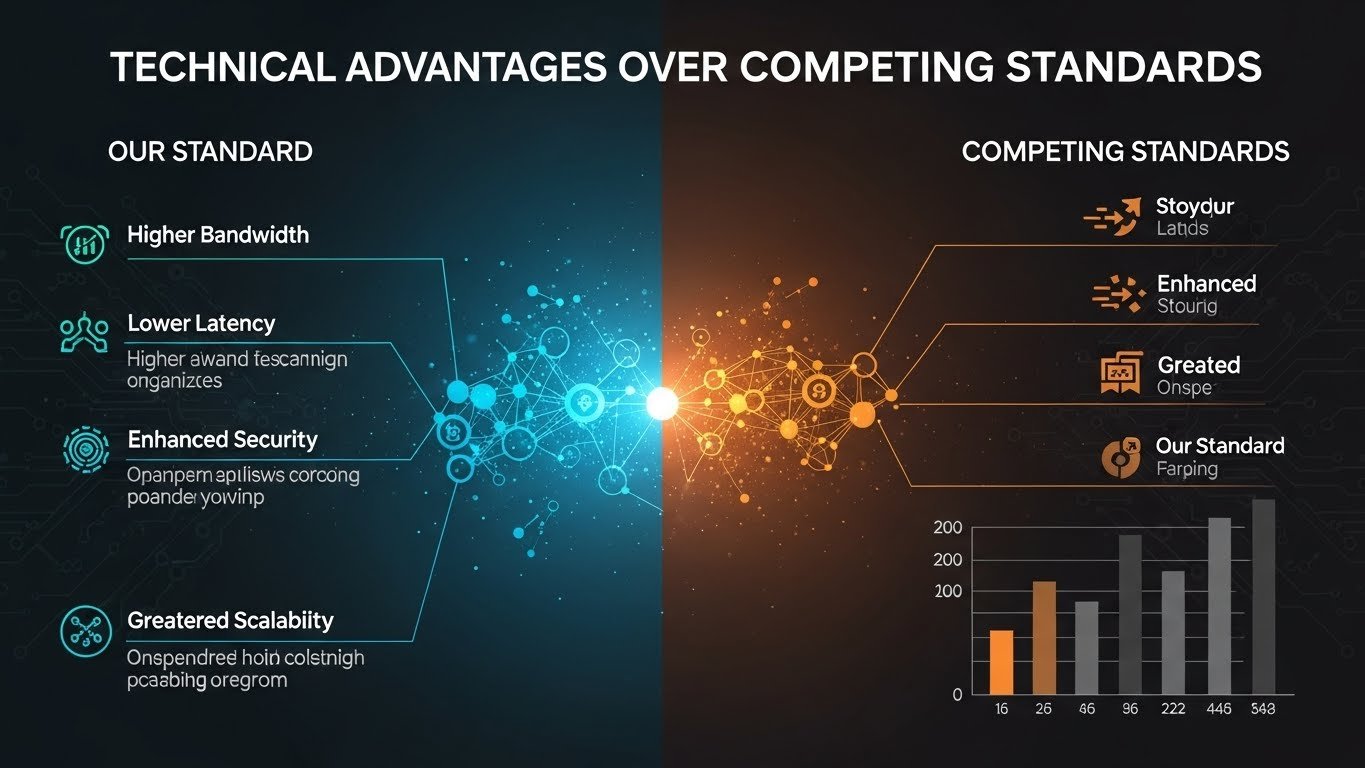

The OpenUSD Core Specification 1.0 distinguishes itself from alternative interchange formats through several fundamental architectural decisions that prioritize composition, scalability, and workflow integration over simple geometry exchange. While formats like glTF excel at delivering optimized three-dimensional content to runtime environments, OpenUSD targets the entire content creation pipeline, providing tools for authoring, reviewing, and refining work at scales that challenge traditional approaches.
The compositional architecture enables truly non-destructive workflows where creative decisions remain reversible throughout production cycles. Artists can experiment with alternative approaches, preview different options, and maintain parallel variations without duplicating underlying data or creating complex branching file structures. This flexibility proves essential in iterative creative processes where requirements evolve and stakeholders provide feedback that necessitates significant revisions. The OpenUSD framework treats these scenarios as fundamental capabilities rather than edge cases requiring workarounds.
Implementation Strategies for Enterprise Adoption
Organizations considering OpenUSD Core Specification 1.0 adoption should approach implementation as a strategic initiative requiring careful planning, stakeholder alignment, and phased deployment rather than a simple technology swap. Successful transitions typically begin with pilot projects that demonstrate value in specific workflows before expanding to broader organizational adoption. These initial implementations provide opportunities to develop internal expertise, identify integration points with existing systems, and build confidence in the technology’s capabilities.
Pipeline integration represents a critical success factor, requiring thoughtful consideration of how OpenUSD will interact with established asset management systems, version control repositories, rendering infrastructure, and collaboration platforms. Organizations should inventory their current toolchains, identifying opportunities where standardization could eliminate pain points or enable new capabilities. The specification’s flexibility allows incremental adoption, where teams can introduce OpenUSD at strategic points in their pipelines without requiring wholesale replacement of functional systems.
The Role of Major Technology Companies
Leading technology companies have invested substantial resources in developing, promoting, and implementing OpenUSD standards across their product portfolios, recognizing the strategic importance of interoperable three-dimensional content ecosystems. NVIDIA has positioned OpenUSD as the foundational format for its Omniverse platform, creating tools and services that enable real-time collaboration on shared virtual environments. The company’s contributions to the specification include performance optimizations, rendering enhancements, and simulation capabilities that extend the standard’s utility for industrial applications.
Apple’s adoption of OpenUSD Core Specification 1.0 across its spatial computing initiatives demonstrates the specification’s relevance beyond traditional content creation contexts. The company has integrated support throughout its operating systems and development frameworks, enabling applications to leverage standardized three-dimensional content representations. This consumer-facing deployment introduces OpenUSD to millions of developers and users who may have never encountered the specification in professional contexts, potentially accelerating its establishment as a universal standard.
Challenges and Considerations for Widespread Adoption
Despite the significant momentum behind OpenUSD Core Specification 1.0, several challenges may influence the pace and extent of industry adoption. Learning curves associated with the specification’s sophisticated compositional model can present initial obstacles for teams accustomed to traditional file formats and workflows. Organizations may encounter resistance from practitioners who question whether benefits justify the effort required to develop new competencies and modify established processes. Addressing these concerns requires clear communication of value propositions, realistic timelines that acknowledge transition costs, and support systems that help teams navigate the learning process.
Existing infrastructure investments create institutional inertia that may slow OpenUSD adoption even when technical advantages are apparent. Organizations have accumulated substantial codebases, content libraries, and procedural knowledge built around incumbent formats and systems. Migrating this intellectual property to new paradigms requires careful planning, potentially significant development effort, and acceptance of temporary capability gaps during transition periods. The business case for adoption must account for these switching costs while articulating long-term strategic benefits that justify near-term disruption.
Future Developments and Industry Trajectory

The OpenUSD ecosystem continues evolving rapidly as the community expands, use cases diversify, and technical requirements emerge from practical deployments. Future specification versions will likely address domains currently underserved by the core standard, including advanced simulation capabilities, streaming optimizations for remote rendering scenarios, and enhanced support for specific industry verticals. The Alliance for OpenUSD’s working group structure facilitates this evolution through focused initiatives that develop extensions and refinements responding to community needs.
Integration with emerging technologies like artificial intelligence, machine learning, and procedural generation systems promises to unlock new creative and analytical capabilities within OpenUSD frameworks. Researchers are exploring how large language models could assist with scene composition, how computer vision systems could automatically tag and organize asset libraries, and how generative algorithms could create variation sets that explore design spaces. These convergences between traditional graphics technologies and cutting-edge computational techniques may redefine content creation workflows in profound ways.
Conclusion
The release of OpenUSD Core Specification 1.0 marks a transformative moment for organizations seeking to leverage three-dimensional content as a strategic asset rather than a production overhead. This comprehensive standard delivers the interoperability, scalability, and workflow sophistication necessary for building next-generation digital ecosystems that blur boundaries between creation, collaboration, and operational execution. Forward-thinking enterprises recognize that early adoption positions them to capitalize on emerging opportunities in the industrial metaverse while avoiding the technical debt associated with proprietary formats and fragmented toolchains.
Organizations that embrace OpenUSD standards today will benefit from growing vendor support, maturing tooling ecosystems, and expanding communities of practice that accelerate implementation and share proven approaches. The specification’s open nature ensures that investments in skills, infrastructure, and content remain valuable as the technology evolves, avoiding the risks associated with betting on vendor-specific solutions that may not endure. As more organizations adopt these standards, network effects amplify benefits through improved compatibility, broader content availability, and more robust third-party services.


