



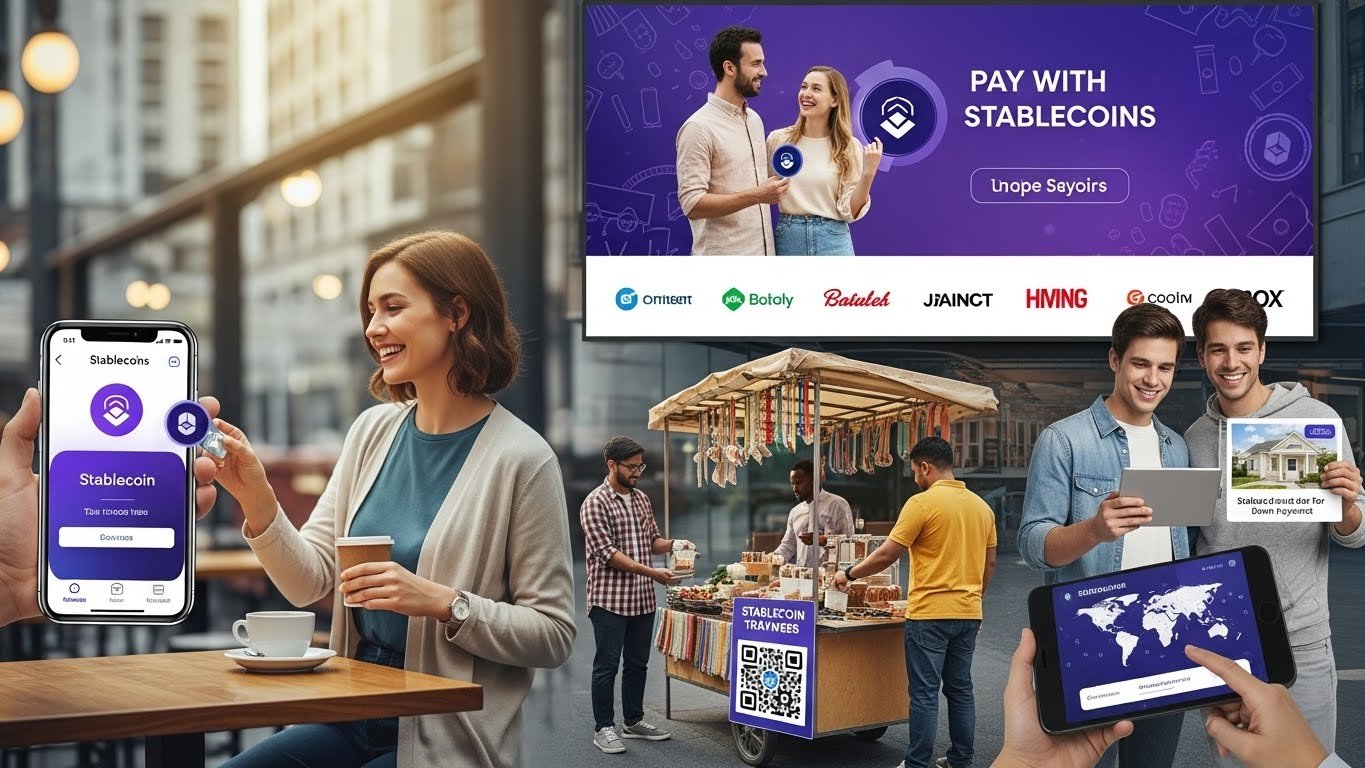
The cryptocurrency industry has long searched for its defining moment, thestablecoins mainstream use case breakthrough application that would finally bring digital assets into everyday life. After years of speculation, volatility, and unfulfilled promises, 2025 marks the year when stablecoins mainstream use scenarios finally materialized into reality. These digital currencies, pegged to traditional assets like the US dollar, have transcended their original purpose of stablecoins mainstream use case as trading tools to become the foundation of a new global payment infrastructure that billions of people now rely on daily.
stablecoins mainstream use case While Bitcoin captured imaginations as digital gold and Ethereum promised programmable money, it was the humble stablecoin that quietly revolutionized how people transfer value across borders, conduct business transactions, and preserve their purchasing power in uncertain economic times. The transformation wasn’t sudden but rather the culmination of technological maturity, regulatory clarity, and genuine market demand converging at precisely the right moment in financial history.of stablecoins mainstream use case.
The Evolution of Stablecoins Into a True Mainstream Application
The stablecoins mainstream use case journey of stablecoins mainstream use case from niche cryptocurrency tools to genuine mainstream financial instruments represents one of the most significant developments in modern finance.stablecoins mainstream use case this transformation requires examining how these digital assets solved real-world problems that traditional banking systems consistently failed to address effectively.Initially created as safe harbors for cryptocurrency traders seeking refuge from market volatility, stablecoins gradually revealed their potential for much broader applications.stablecoins mainstream use case.
stablecoins mainstream use case of the trajectory accelerated dramatically when everyday consumers, small businesses, and even large corporations discovered that these digital dollars offered tangible advantages over conventional payment rails.The technical infrastructure supporting stablecoins matured significantly throughout 2024 and into 2025. Blockchain networks improved their transaction processing capabilities, reducing costs and increasing speed to levels that finally competed favorably with traditional payment systems. This technological evolution removed one of the primary barriers preventing widespread adoption, making stablecoins practical for transactions ranging from coffee purchases to international business settlements.
How Stablecoins Solved Real Payment Problems in 2025
stablecoins mainstream use case to the traditional cross-border payments have frustrated businesses and individuals for decades with their combination of high fees, slow processing times, and limited accessibility. The mainstream use of stablecoins emerged as a direct response to these persistent pain points that legacy financial institutions seemed unable or unwilling to resolve.Consider the remittance market, where migrant workers send portions of their earnings back to families in their home countries. Traditional services typically charge between five and ten percent in fees while taking several days to complete transfers. Stablecoin payments reduced these costs to fractions of a percent while settling transactions in minutes rather than days. This dramatic improvement in both cost and speed represented not just incremental progress but a fundamental reimagining of how value moves globally.
Small and medium-sized businesses discovered that accepting stablecoin payments eliminated the risks associated with volatile cryptocurrency prices while still providing the benefits of digital asset transactions. stablecoins mainstream use case Merchants could receive payments that maintained stable value, instantly convert them to local currency if desired, or hold them in digital form for future use. This flexibility proved particularly valuable for businesses operating across multiple countries, where managing various currencies and dealing with exchange rate fluctuations had traditionally consumed significant resources.The settlement speed of stablecoin transactions also transformed business cash flow management. Instead of waiting three to five business days for international wire transfers to clear, companies could receive confirmed payments within minutes. This acceleration of capital movement allowed businesses to operate more efficiently, reduce the amount of working capital tied up in pending transactions, and respond more quickly to market opportunities.
Regulatory Clarity Catalyzed Stablecoin Mainstream Acceptance


Perhaps no single factor contributed more to stablecoins becoming mainstream than the establishment of clear regulatory frameworks across major jurisdictions in 2024 and early 2025. Governments and financial regulators, having spent years studying these digital assets, finally implemented comprehensive rules that provided both consumer protection and operational clarity for stablecoin issuers.The European Union’s Markets in Crypto-Assets Regulation established detailed requirements for stablecoin reserves, redemption rights, and operational transparency. These standards gave consumers confidence that the stablecoins they held were genuinely backed by real assets and could be redeemed for their face value on demand. Similar regulatory developments in the United States, United Kingdom, and across Asia created a global patchwork of rules that, while not uniform, provided sufficient certainty for mainstream adoption to proceed.
Major stablecoin issuers responded to regulatory scrutiny by dramatically increasing their transparency. Regular attestations from reputable accounting firms, detailed breakdowns of reserve compositions, and clear redemption mechanisms became standard practice. This transparency addressed one of the primary concerns that had prevented cautious institutional and retail adopters from embracing stablecoins previously.Financial institutions that had watched stablecoins from the sidelines suddenly found themselves able to participate actively in this market. Banks began offering stablecoin custody services, payment processing, and even issuing their own regulated stablecoins. This entry of traditional financial institutions into the stablecoin ecosystem brought additional legitimacy, infrastructure, and distribution channels that accelerated the mainstream adoption of stablecoins substantially.
The Infrastructure That Enabled Stablecoin Mainstream Success
Behind every successful stablecoin transaction in 2025 lies a sophisticated technological infrastructure that most users never see but that makes seamless payments possible. The maturation of blockchain technology, the development of user-friendly interfaces, and the integration of stablecoins into existing payment systems all contributed to making these digital currencies genuinely accessible to mainstream users.Layer-two scaling solutions and more efficient blockchain architectures reduced transaction costs to negligible levels while maintaining the security and decentralization that make blockchain technology valuable. Users no longer needed to pay attention to network congestion or calculate optimal transaction fees. The technical complexity was abstracted away behind intuitive applications that made sending stablecoins as simple as sending a text message.
Payment processors and fintech companies built bridges between the traditional financial system and stablecoin rails, allowing users to seamlessly move between dollars in their bank accounts and stablecoins in their digital wallets. This interoperability proved crucial for mainstream adoption because it meant users didn’t need to choose entirely between the old system and the new one. They could leverage the advantages of stablecoins when beneficial while maintaining access to traditional banking services when needed.Mobile applications specifically designed for stablecoin payments proliferated throughout 2025, bringing sophisticated financial technology to populations that had limited access to traditional banking services. In regions with underdeveloped financial infrastructure, stablecoins effectively leapfrogged traditional banking, providing people with their first experience of reliable, low-cost financial services through nothing more than a smartphone and internet connection.
Stablecoins in Emerging Markets: The True Mainstream Revolution
While developed economies saw significant stablecoin adoption, the most profound impact of stablecoins as a mainstream use case manifested in emerging markets where traditional financial systems had consistently failed large portions of the population. In countries experiencing currency instability, hyperinflation, or capital controls, stablecoins provided access to stable value storage and transfer capabilities that local currencies simply couldn’t offer.Citizens in nations with rapidly depreciating currencies discovered they could preserve their purchasing power by converting local currency to dollar-denominated stablecoins. Rather than watching their savings evaporate through inflation or struggling to access foreign currency through official channels with unfavorable exchange rates, people could protect their financial security through digital assets that maintained stable value.
The merchant adoption of stablecoins in developing economies accelerated remarkably quickly once the infrastructure became available. Small business owners who had struggled with expensive and unreliable payment systems found that stablecoins offered a superior alternative. Street vendors, online merchants, and service providers all discovered they could accept payments more efficiently, reduce their exposure to currency risk, and access a broader customer base through stablecoin acceptance.International trade between developing economies also benefited dramatically from stablecoin settlement. Businesses that had previously relied on correspondent banking relationships, letters of credit, and other costly trade finance mechanisms found they could settle transactions directly through stablecoins with dramatically reduced costs and friction. This democratization of international trade enabled smaller businesses to participate in global commerce in ways that had been economically unfeasible previously.
The Business Transformation Driven by Stablecoin Adoption
Corporate treasuries and business payment operations underwent fundamental transformations in 2025 as mainstream stablecoin usage became standard practice rather than experimental innovation. Companies discovered that maintaining portions of their working capital in stablecoins provided advantages in liquidity management, payment efficiency, and international operations.The instantaneous settlement of stablecoin transactions eliminated the concept of business days and banking hours from financial operations. A company in New York could pay a supplier in Singapore and have the transaction confirmed within minutes, regardless of what time it was in either location or whether banks were open. This twenty-four-seven operational capability matched the increasingly global and continuous nature of modern business operations.
Automated payment systems became significantly more sophisticated when built on stablecoin infrastructure. Smart contracts could automatically release payments when predefined conditions were met, eliminating the need for manual payment processing and reducing the risk of human error or fraud. Supply chain financing, escrow services, and performance-based payment structures all became simpler to implement and more reliable when powered by programmable stablecoin transactions.The reduction in payment processing costs also had a cascading effect throughout business operations. Companies that had previously spent substantial amounts on transaction fees, currency conversion charges, and international wire transfer expenses found themselves with reduced operational costs that could be reinvested in growth, passed along to customers through lower prices, or retained as improved profit margins.
How Major Financial Institutions Embraced Stablecoins

The participation of major banks and financial institutions in the stablecoin ecosystem represented a crucial milestone in the journey toward mainstream acceptance of stablecoins. What began as skepticism and resistance gradually transformed into active participation as these institutions recognized both the threat of disruption and the opportunity for innovation that stablecoins represented.Several major banks launched their own stablecoins in 2025, leveraging their existing customer relationships and regulatory licenses to create digital currencies that combined the efficiency of blockchain technology with the trust and stability of established financial institutions. These bank-issued stablecoins provided conservative customers with a comfortable entry point into digital asset usage, backed by brands they already trusted for their financial needs.
Payment networks and card companies integrated stablecoin settlement into their existing infrastructure, allowing merchants to accept stablecoin payments that settled directly into their traditional business accounts. This integration removed one of the final barriers to merchant adoption by eliminating the need for separate reconciliation processes or new accounting procedures. Stablecoin transactions could flow through the same systems as credit card payments, just with lower fees and faster settlement times.Institutional investors and asset managers also began incorporating stablecoins into their portfolios and operations in 2025. Rather than simply viewing stablecoins as a bridge currency for cryptocurrency trading, these sophisticated financial actors recognized them as efficient tools for cash management, liquidity provision, and international investment operations. The availability of regulated, audited, and institutionally-acceptable stablecoins made this participation possible.
The Technology Behind User-Friendly Stablecoin Experiences
The technical sophistication required to make stablecoins genuinely user-friendly for mainstream audiences cannot be overstated. The difference between a product that appeals to cryptocurrency enthusiasts and one that your grandmother can use comfortably is enormous, and the stablecoin ecosystem invested heavily in bridging that gap throughout 2024 and 2025.Wallet applications evolved from complex technical tools requiring understanding of private keys, seed phrases, and blockchain addresses into intuitive financial apps that felt familiar to anyone who had used mobile banking. Biometric authentication, social recovery mechanisms, and customer support systems all emerged to make stablecoin usage as safe and accessible as traditional financial applications while maintaining the self-custody advantages that make digital assets valuable.
The integration of stablecoin functionality into existing applications that people already used daily represented another crucial development. Messaging applications, e-commerce platforms, and social media services began incorporating stablecoin payment capabilities, allowing users to access these financial tools without downloading separate cryptocurrency applications or learning entirely new interfaces. This embedded approach to stablecoin distribution brought digital currency capabilities to billions of users who might never have sought out cryptocurrency services independently.Identity verification and compliance systems also matured to balance regulatory requirements with user experience considerations. Streamlined know-your-customer processes allowed new users to establish accounts quickly while still meeting anti-money laundering standards. The friction that had made cryptocurrency onboarding frustrating was systematically reduced through better technology and clearer regulatory guidance about what verification steps were actually necessary.
Stablecoins and Financial Inclusion: Banking the Unbanked
One of the most socially significant aspects of stablecoins achieving mainstream status has been their role in providing financial services to populations that traditional banking had consistently excluded or underserved. An estimated one point seven billion adults globally lack access to formal financial services, and stablecoins are rapidly changing that reality.The only requirements for accessing stablecoin services are a smartphone and internet connectivity, both of which are increasingly available even in the world’s poorest regions. This low barrier to entry means that individuals who would never qualify for a traditional bank account due to lack of documentation, insufficient account balances, or residence in underserved areas can still participate in the digital economy through stablecoins.
Microentrepreneurs in developing countries discovered that stablecoin acceptance opened new markets for their products and services. A craftsperson in rural Africa could sell directly to customers anywhere in the world and receive payment instantly in a stable currency, without needing a merchant account, business license, or traditional banking relationship. This democratization of commerce has profound implications for economic development and poverty reduction.The remittance savings that stablecoins enabled also disproportionately benefited lower-income populations for whom the traditional remittance fees represented a significant portion of the money being sent. When a migrant worker can send home ninety-nine percent of their money rather than ninety percent, that nine percent difference can mean the difference between their family thriving or merely surviving.
The Competitive Landscape of Stablecoin Providers in 2025
The market for stablecoins became increasingly competitive throughout 2025 as various issuers competed for market share in what was clearly becoming a massive and growing market. Understanding the different types of stablecoins and the various providers helps explain how the stablecoin mainstream use case evolved with multiple viable options rather than a single dominant solution.Fiat-collateralized stablecoins backed by reserves of traditional currency held in bank accounts remained the most popular category, offering the most straightforward value proposition and the most regulatory acceptance. Major issuers in this category competed primarily on transparency, redemption efficiency, and integration partnerships rather than on fundamental differences in their backing mechanisms.
Algorithmic stablecoins, which maintain their peg through smart contract mechanisms rather than collateral reserves, also matured significantly by 2025 after learning from the failures of earlier generations. More sophisticated designs that incorporated multiple stability mechanisms and conservative collateralization ratios proved capable of maintaining their pegs even through significant market stress, though they remained more popular among cryptocurrency natives than mainstream users who generally preferred the simpler backing model of fiat-collateralized options.Bank-issued stablecoins emerged as a distinct category, offering the backing and regulatory status of traditional financial institutions combined with the efficiency of blockchain technology. These products appealed particularly to conservative corporate treasurers and institutional users who valued the additional layer of institutional guarantee that bank issuers provided.
Challenges and Criticisms That Persist Despite Mainstream Adoption
Even as stablecoins achieved mainstream success, legitimate concerns and criticisms about their role in the financial system persisted. Understanding these challenges provides important context about the ongoing evolution of stablecoin technology and regulation rather than suggesting fatal flaws in the fundamental concept.Systemic risk concerns focused on what would happen if a major stablecoin issuer failed or experienced a bank run type scenario where massive numbers of users simultaneously attempted to redeem their stablecoins for underlying assets. Regulators and policymakers worked to establish standards for reserve management and redemption mechanisms that would prevent such scenarios, but the rapid growth of stablecoin circulation meant these digital assets were becoming systemically important components of the global financial system.
stablecoins mainstream use case of privacy advocates worried about the traceability of stablecoin transactions and the potential for financial surveillance that blockchain transparency enabled. While this transparency helped with regulatory compliance and reduced concerns about money laundering, it also meant that stablecoin payments were less private than cash transactions. Various projects worked on privacy-preserving stablecoin designs, but balancing privacy with regulatory requirements remained an ongoing challenge.stablecoins mainstream use case of concentration of stablecoin reserves in traditional banks also created dependencies and vulnerabilities that some critics viewed as undermining the decentralization ethos of cryptocurrency. If major stablecoins held billions of dollars in a small number of large banks, the failure of those banks could threaten the stablecoin ecosystem. Diversification of reserves across multiple institutions and asset types helped mitigate this risk but couldn’t eliminate it entirely.
The Future Evolution of Stablecoin Technology and Usage

Looking beyond 2025, the trajectory of stablecoin mainstream adoption points toward even deeper integration into global financial infrastructure and the emergence of new use cases that are only beginning to materialize. The success of stablecoins as payment instruments establishes a foundation for more sophisticated financial applications built on the same technological rails.Programmable stablecoins that combine stable value with smart contract functionality represent one exciting frontier. These digital currencies could automatically execute complex financial operations, from interest payments to dividend distributions to escrow releases, all while maintaining stable purchasing power. The combination of reliability and programmability opens possibilities for financial automation that were simply impossible with traditional currency systems.
stablecoins mainstream use case of central bank digital currencies may either compete with or complement private stablecoins as governments recognize both the threat that private digital currencies pose to monetary sovereignty and the benefits that digital currency infrastructure provides. How this relationship between public and private digital currencies evolves will significantly shape the future financial landscape.Integration with Internet of Things devices could enable autonomous economic agents that use stablecoins to pay for services, purchase resources, or conduct business transactions without human intervention.stablecoins mainstream use caseof machine-to-machine commerce powered by stablecoin payments could optimize everything from energy grid management to supply chain logistics through automated economic coordination.
Conclusion
The emergence of stablecoins as crypto’s mainstream use case in 2025 represents more than just a milestone for the cryptocurrency industry. It demonstrates that blockchain technology, when applied to solving genuine problems rather than chasing speculative gains, can fundamentally improve how the global financial system operates. The transformation of stablecoins from niche trading tools to essential financial infrastructure validates the core promise of digital assets to make finance more accessible, efficient, and inclusive.For businesses seeking to reduce payment costs and accelerate international transactions, for individuals looking to protect their savings from currency instability, and for underbanked populations gaining their first access to reliable financial services, stablecoins have already delivered transformative value.
The mainstream adoption of stablecoins will continue accelerating as the infrastructure improves, regulatory frameworks mature, and more people discover the practical advantages these digital currencies provide.Whether you are a business owner looking to optimize payment operations, an individual seeking better financial tools, or simply someone interested in understanding how technology is reshaping finance, now is the time to explore how stablecoins mainstream use case applications can benefit you. The revolution is no longer coming; it has arrived, and understanding how to leverage these new financial rails will become increasingly essential for anyone participating in the digital economy.


