



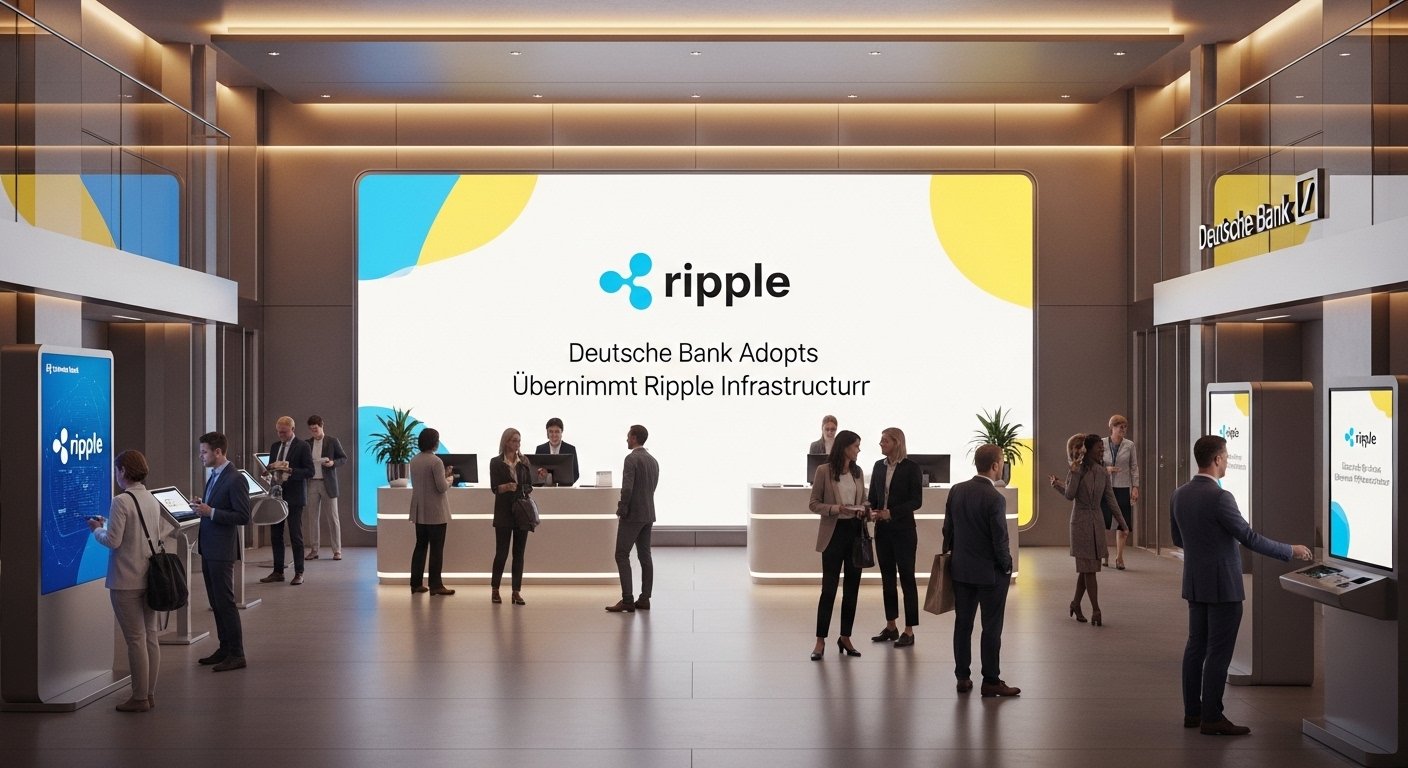
Deutsche Bank Adopts Ripple Infrastructure as SWIFT Builds Blockchain Ledger the global payments landscape is entering a defining chapter as traditional banking giants accelerate their adoption of distributed ledger technologies. In a significant move, Deutsche Bank Turns To Ripple Infrastructure As SWIFT Races To Build Blockchain Ledger, underscoring a broader transformation within international finance. The decision reflects not only shifting technological priorities but also mounting competitive pressure among financial institutions to modernize cross-border payments.
As global trade becomes increasingly digital, the need for faster, cheaper, and more transparent settlement systems has intensified. Conventional correspondent banking networks have long struggled with inefficiencies, delayed settlements, and high operational costs. Meanwhile, fintech innovators and blockchain-native firms have demonstrated how distributed ledger technology can streamline global transactions. In this evolving environment, the strategic direction of institutions such as Deutsche Bank and SWIFT is more than symbolic. It represents a turning point in the adoption of blockchain infrastructure by legacy finance.
At the center of this transition stands Ripple, whose enterprise-grade blockchain infrastructure has increasingly attracted attention from banks seeking scalable digital payment rails. As Deutsche Bank explores Ripple infrastructure, SWIFT simultaneously accelerates its own blockchain ledger development, setting the stage for a technological rivalry that could reshape global settlement networks.
Deutsche Bank Adopts Ripple Infrastructure
The decision by Deutsche Bank to leverage Ripple infrastructure highlights a growing institutional confidence in blockchain-powered payment systems. Traditionally, banks relied on layered correspondent networks to process international transfers. Each intermediary added cost, complexity, and settlement delays. Ripple’s infrastructure, built on distributed ledger technology, offers an alternative model focused on real-time settlement and liquidity optimization.
By integrating Ripple infrastructure, Deutsche Bank gains access to a system designed to minimize friction in cross-border payments. The blockchain ledger enables near-instant settlement by reducing reliance on pre-funded nostro and vostro accounts. This transformation directly addresses long-standing inefficiencies in the global payments ecosystem.
Furthermore, the move signals recognition of blockchain adoption in banking as a strategic imperative rather than a speculative experiment. Banks are increasingly aware that digital assets and distributed networks are not passing trends but foundational components of future financial architecture.
Why Deutsche Bank’s Move Matters
Deutsche Bank’s adoption of Ripple infrastructure carries substantial implications for the wider financial industry. As one of Europe’s largest banking institutions, its technological direction influences peers, regulators, and institutional investors alike.
First, the decision validates Ripple’s enterprise-grade blockchain solutions as viable within regulated banking frameworks. Regulatory compliance has long been cited as a barrier to blockchain integration. By engaging with Ripple infrastructure, Deutsche Bank demonstrates that distributed ledger systems can align with established regulatory standards.
Second, the move intensifies competitive pressure on SWIFT. For decades, SWIFT has functioned as the backbone of global financial messaging. Its network connects thousands of banks across continents. However, the emergence of blockchain-based payment rails challenges the traditional messaging-centric model. As Deutsche Bank explores Ripple infrastructure, SWIFT must accelerate its blockchain ledger initiatives to maintain relevance.

Third, this development strengthens confidence in digital asset infrastructure as a foundational layer for cross-border finance. Institutional backing lends credibility to the broader blockchain ecosystem, encouraging further experimentation and adoption across global banks.
SWIFT’s Blockchain Ledger Ambitions
While Deutsche Bank turns to Ripple infrastructure, SWIFT is far from passive. The organization has invested heavily in modernizing its network and exploring blockchain ledger solutions that integrate with its existing infrastructure.
SWIFT’s approach differs strategically. Rather than replacing its core messaging system, it aims to enhance interoperability through distributed ledger connectivity. By enabling communication between traditional banking systems and blockchain networks, SWIFT seeks to position itself as a bridge rather than a competitor.
This dual dynamic—Deutsche Bank leveraging Ripple infrastructure while SWIFT builds its blockchain ledger—illustrates a broader contest between open blockchain networks and established centralized messaging systems. SWIFT’s efforts aim to retain its central role in global settlements, even as banks experiment with alternative infrastructures.
The race is not merely technological; it is institutional. Control over settlement infrastructure translates into influence over global liquidity flows. As distributed ledger technology matures, the balance of power within international finance may shift accordingly.
Ripple’s Growing Role in Cross-Border Payments
Ripple’s infrastructure has steadily gained traction among financial institutions seeking improved settlement efficiency. Its blockchain ledger facilitates real-time transactions, liquidity management, and cost reduction. By eliminating multiple intermediaries, Ripple infrastructure streamlines processes that previously required days to finalize.
A key advantage lies in enhanced transparency. Distributed ledger technology provides an immutable record of transactions, reducing reconciliation errors and improving compliance oversight. For banks operating across multiple jurisdictions, such clarity offers operational benefits.
Moreover, Ripple infrastructure supports scalability. As transaction volumes grow, blockchain-based systems can adapt without the same degree of friction associated with legacy networks. This adaptability aligns with the needs of institutions like Deutsche Bank, which manage extensive global transaction flows.
The convergence of Deutsche Bank and Ripple infrastructure reflects a strategic alignment between traditional finance and blockchain innovation. It suggests that the once-perceived divide between banks and crypto infrastructure is narrowing.
Implications for Global Financial Messaging
The involvement of Deutsche Bank in Ripple infrastructure initiatives signals broader shifts within global payment networks. For decades, SWIFT dominated the cross-border messaging landscape. Its reliability and global reach cemented its position as the default settlement backbone.
However, blockchain technology introduces an alternative framework. Instead of relying solely on centralized messaging hubs, distributed ledger systems enable peer-to-peer settlement verification. This architecture reduces dependency on intermediaries and accelerates settlement timelines.
SWIFT’s blockchain ledger efforts reflect awareness of this transformation. By building its own distributed solutions, SWIFT acknowledges the inevitability of digital ledger integration. The competition between Ripple infrastructure and SWIFT’s blockchain initiatives may ultimately lead to hybrid systems that combine centralized oversight with decentralized efficiency.
Regulatory and Compliance Considerations
One of the most critical factors influencing blockchain adoption in banking is regulatory clarity. Deutsche Bank’s exploration of Ripple infrastructure indicates confidence that distributed ledger technology can operate within established compliance frameworks.
Regulators worldwide are gradually developing standards for digital asset transactions, custody, and reporting. Banks must ensure that any blockchain ledger integration adheres to anti-money laundering requirements, know-your-customer protocols, and data protection laws.
Ripple infrastructure has emphasized enterprise-grade compliance capabilities, positioning itself as suitable for institutional use. As Deutsche Bank navigates integration, regulatory cooperation will be central to successful deployment.
Simultaneously, SWIFT’s blockchain ledger strategy may benefit from its long-standing relationships with regulators and central banks. Its credibility within the traditional financial system could facilitate smoother approval processes for distributed ledger expansions.
Competitive Dynamics Between Ripple and SWIFT
The headline development that Deutsche Bank Turns To Ripple Infrastructure As SWIFT Races To Build Blockchain Ledger encapsulates a broader strategic contest. Ripple represents a purpose-built blockchain payments provider. SWIFT embodies decades of institutional trust and global connectivity.
Ripple’s competitive edge lies in technological innovation and agility. Its infrastructure is designed specifically for blockchain-based settlement, offering speed and liquidity optimization.
SWIFT’s advantage stems from network effects. With thousands of participating institutions, its reach remains unparalleled. Transitioning such an extensive network to a blockchain ledger environment is complex but potentially transformative.
The coexistence of both systems could produce collaborative integration. Alternatively, competitive pressures may accelerate innovation on both sides, ultimately benefiting global financial markets.
Market Reaction and Industry Outlook
Market observers view Deutsche Bank’s move as a signal that blockchain adoption in banking is entering a mature phase. Institutional participation legitimizes distributed ledger technology beyond speculative digital asset trading.
Industry analysts suggest that more banks may follow suit, exploring Ripple infrastructure or similar blockchain solutions. The demand for efficient cross-border payments continues to rise alongside globalization and digital commerce growth. Meanwhile, SWIFT’s blockchain ledger development ensures that traditional infrastructure providers remain central to modernization efforts. Rather than being displaced, established networks may evolve.
The interplay between Ripple infrastructure and SWIFT’s blockchain ambitions represents a transition rather than a replacement. Financial systems rarely shift overnight. Instead, they adapt incrementally, integrating new technologies alongside established frameworks.
The Broader Impact on Digital Asset Infrastructure
Beyond immediate banking implications, this development strengthens the broader distributed ledger technology ecosystem. Institutional validation supports investment in blockchain innovation, research, and development. Digital asset infrastructure providers gain credibility when global banks engage with their platforms. This dynamic fosters further partnerships, pilot programs, and cross-industry experimentation.
Moreover, the strategic race between Ripple infrastructure and SWIFT’s blockchain ledger may accelerate global standards for interoperability. Seamless communication between various ledger systems will be crucial to achieving widespread adoption. As Deutsche Bank integrates Ripple infrastructure, lessons learned could inform future deployments across the banking sector. The ripple effects, both literal and metaphorical, extend far beyond a single institution.
Conclusion
The announcement that Deutsche Bank Turns To Ripple Infrastructure As SWIFT Races To Build Blockchain Ledger marks a defining moment in the modernization of global payments. It illustrates how legacy financial institutions are embracing blockchain infrastructure to enhance efficiency, transparency, and scalability.
Ripple infrastructure offers an alternative settlement framework designed for the digital era, while SWIFT’s blockchain ledger initiatives demonstrate adaptation rather than resistance. Together, these developments highlight an industry in transition.
The future of cross-border payments will likely involve a blend of distributed ledger technology and established financial networks. As Deutsche Bank, Ripple, and SWIFT continue their strategic evolution, the global financial ecosystem edges closer to a more integrated, digital, and efficient era.
FAQs
Q: Why is Deutsche Bank turning to Ripple infrastructure instead of relying solely on traditional systems?
Deutsche Bank is exploring Ripple infrastructure because distributed ledger technology addresses inefficiencies that have long plagued cross-border payments. Traditional correspondent banking networks often involve multiple intermediaries, pre-funded accounts, and delayed settlements. Ripple infrastructure offers near-instant settlement, improved liquidity management, and enhanced transparency. By leveraging blockchain-based systems, Deutsche Bank aims to modernize its payment operations while maintaining compliance with regulatory standards. This shift reflects broader industry recognition that blockchain adoption in banking can reduce operational costs and improve transaction speed without compromising security.
Q: How does SWIFT’s blockchain ledger initiative differ from Ripple’s infrastructure approach?
SWIFT’s blockchain ledger strategy focuses on enhancing interoperability between existing financial messaging systems and distributed ledger networks. Rather than replacing its core messaging infrastructure, SWIFT aims to integrate blockchain capabilities into its established framework. Ripple infrastructure, on the other hand, is built natively on distributed ledger technology and emphasizes direct settlement without multiple intermediaries. While Ripple offers a purpose-built blockchain payments solution, SWIFT seeks to modernize its traditional network by incorporating blockchain features. Both approaches aim to improve global payment efficiency but differ in architectural philosophy and implementation strategy.
Q: What impact could this development have on global cross-border payments?
The involvement of Deutsche Bank in Ripple infrastructure initiatives signals potential acceleration in blockchain adoption across the banking sector. If successful, blockchain-based settlement systems could significantly reduce transaction times, lower costs, and increase transparency. This transformation may encourage other banks to experiment with distributed ledger solutions. Simultaneously, SWIFT’s blockchain ledger advancements ensure that established networks remain competitive. The overall impact could be a more efficient and interconnected global payments ecosystem that blends centralized oversight with decentralized technology.
Q: Are there regulatory risks associated with blockchain integration in banking?
Regulatory compliance remains a critical consideration in blockchain adoption. Banks must adhere to anti-money laundering regulations, know-your-customer requirements, and data protection laws. Ripple infrastructure emphasizes enterprise-grade compliance features designed for institutional use. Deutsche Bank’s exploration suggests confidence that distributed ledger systems can align with regulatory expectations. Additionally, SWIFT’s longstanding regulatory relationships may facilitate smoother integration of its blockchain ledger solutions. While regulatory frameworks continue to evolve, increasing clarity reduces uncertainty for financial institutions adopting blockchain technology.
Q: Could Ripple infrastructure eventually replace SWIFT entirely?
A complete replacement of SWIFT by Ripple infrastructure is unlikely in the near term. SWIFT’s extensive global network and institutional trust remain deeply embedded within the financial system. Instead, the future may involve coexistence and integration. Ripple infrastructure may handle specific settlement functions while SWIFT continues to provide global messaging connectivity enhanced by blockchain features. The evolution of cross-border payments will likely reflect collaboration, competition, and gradual adaptation rather than abrupt displacement.


