



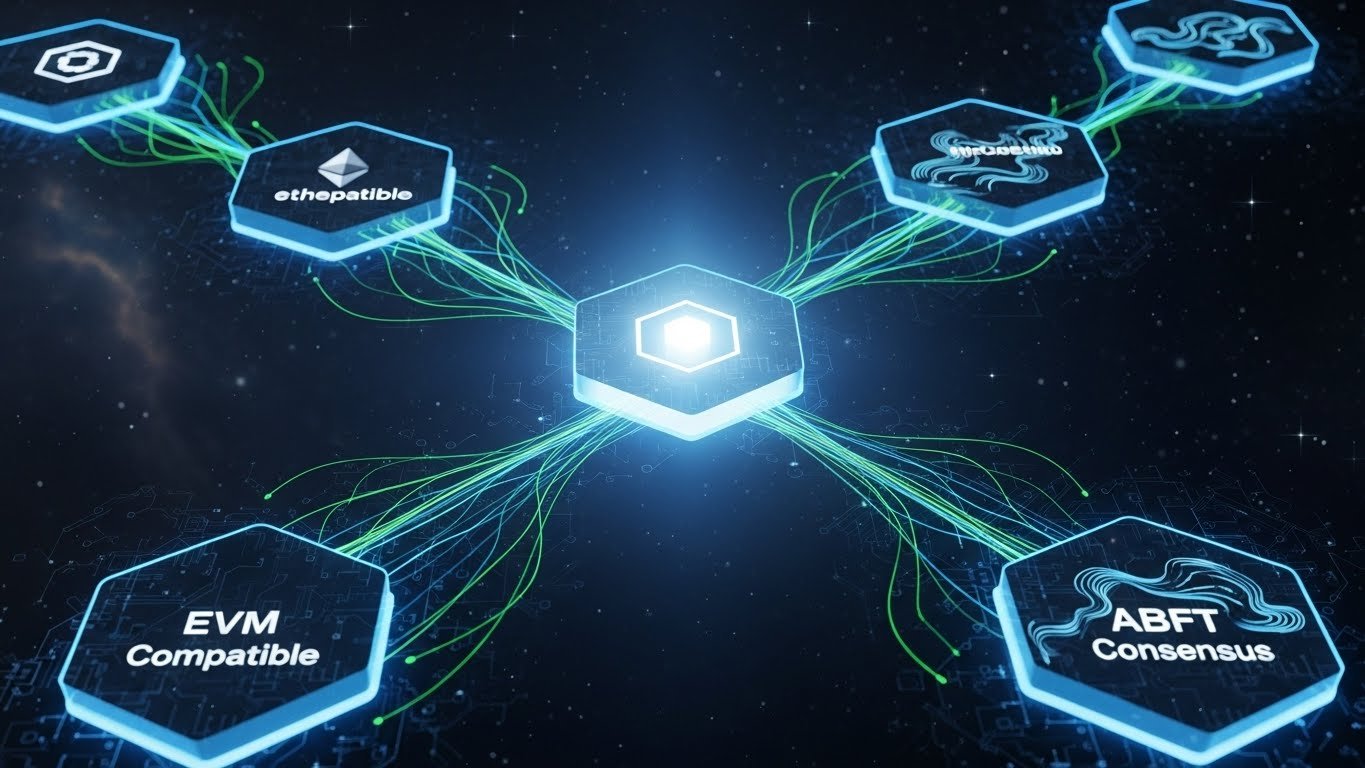
The concept of an EVM-compatible blockchain ABFT system brings together two powerful technological frameworks that have traditionally operated in separate spheres. The Ethereum Virtual Machine has become the de facto standard for smart contract execution, powering thousands of decentralized applications across multiple blockchain networks. Meanwhile, Asynchronous Byzantine Fault Tolerance represents one,
DMD Diamond’s implementation of this blockchain powered by asynchronous Byzantine fault tolerance eliminates the traditional trade-offs that developers have faced when choosing between performance and security. .The EVM compatibility aspect ensures that developers can migrate existing Ethereum-based smart contracts to DMD Diamond’s network without requiring extensive code modifications. This compatibility extends to popular development tools, frameworks, and libraries that the Ethereum ecosystem has cultivated over years of innovation.
The Technical Architecture Behind DMD Diamond’s Innovation
At the core of DMD Diamond’s EVM-compatible blockchain ABFT system lies a sophisticated technical architecture that harmonizes multiple cutting-edge technologies. The asynchronous Byzantine fault tolerance consensus mechanism operates through a network of validator nodes that can reach agreement on transaction ordering without requiring strict temporal synchronization. This approach fundamentally
The blockchain powered by asynchronous Byzantine fault tolerance employs cryptographic techniques that enable validators to communicate efficiently even when network conditions are unpredictable. Each validator node maintains its own view of the transaction history and participates in a sophisticated voting protocol DMD Diamond’s implementation of the EVM-compatible blockchain component involves careful
Performance Advantages of the ABFT Consensus Mechanism
The asynchronous Byzantine fault tolerance consensus mechanism delivers substantial performance improvements compared to traditional proof-of-work or even conventional proof-of-stake systems. By eliminating the need for energy-intensive mining operations, the blockchain powered by asynchronous Byzantine fault tolerance achieves transaction finality in seconds rather than minutes or hours. This rapid finality is particularly valuable for applications requiring immediate confirmation, such as decentralized finance protocols, payment systems, and supply chain tracking solutions.
Transaction throughput on DMD Diamond’s EVM-compatible blockchain ABFT system significantly exceeds that of the Ethereum mainnet, addressing one of the most persistent criticisms of Ethereum-based platforms. The fault tolerance characteristics of the asynchronous Byzantine fault tolerance mechanism ensure that the network continues operating correctly even when up to one-third of validator nodes behave maliciously or experience technical failures. This resilience threshold exceeds that of many alternative consensus protocols and provides robust protection against various attack vectors, including network partitioning, eclipse attacks, and coordinated validator collusion attempts.
Enterprise Applications and Use Cases
The combination of EVM compatibility and asynchronous Byzantine fault tolerance creates compelling o Diamond’s platform without compromising on either dimension. The EVM-compatible blockchain ABFT architecture supports a wide range of enterprise use cases that were previously challenging to implement on traditional blockchain networks.Financial institutions exploring decentralized finance applications benefit from the rapid transaction finality and high throughput that the blockchain powered by asynchronous Byzantine fault tolerance provides. resistance advantages of blockchain technology. The EVM compatibility
Supply chain management represents another domain where DMD Diamond’s EVM-compatible blockchain ABFT system delivers substantial value. The ability to track products through complex global supply networks requires both high transaction throughput and strong consistency guarantees. The asynchronous Byzantine fault tolerance consensus ensures that all network participants eventually agree on the authoritative state of the supply chain, while the EVM compatibility allows integration with existing enterprise resource planning systems through standardized smart contract interfaces.
Developer Experience and Ecosystem Integration


DMD Diamond’s commitment to EVM compatibility extends beyond mere technical specification compliance to encompass the entire developer experience. Programmers familiar with Ethereum development tools such as Hardhat, Truffle, and Remix can immediately begin building on DMD Diamond’s blockchain powered by asynchronous Byzantine fault tolerance without learning new frameworks or languages. This seamless onboarding reduces the friction typically associated with multi-chain development and accelerates the growth of the platform’s application ecosystem.
The EVM-compatible blockchain ABFT architecture supports all standard Ethereum JSON-RPC methods, documentation that the Ethereum community has developed over years of production experience. Auditing firms specializing in EVM-compatible smart contracts can apply their existing methodologies to applications built on DMD Diamond’s platform, providing assurance to users and investors. The consistency in execution semantics means that battle-tested contract patterns from Ethereum can be confidently deployed on the blockchain powered by asynchronous Byzantine fault tolerance without introducing unexpected vulnerabilities.
Security Considerations and Network Resilience
The security architecture of DMD Diamond’s EVM-compatible blockchain ABFT system reflects careful consideration of the threat landscape facing modern blockchain networks. The asynchronous Byzantine fault tolerance consensus mechanism provides strong theoretical security guarantees that have been formally verified through rigorous mathematical proofs. These guarantees ensure that the network maintains consistency and liveness properties even under adversarial conditions, providing a solid foundation for high-value applications.
The blockchain powered by asynchronous Byzantine fault tolerance inherently resists certain attack vectors that plague synchronous consensus mechanisms. Time-based attacks, where adversaries manipulate network delays to gain strategic advantages, become ineffective against asynchronous protocols. Similarly, the consensus mechanism’s resilience to network partitioning means that temporary connectivity issues between validator nodes do not compromise the network’s ability to process transactions and reach finality.
Economic Model and Token Utility
The economic design of DMD Diamond’s EVM-compatible blockchain ABFT network aligns incentives to promote network security, decentralization, and sustainable growth. Validator nodes participating in the asynchronous Byzantine fault tolerance Transaction fees on the blockchain powered by asynchronous Byzantine fault tolerance compensate validators for their computational resources and network participation. characteristics of the asynchronous Byzantine fault tolerance
The native token serves multiple functions within the DMD Diamond ecosystem beyond transaction fee payment. Token holders can participate in governance decisions affecting network parameters, protocol upgrades, and treasury allocation. This decentralized governance model ensures that the EVM-compatible blockchain ABFT platform evolves in alignment with stakeholder interests while maintaining the technical rigor necessary for enterprise adoption.
Interoperability and Cross-Chain Communication
DMD Diamond’s EVM compatibility facilitates interoperability with the broader blockchain ecosystem through standardized bridge protocols and cross-chain messaging frameworks. Assets and data can flow between DMD Diamond’s blockchain powered by asynchronous Byzantine fault tolerance and other networks, enabling developers to create applications that leverage the unique strengths of multiple platforms. This interoperability is essential for realizing the vision of a interconnected blockchain ecosystem where specialized networks cooperate rather than compete in isolation.
The EVM-compatible blockchain ABFT architecture supports wrapped asset protocols that enable tokens from Ethereum and other EVM-compatible chains to circulate on DMD Diamond’s network. These wrapped assets inherit the performance characteristics of the asynchronous Byzantine fault tolerance consensus while maintaining verifiable backing by assets on their origin chains. Decentralized finance applications can thus offer users access to liquidity from multiple ecosystems through a unified interface.
Future Roadmap and Development Trajectory

DMD Diamond’s vision for the EVM-compatible blockchain ABFT platform extends far beyond the initial launch, with an ambitious roadmap addressing emerging needs in the blockchain infrastructure space. Planned enhancements to the asynchronous Byzantine fault tolerance consensus mechanism include he development team is exploring integration of privacy-preserving technologies such as zero-knowledge proofs into the blockchain powered by asynchronous Byzantine fault tolerance.
across multiple parallel chains, each operating its own asynchronous Byzantine fault tolerance consensus instance. This horizontal scaling approach could multiply the network’s transaction processing capacity while maintaining the security properties of the base consensus protocol. Developers building on the EVM-compatible blockchain ABFT system would benefit from these enhancements through increased capacity without requiring application-level modifications.
Conclusion
DMD Diamond’s introduction of the first EVM-compatible blockchain ABFT system represents a watershed moment in blockchain technology evolution. By successfully integrating Ethereum Virtual Machine compatibility with asynchronous Byzantine fault tolerance, the platform addresses critical limitations that have constrained blockchain adoption in performance-sensitive applications. The blockchain powered by asynchronous Byzantine fault tolerance delivers enterprise-grade reliability while preserving the users seeking next-generation blockchain infrastructure should closely examine the opportunities that DMD Diamond’s EVM-compatible blockchain ABFT platform provides.
The launch of this EVM-compatible blockchain powered by asynchronous Byzantine fault tolerance invites the global blockchain community to participate in building the decentralized applications of tomorrow. Whether you are a developer eager to leverage cutting-edge consensus technology, an enterprise evaluating blockchain infrastructure options, or an enthusiast passionate about decentralized systems, DMD Diamond’s platform offers the tools and capabilities to turn vision into reality. Explore the possibilities of the EVM-compatible blockchain ABFT ecosystem today and join the revolution in distributed computing infrastructure.


