



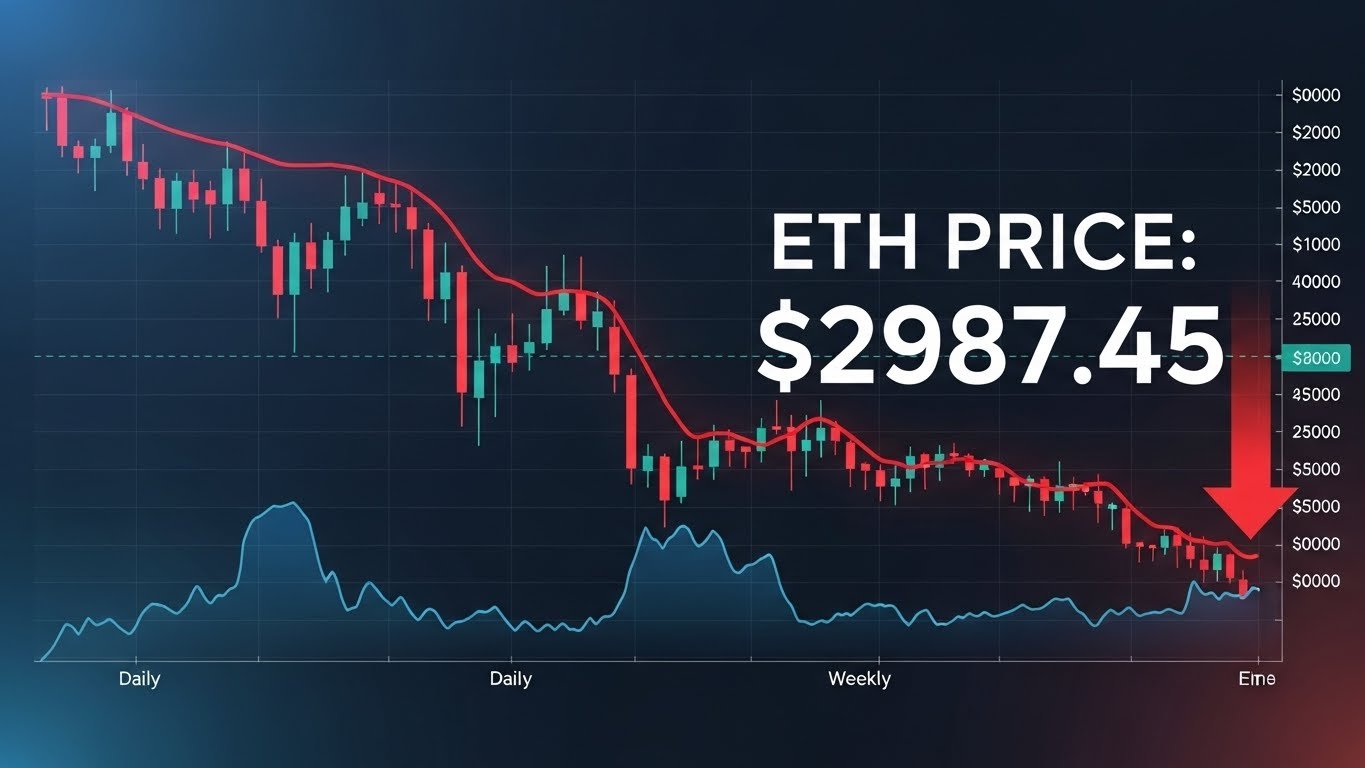
The cryptocurrency market has witnessed a significant milestone as Ethereum price below $3000 becomes the new reality for investors worldwide. This substantial decline has sent shockwaves through the digital asset community, particularly as institutional investors demonstrate increasingly divergent strategies regarding their ETH holdings. The second-largest cryptocurrency by market capitalization has experienced mounting pressure from various market forces, creating uncertainty among both retail and professional traders. Understanding what drives this Ethereum price below $3000 phenomenon requires a comprehensive examination of institutional behavior, market dynamics, and the broader economic landscape affecting digital assets today.
The Ethereum Price Decline Below $3000
The journey of Ethereum price below $3000 didn’t happen overnight. This decline represents a confluence of factors that have systematically eroded investor confidence over recent months. Market analysts have identified several key catalysts behind this downturn, ranging from regulatory pressures to technical challenges within the Ethereum network itself.The psychological barrier of three thousand dollars has historically served as a critical support level for ETH. When this threshold was breached, it triggered algorithmic selling from trading systems designed to cut losses at predetermined levels. This cascading effect amplified the downward momentum, pushing Ethereum price below $3000 and creating additional selling pressure from leveraged positions being liquidated across major exchanges.
Market volatility has intensified significantly during this period. Daily price swings exceeding five percent have become commonplace, reflecting deep uncertainty about Ethereum’s near-term trajectory. Traditional technical analysis patterns suggest that without substantial buying support, the asset could test even lower support levels before establishing a sustainable base for recovery.The broader cryptocurrency market has experienced synchronized selling pressure, with Bitcoin and other major digital assets also facing substantial headwinds. However, Ethereum’s decline has been particularly pronounced due to factors specific to its ecosystem, including competition from alternative layer-one blockchains and concerns about network scalability despite recent upgrades.
Institutional Investors Show Divergent Strategies on Ethereum
Perhaps the most fascinating aspect of the current Ethereum price below $3000 scenario is the stark divergence among institutional investment strategies. Major financial institutions are demonstrating radically different approaches to their Ethereum exposure, creating a complex landscape that defies simple analysis.Some prominent institutional investors have dramatically reduced their ETH holdings during this downturn. Hedge funds that accumulated significant positions during the 2021 bull market have begun systematically unwinding these investments, citing concerns about regulatory uncertainty and diminished return expectations. These large-scale redemptions have contributed substantially to the selling pressure that pushed Ethereum price below $3000.
The divergence extends beyond simple buy-and-sell decisions. Some institutions are implementing sophisticated hedging strategies using derivatives markets, maintaining their underlying ETH exposure while protecting against further downside. Others have shifted focus toward Ethereum staking opportunities, viewing the yield generation potential as a way to offset capital depreciation during this challenging market environment.Corporate treasuries that previously allocated portions of their reserves to Ethereum face particularly difficult decisions. Companies must balance the potential for significant capital losses against their conviction in blockchain technology’s long-term prospects. Several high-profile corporations have disclosed reduced cryptocurrency holdings in recent quarterly reports, though few have completely exited their positions.
Technical Factors Contributing to Ethereum’s Price Weakness


Beyond institutional dynamics, several technical factors have accelerated the Ethereum price below $3000 movement. Network congestion during periods of high transaction volume continues to plague the Ethereum blockchain, despite the successful implementation of various scaling solutions. Users frustrated by elevated gas fees have increasingly explored alternative networks offering faster and cheaper transactions.The transition to proof-of-stake consensus mechanism, while technologically successful, has introduced new concerns about network centralization. Critics point to the concentration of staking power among a relatively small number of validators and exchanges as a potential vulnerability. These centralization concerns have dampened enthusiasm among some investors who previously championed Ethereum’s decentralization ethos.
Competition from emerging blockchain platforms has intensified dramatically. Solana, Avalanche, and other high-performance networks have captured significant market share in decentralized finance and non-fungible token applications that previously dominated Ethereum. This competitive pressure has raised questions about whether Ethereum can maintain its position as the preferred platform for blockchain innovation.Developer activity, while still robust, has shown signs of deceleration compared to the explosive growth witnessed during 2020 and 2021. Some prominent development teams have announced plans to build cross-chain compatible applications rather than Ethereum-exclusive projects, reflecting a more pragmatic approach to blockchain development that prioritizes reaching the widest possible user base.
Regulatory Environment Impacts Ethereum Valuation
The regulatory landscape surrounding cryptocurrencies has evolved considerably, creating additional headwinds for the Ethereum price below $3000 situation. Governments worldwide are implementing increasingly stringent frameworks for digital asset oversight, with Ethereum facing particular scrutiny due to its prominence in decentralized finance applications.Securities regulators in multiple jurisdictions have questioned whether certain tokens built on Ethereum should be classified as securities, creating legal uncertainty for projects within the ecosystem. This regulatory ambiguity has prompted some institutional investors to reduce exposure until clearer guidance emerges, contributing to the selling pressure that has kept Ethereum price below $3000.
Tax treatment of cryptocurrency transactions continues to evolve, with many jurisdictions implementing more comprehensive reporting requirements. The increased compliance burden associated with cryptocurrency investments has made some institutional participants reconsider their digital asset strategies, particularly for assets like Ethereum that involve complex DeFi interactions potentially subject to varied tax interpretations.International coordination on cryptocurrency regulation remains limited, creating a fragmented global landscape. Institutions operating across multiple jurisdictions face the challenge of navigating different regulatory regimes simultaneously, adding operational complexity that may discourage Ethereum investments compared to more straightforward traditional assets.
Macroeconomic Pressures Affecting Ethereum and Crypto Markets
The broader macroeconomic environment has played a crucial role in driving Ethereum price below $3000 and sustaining pressure on cryptocurrency valuations generally. Central bank monetary policies, particularly interest rate decisions, have fundamentally altered the risk-return calculus for speculative assets including digital currencies.Rising interest rates globally have made traditional fixed-income investments increasingly attractive relative to cryptocurrencies. Investors can now earn meaningful yields on government bonds and corporate debt with substantially lower volatility than Ethereum and other digital assets. This shift in relative attractiveness has prompted portfolio reallocation away from cryptocurrencies toward income-generating traditional securities.Inflationary pressures, while moderating from recent peaks, remain elevated in many economies. .
Currency market dynamics have also influenced Ethereum valuations. The strengthening of the U.S. dollar against most major currencies has created headwinds for dollar-denominated assets including cryptocurrencies. International investors face the dual challenge of cryptocurrency price declines and unfavorable currency exchange rates, amplifying losses for non-U.S. holders.Geopolitical tensions and economic uncertainty have traditionally driven investors toward safe-haven assets. While some cryptocurrency advocates argue that digital assets should serve this role, market behavior demonstrates that during periods of genuine stress, capital flows toward traditional havens like gold and government bonds rather than cryptocurrencies. This pattern has contributed to sustained pressure keeping Ethereum price below $3000.
Ethereum Network Developments and Future Upgrades
Despite the challenging price environment with Ethereum price below $3000, significant technological developments continue within the Ethereum ecosystem. The network’s development roadmap includes ambitious upgrades designed to address scalability, security, and sustainability concerns that have limited adoption.Layer-two scaling solutions have made substantial progress in recent months. Optimistic rollups and zero-knowledge rollups now process millions of transactions daily, offering users dramatically reduced fees compared to the main Ethereum network. These scaling technologies represent crucial infrastructure for Ethereum’s long-term viability, though their impact on ETH price appreciation remains uncertain.
The implementation of proto-danksharding, a precursor to full danksharding, promises to further enhance Ethereum’s data availability and reduce costs for layer-two networks. Technical experts view these upgrades as essential for Ethereum to compete effectively with high-throughput alternative blockchains. However, translating technological improvements into price appreciation requires renewed investor enthusiasm that has been notably absent during the current downturn.Ethereum’s developer community continues to prioritize network security and decentralization. Regular security audits, bug bounty programs, and conservative upgrade timelines reflect a maturity in governance that distinguishes Ethereum from many competing platforms. This long-term focus on sustainability may not immediately impact price but builds fundamental value that could support future appreciation.
Research into account abstraction and improved user experience aims to make Ethereum more accessible to mainstream users. Simplifying wallet management, gas fee estimation, and transaction confirmation could remove significant friction points that currently limit broader adoption. Success in these areas could catalyze renewed growth despite the current Ethereum price below $3000 environment.
Market Sentiment and Investor Psychology Around Ethereum
Psychological factors play an enormous role in cryptocurrency valuations, and the sentiment surrounding Ethereum price below $3000 reveals important insights about investor mindset. Fear and uncertainty have replaced the euphoria that characterized previous bull markets, creating a challenging environment for price recovery.Social media sentiment analysis shows predominantly negative discourse around Ethereum compared to the optimistic tone prevalent during 2021. Retail investors who purchased ETH at higher prices face substantial unrealized losses, creating a cohort of holders who may sell into any meaningful price rally to recoup investments. This overhang of underwater positions represents a significant headwind to sustained price appreciation.The decline in speculative interest is evident across multiple metrics. Google search trends for Ethereum-related terms have decreased substantially from peak levels. Trading volumes on major exchanges, while still significant, have declined from the elevated levels witnessed during periods of maximum market enthusiasm. This reduced engagement reflects diminished confidence in near-term price appreciation potential.
Influencer narratives within the cryptocurrency community have shifted noticeably. Prominent voices who previously championed Ethereum aggressively have adopted more cautious tones, acknowledging challenges and setting more modest expectations for future performance. This moderation in advocacy removes an important source of positive sentiment that previously helped drive retail investment flows.Conversely, hardcore Ethereum believers maintain unwavering conviction despite the Ethereum price below $3000 reality. This committed base of long-term holders provides some price support and continues actively participating in network governance and development discussions. Their sustained engagement ensures Ethereum retains a dedicated community even during challenging market conditions.
Comparing Ethereum Performance to Bitcoin and Alternative Cryptocurrencies
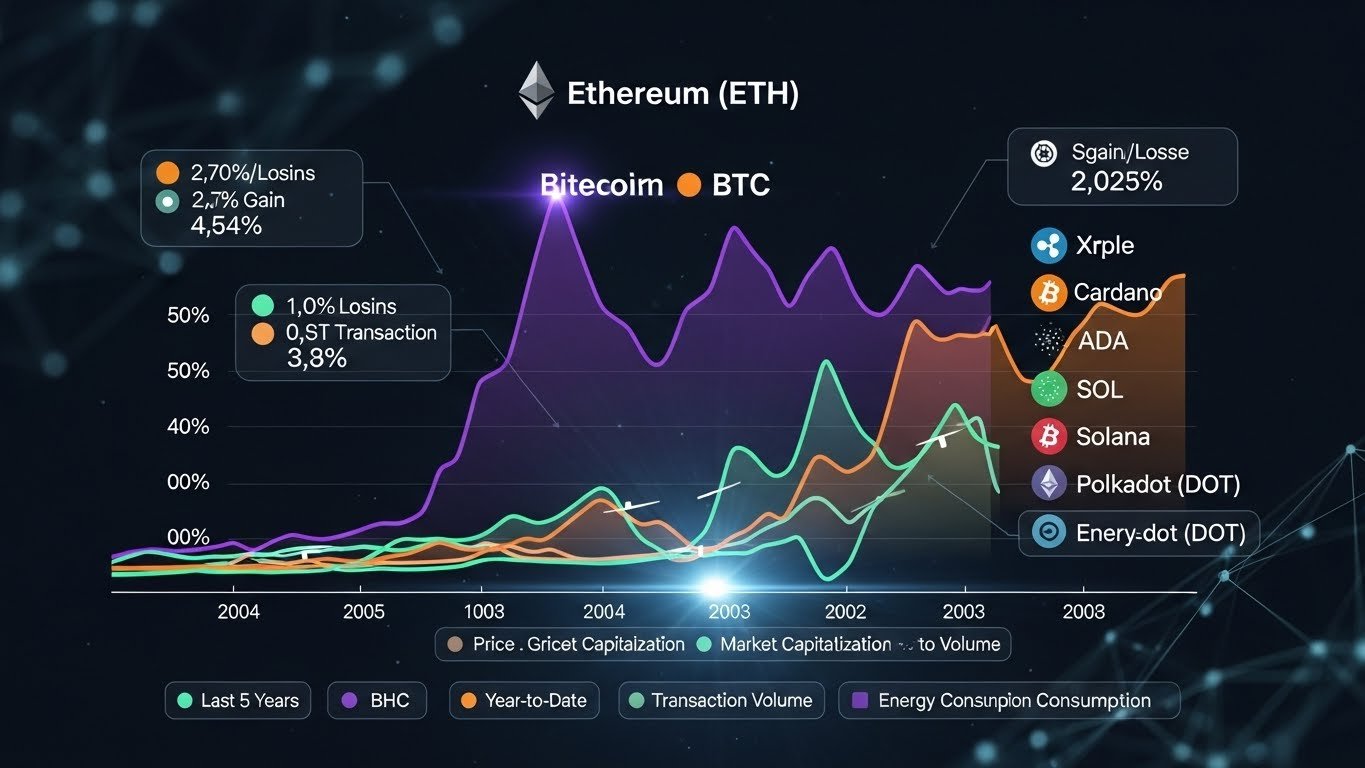
The Ethereum price below $3000requires context regarding how ETH has performed relative to other major cryptocurrencies. Bitcoin, despite its own significant decline from all-time highs, has generally outperformed Ethereum on a percentage basis during recent months, raising questions about Ethereum’s relative strength.
The ETH/BTC trading pair has weakened considerably, indicating that even cryptocurrency investors committed to digital assets have preferred Bitcoin’s perceived stability over Ethereum’s growth potential. This relative underperformance suggests concerns specific to Ethereum beyond the general cryptocurrency market malaise affecting all digital assets.Alternative layer-one blockchains have captured mindshare and capital that might previously have flowed to Ethereum. Solana, despite its own technical challenges and network outages, has maintained stronger price resilience than Ethereum on certain metrics. Avalanche, Cardano, and other competitors continue marketing aggressive roadmaps positioning themselves as superior alternatives to Ethereum.
The proliferation of Ethereum competitors reflects both the platform’s success in validating the smart contract blockchain concept and the market’s belief that improvements on Ethereum’s design are possible. Whether any competitor will genuinely displace Ethereum’s network effects remains uncertain, but the competitive landscape has undoubtedly intensified, contributing to the Ethereum price below $3000 dynamic.Stablecoin dominance in trading pairs has also affected Ethereum price discovery. The majority of cryptocurrency trading now occurs against stablecoins rather than Bitcoin or fiat currencies. This structural shift in market microstructure may contribute to increased volatility and potentially distorted price signals during periods of market stress.
Opportunities and Risks for Investors at Current Price Levels
The Ethereum price below $3000 environment presents both compelling opportunities and significant risks for investors considering position adjustments. Value-oriented investors argue that current prices represent attractive entry points for long-term accumulation, while skeptics warn that further downside remains entirely possible.From an opportunity perspective, Ethereum’s established network effects and developer ecosystem represent substantial competitive advantages unlikely to dissipate quickly. The platform hosts the majority of decentralized finance applications and NFT marketplaces, creating powerful incentives for continued use despite competition. Patient investors willing to maintain multi-year time horizons may view current weakness as a strategic buying opportunity.
Staking yields provide an additional dimension to the investment case at current price levels. Ethereum staking currently offers annual percentage yields that, combined with potential price appreciation, could generate attractive total returns for long-term holders. This yield component distinguishes Ethereum from pure speculative assets, providing ongoing cash flow even during periods of price weakness.However, substantial risks remain that could drive Ethereum price below $3000 even further. Regulatory actions targeting proof-of-stake mechanisms or decentralized finance applications could dramatically impact Ethereum’s utility and value proposition. Investors must assess their risk tolerance for potential adverse regulatory developments that could fundamentally alter the Ethereum investment thesis.
Technical analysis suggests additional support levels exist below three thousand dollars. Traders examining historical price patterns and volume profiles identify potential downside targets that would represent significant additional losses from current levels. Investors should carefully consider position sizing and avoid overleveraging in an environment where volatility remains elevated.Correlation with traditional risk assets represents another consideration. Ethereum has demonstrated strong correlation with technology stocks and other risk-sensitive investments. If broader equity markets face renewed selling pressure, cryptocurrencies including Ethereum would likely experience sympathetic declines regardless of cryptocurrency-specific fundamentals.
Expert Predictions and Future Outlook for Ethereum Price
Forecasting future price movements for Ethereum remains exceptionally challenging given the numerous variables influencing cryptocurrency valuations. Analysts across the financial industry offer widely divergent predictions, reflecting genuine uncertainty about how the Ethereum price below $3000 situation will ultimately resolve.Bullish analysts argue that Ethereum’s fundamental value proposition remains compelling despite current price weakness. They project that successful implementation of planned network upgrades, combined with growing institutional adoption of blockchain technology, will drive substantial appreciation over multi-year timeframes. Some optimistic forecasts project Ethereum reaching five thousand dollars or higher within the next eighteen to twenty-four months.
Bearish analysts counter that structural challenges facing Ethereum may prevent significant price appreciation. They cite intense competition, regulatory risks, and waning retail enthusiasm as factors that could keep prices depressed for extended periods. Some pessimistic forecasts suggest Ethereum could test support levels in the fifteen hundred to two thousand dollar range before establishing a sustainable bottom.Moderate analysts adopt a more neutral stance, suggesting Ethereum may trade in a relatively wide range for the foreseeable future. This perspective acknowledges both the platform’s enduring strengths and the significant challenges it faces, projecting that Ethereum price below $3000 could persist for several quarters before clearer directional trends emerge.
Time horizon significantly impacts price predictions. Analysts generally express more confidence in longer-term forecasts, arguing that Ethereum’s technology advantages and ecosystem development will eventually translate into price appreciation. Near-term predictions remain highly uncertain given the numerous external factors influencing cryptocurrency valuations.Market participants should approach all price predictions with appropriate skepticism. Cryptocurrency markets have repeatedly defied expert forecasts in both directions, demonstrating that even sophisticated analysis cannot reliably predict short-term price movements in these highly volatile markets.
Conclusion
The Ethereum price below $3000 environment represents a defining moment for the cryptocurrency and its community of investors, developers, and users. This challenging period has exposed vulnerabilities in the Ethereum investment thesis while simultaneously creating potential opportunities for strategic long-term capital allocation.Institutional divergence in Ethereum strategies reflects the complex calculus facing professional investors. The decision to increase, maintain, or reduce ETH exposure depends on individual risk tolerances, time horizons, and convictions about blockchain technology’s future role in the global financial system. No single approach can be universally prescribed for all market participants.
The current market environment demands that investors conduct thorough due diligence before making Ethereum-related investment decisions. the technological roadmap, competitive landscape, regulatory environment, and macroeconomic context is essential for making informed choices about whether current price levels represent value or falling knives.Looking forward, Ethereum price below $3000 may ultimately be remembered as either a capitulation event marking the bottom of a bear market or a waystation in a longer-term decline. Only time will reveal which interpretation proves accurate. What remains certain is that Ethereum’s journey continues to captivate global attention and influence the broader conversation about blockchain technology’s potential.
For investors considering Ethereum positions at current levels, establishing clear investment objectives, appropriate position sizing, and realistic expectations about volatility and time horizons will prove essential for navigating whatever future developments emerge in this dynamic and rapidly evolving market.Stay informed about Ethereum price below $3000 developments by following reputable cryptocurrency news sources and conducting ongoing analysis of the factors influencing digital asset valuations in this unprecedented market environment.


