



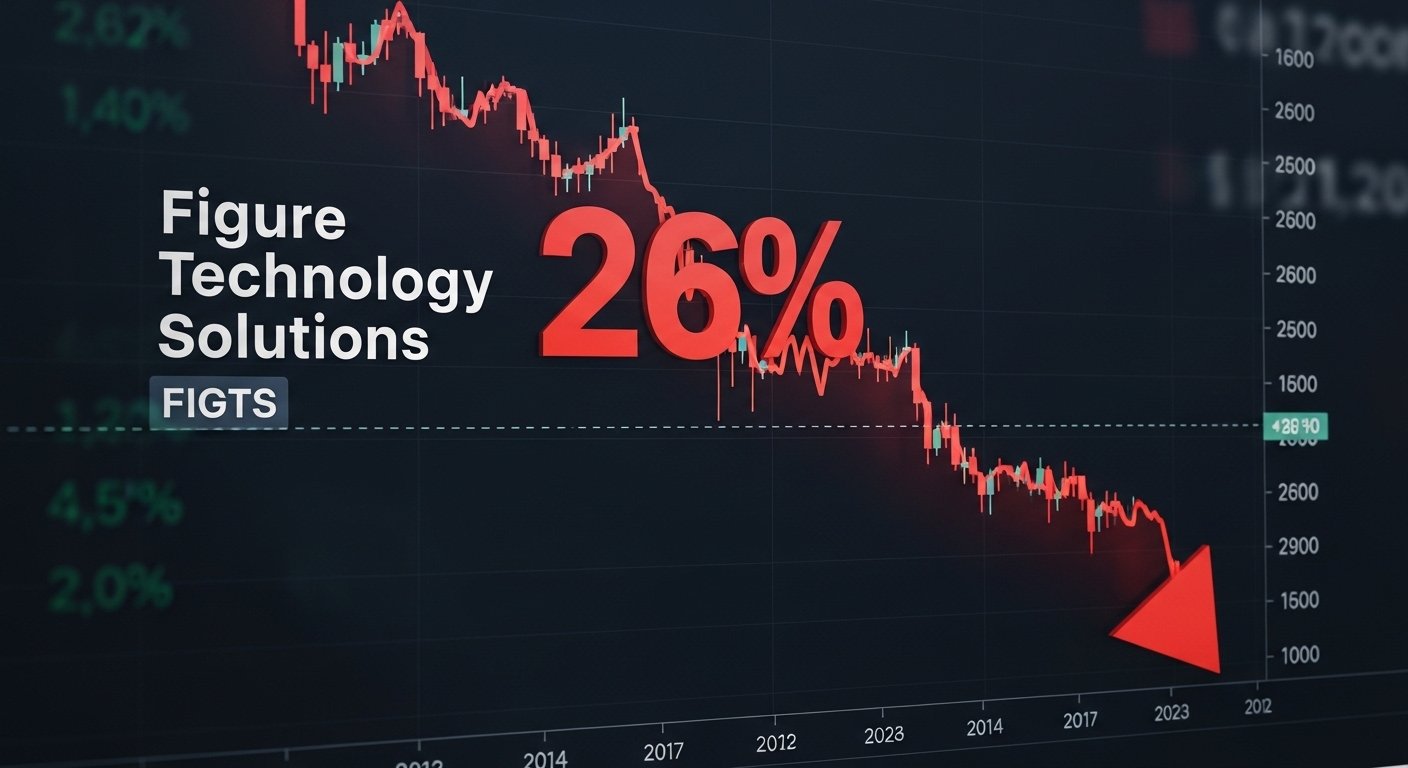
Figure Technology Solutions Stock Dived 26% Today the financial markets can shift direction in a matter of hours, and today’s trading session delivered a dramatic reminder of that reality. The headline move centered on Figure Technology Solutions stock dived by almost 26% today, catching investors off guard and triggering widespread discussion across trading desks and online forums. Such a steep single-day decline is rarely isolated; it typically reflects a combination of earnings expectations, broader market sentiment, valuation concerns, and sector-specific pressures.
As investors tried to digest the sudden downturn, attention quickly turned to fundamentals, recent company developments, and macroeconomic conditions influencing technology stocks and the broader fintech sector. Sharp price movements like this often reflect shifting expectations about growth, profitability, and future guidance rather than a single isolated event. Understanding why Figure Technology Solutions stock dived by almost 26% today requires a deeper look at market dynamics, investor psychology, and the company’s positioning within the competitive financial technology landscape. This breaks down the potential drivers behind the decline, explores technical and fundamental implications, and evaluates what the move could mean for short-term traders and long-term investors alike.
Figure Technology Solutions Stock Dived 26% Today
When Figure Technology Solutions stock dived by almost 26% today, the move immediately placed the company among the session’s most active and volatile stocks. Such a sharp drop typically signals heightened investor uncertainty. Volume often surges during these sessions as institutional investors rebalance positions while retail traders react to headlines.
The decline may have been amplified by algorithmic trading strategies, which can accelerate price movements once predefined thresholds are breached. In volatile environments, market sentiment can shift quickly, especially in sectors driven by growth expectations. When expectations are adjusted downward, valuations can compress rapidly, leading to significant price corrections.
For investors monitoring stock market volatility, today’s movement serves as a reminder of how quickly sentiment can influence price action. While long-term fundamentals remain important, short-term price swings often reflect immediate reactions rather than structural changes.
Possible Drivers Behind the 26% Drop
Earnings Expectations and Forward Guidance
One of the most common catalysts for a sudden decline is disappointing earnings or cautious forward guidance. Even if revenue or profit metrics appear stable, investors often price stocks based on future growth projections. If expectations were elevated, even modestly conservative commentary can cause a revaluation.
In high-growth sectors such as financial technology, valuations are frequently tied to expansion potential rather than current profitability. If management signals slower growth, tighter margins, or increased operating expenses, investors may reassess long-term forecasts. This adjustment can explain why Figure Technology Solutions stock dived by almost 26% today.
Broader Sector Pressure
Another factor could be weakness across the fintech industry or broader technology sector. When comparable companies experience declines, correlation effects can push related stocks downward. Investors sometimes reduce exposure to entire categories during periods of uncertainty, particularly if interest rate expectations or liquidity conditions shift.

Rising interest rates can also impact growth-oriented stocks. Higher rates increase the discount rate used in valuation models, which reduces the present value of future earnings. This dynamic often affects companies with extended growth horizons more significantly than mature businesses.
Valuation Concerns
If the stock had previously traded at a premium valuation relative to peers, today’s drop may reflect a recalibration. Markets periodically reassess whether growth assumptions justify high price-to-earnings or price-to-sales ratios. When confidence in growth slows, valuation compression can occur quickly.
Such corrections are not uncommon in emerging or rapidly expanding industries. Investors who entered during strong momentum phases may react more aggressively to signs of deceleration, contributing to amplified downward pressure.
Technical Analysis Perspective
From a technical analysis standpoint, a nearly 26% decline can break key support levels. When major support zones fail, stop-loss orders may trigger automatically, accelerating the move lower. This phenomenon can intensify intraday declines.
Traders often watch moving averages, volume patterns, and relative strength indicators to evaluate momentum shifts. If Figure Technology Solutions stock dived by almost 26% today on unusually high trading volume, it may suggest conviction behind the move rather than a temporary fluctuation.
However, technical oversold conditions can also emerge after sharp declines. Indicators such as RSI may signal that the stock has entered oversold territory, potentially setting the stage for a short-term rebound. Whether that occurs depends on whether fundamental concerns persist.
Investor Sentiment and Behavioral Factors
Investor psychology plays a powerful role in price movements. When uncertainty rises, risk appetite tends to decline. In growth sectors, expectations often drive valuations, meaning sentiment shifts can have outsized effects.
If recent news, regulatory commentary, or macroeconomic signals introduced ambiguity, traders may have opted to reduce exposure. The speed of today’s decline suggests that positioning adjustments may have contributed to the move.
When Figure Technology Solutions stock dived by almost 26% today, social media and trading communities likely amplified discussion, which can sometimes influence short-term sentiment further. In volatile markets, narratives can evolve rapidly and influence trading decisions.
Implications for Short-Term Traders
For active traders, large single-day moves create both opportunity and risk. Increased volatility can provide entry and exit points, but it also requires disciplined risk management. Sharp declines often lead to heightened intraday price swings.
Short-term participants may evaluate whether the drop represents an overreaction or the beginning of a broader trend. Volume confirmation, price stabilization, and news clarity will be critical factors in determining next steps.
Because Figure Technology Solutions stock dived by almost 26% today, traders may watch for consolidation patterns before taking new positions. Patience during volatile sessions can help avoid emotional decision-making.
Long-Term Investment Considerations
Long-term investors typically focus on fundamentals rather than daily price action. For them, the key questions involve revenue growth trajectory, competitive positioning, profitability path, and balance sheet strength.
If the company maintains strong fundamentals, today’s decline could represent a potential valuation reset rather than a structural problem. In such cases, some investors view significant pullbacks as opportunities to reassess entry points.
However, due diligence remains essential. Reviewing recent earnings reports, management commentary, and industry trends can provide clarity. Even when Figure Technology Solutions stock dived by almost 26% today, the long-term outlook depends on sustained performance and strategic execution.
Macroeconomic Context
Broader economic conditions often influence technology-related stocks. Inflation trends, interest rate policies, and economic growth expectations all affect investor appetite for risk assets.
If market conditions shifted recently, this could have contributed to today’s downturn. Growth stocks are particularly sensitive to changes in liquidity and monetary policy expectations. When capital becomes more expensive, valuations often adjust accordingly. Understanding macroeconomic drivers can help investors interpret whether the move is company-specific or part of a larger market rotation.
Risk Management and Portfolio Strategy
Sharp declines highlight the importance of diversification and risk management. Concentrated positions can expose portfolios to significant short-term fluctuations. Many investors use asset allocation strategies to balance exposure across sectors.
When Figure Technology Solutions stock dived by almost 26% today, diversified portfolios may have experienced a smaller overall impact. Risk management tools such as position sizing and stop-loss strategies can help mitigate volatility. Reassessing portfolio exposure after large moves is a prudent step. Investors may evaluate whether their original thesis still holds or requires adjustment.
What Investors Should Monitor Next
Going forward, market participants will likely watch for updated guidance, corporate announcements, and broader sector trends. Stabilization in trading volume and price action could signal that the initial reaction has subsided.
Earnings updates, conference calls, and strategic disclosures will be key in determining whether today’s drop was driven by temporary sentiment or deeper concerns. Monitoring industry peers can also provide comparative context. Since Figure Technology Solutions stock dived by almost 26% today, the next few sessions may reveal whether buyers step in at lower levels or whether selling pressure continues.
Conclusion
The dramatic move in which Figure Technology Solutions stock dived by almost 26% today underscores the dynamic nature of equity markets. While such a sharp decline can be unsettling, it does not automatically indicate long-term weakness. Instead, it often reflects a combination of earnings expectations, valuation adjustments, sector trends, macroeconomic influences, and investor sentiment.
For traders, volatility presents opportunities but requires discipline and careful analysis. For long-term investors, the key lies in evaluating whether the company’s fundamentals remain intact and whether the current valuation aligns with growth prospects.
Markets move in cycles, and significant pullbacks can sometimes precede stabilization or recovery. Understanding the underlying drivers, rather than reacting solely to price action, is essential for making informed investment decisions.
FAQs
Q: What could cause Figure Technology Solutions stock to fall nearly 26% in a single day?
A sharp decline of this magnitude can result from earnings results, cautious forward guidance, broader technology sector weakness, valuation concerns, or shifts in macroeconomic expectations such as interest rate changes. Large institutional selling and algorithmic trading can also amplify the move once key price levels are breached.
Q: Does a 26% drop mean the company’s fundamentals have changed?
Not necessarily. While the market reaction may reflect concerns, a single-day price decline does not automatically indicate deteriorating fundamentals. Investors should review recent financial reports, management commentary, and industry trends to determine whether the business outlook has materially changed.
Q: Should long-term investors consider buying after such a drop?
Long-term decisions depend on individual risk tolerance, investment goals, and confidence in the company’s growth strategy. Some investors view sharp declines as potential opportunities if fundamentals remain strong, while others may wait for confirmation of price stabilization and improved sentiment before entering positions.
Q: How does market volatility affect stocks like Figure Technology Solutions?
High volatility can increase both upside and downside price movements. Growth-oriented technology companies are often more sensitive to sentiment shifts, macroeconomic developments, and interest rate expectations. Volatility can create trading opportunities but also increases risk, making disciplined strategy essential.
Q: What should investors watch in the coming days?
Investors may monitor trading volume, price stabilization, updated corporate announcements, and broader sector performance. Earnings guidance, analyst commentary, and macroeconomic developments will also help clarify whether today’s decline was a short-term reaction or part of a longer trend.


